
Hong Kong bans passenger flights from Indonesia over COVID-19 fears
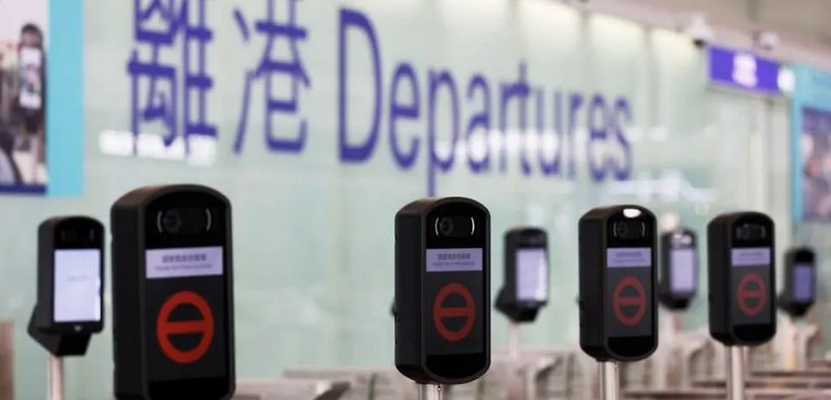
HONG KONG: The Hong Kong government said on Wednesday (Jun 23) it will ban passenger flights from Indonesia from Friday, deeming the country’s arrivals “extremely high risk” for COVID-19.
Authorities said flights would be suspended after the number of imported COVID-19 cases from Indonesia crossed thresholds set by the global financial hub.
READ: Daily new COVID-19 caseload in Indonesia hits record high; total infections surpass 2 million
Hong Kong has already banned travellers from India, Nepal, Pakistan and the Philippines using a flight suspension rule triggered when there are five or more passengers who test positive on arrival for variants of COVID-19.
The rule is also triggered when 10 or more passengers are found to have any strain of the coronavirus while in quarantine.
READ: Jokowi aims to vaccinate 7.5 million Jakartans by end August, but experts say herd immunity is not a given
READ: COVID-19: Hurdles ahead for Indonesia as it aims to vaccinate 180 million people in 15 months
The Chinese special administrative region has recorded over 11,800 cases and 210 deaths due to the coronavirus. Most of the city’s recent cases over the past month have been imported.
Indonesia’s Foreign Ministry said in a statement that Hong Kong’s ban was “temporary” and that migrant workers affected by the new regulation should contact their employers and agents.
Hong Kong employs thousands of migrant workers from countries including Indonesia and the Philippines.
Source: Reuters/vc
Calls grow to evacuate Afghans to Guam as US troops leave
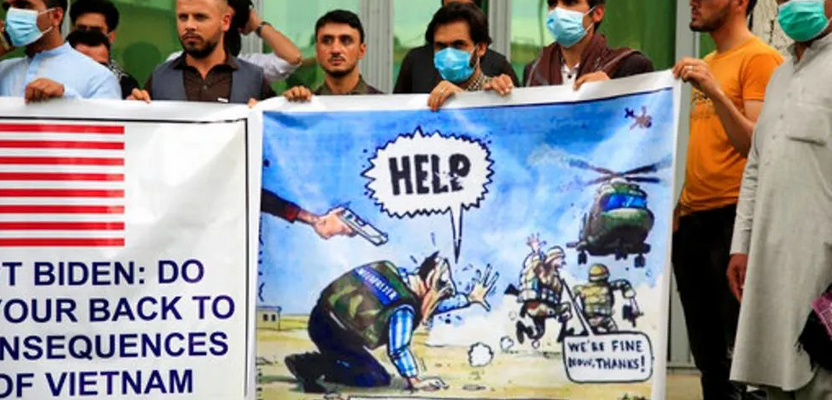
SAN DIEGO: In the chaotic, final hours of the Vietnam War, the US evacuated thousands of South Vietnamese who supported the American mission and were at risk under the communist government.
With US and NATO forces facing a Sep 11 deadline to leave Afghanistan, many are recalling that desperate, hasty exodus as they urge the Biden administration to evacuate thousands of Afghans who worked as interpreters or otherwise helped US military operations there in the past two decades.
Despite unusual bipartisan support in Congress, the administration hasn’t agreed to such a move, declining to publicly support something that could undermine security in the country as it unwinds a war that started after the 9/11 attacks.
“We have a moral obligation to protect our brave allies who put their lives on the line for us, and we’ve been working for months to engage the administration and make sure there’s a plan, with few concrete results,” Republican Representative Peter Meijer of Michigan said during a House hearing last week.
Lawmakers have urged the administration to consider temporarily relocating Afghans who worked for American or NATO forces to a safe overseas location while their US visas are processed. Some have suggested Guam, a US territory that served a similar purpose after the Vietnam War. Kurdish refugees also were flown to the Pacific island in 1996 after the Gulf War.
Guam’s governor recently wrote to President Joe Biden to say the territory was ready to help if needed.
READ: Taliban say ‘Islamic system’ only way to Afghan peace, women’s rights
The Biden administration for now is focusing on accelerating a special visa program for Afghans who helped US operations and pouring resources into relieving the backlog.
“We are processing and getting people out at a record pace,” White House press secretary Jen Psaki said Wednesday. “We are working with Congress right now to streamline some of the requirements that slow this process down and we’re doing the kind of extensive planning for potential evacuation, should that become necessary.”
Zalmay Khalilzad, the State Department’s special representative for Afghanistan reconstruction, warned lawmakers in May that “the departure of all educated Afghans” would “signal panic” and hurt the morale of the country’s security forces.
“This is a delicate, complicated balance that we have to keep,” Khalilzad said.

Democratic Representative Jason Crow of Colorado recently introduced legislation that would nearly double the number of visas available this year, to 8,000, and ease eligibility requirements.
But he said congressional action will not be quick enough or sufficient.
Even if the legislation passed immediately, the number of visas would fall far short of the estimated 18,000 Afghans waiting to be processed. That figure does not include their spouses and children, who would bring the total to about 70,000 people.
And the average wait is more than three years. The process has been also hampered by the coronavirus pandemic, which led the US embassy in Afghanistan to suspend visa interviews.
Crow, a former Army ranger who served in Afghanistan, said he prefers the government “evacuate our Afghan partners to a temporary evacuation site where we can safely conduct robust visa processing without threat to applicants’ safety by the Taliban.”
In a statement this month, the Taliban vowed not to attack those who worked for Western interests, urging Afghans to remain at home and warning their ranks against revenge killings.
Still, many Afghans are desperate for a visa, fearing violence not only from the Taliban but heavily armed warlords allied with the US and seeing now as their last chance to leave Afghanistan.
READ: Taliban launch major offensives in northern Afghanistan
The American withdrawal began May 1, when the number of US troops was between 2,500 and 3,500, and could be completed by Jul 4. Some 7,000 NATO forces are set to leave by Sep 11.
Independent Senator Angus King of Maine said the government needs to find a “creative” approach to helping Afghans who worked with the US military. That could include sending more people from the State Department or the military to process visas in Afghanistan or evacuating people to a safe place to be vetted.
“It’s not only a moral issue, it’s a national security issue,” said King, who sits on both the Intelligence and Armed Services committees, adding that “we also have a practical responsibility, in terms of do we want people to help us in the future?”
More than 300 interpreters have been killed in Afghanistan since 2016, according to No One Left Behind, an organization that advocates on their behalf.
Former Army Major Matt Zeller said a military evacuation is the only viable option for thousands of Afghans facing threats who have been protected by the presence of US troops.
“I’m only alive because my Afghan, Muslim translator saved my life by killing two Taliban fighters who were about to kill me in a battle,” said Zeller, whose interpreter waited three years for a visa.
READ: The US’ hasty exit from Afghanistan is a gift to the Taliban
The US government should have learned from what happened in Vietnam, said Jim Jones, a Vietnam veteran and former Idaho Supreme Court chief justice.
Initially fearing a mass evacuation would undermine the South Vietnamese military, the US watched for weeks as the North Vietnamese Army overtook South Vietnam before starting to fly out Americans and allies. The effort ended with the largest helicopter evacuation in history in the final hours of the war.

In less than 24 hours, Marine helicopters airlifted about 7,000 US military personnel, South Vietnamese who supported the American mission and their dependants.
Many South Vietnamese soldiers and government officials left behind were killed or held in “reeducation” camps. They included troops who had helped Jones stay alive as an Army artillery officer.
“We had a moral obligation to extract as many as possible but, instead, we abandoned them to a horrific fate,” Jones wrote in the Military Times. “We simply cannot allow that kind of tragedy to happen again with the Afghans. I pray that this great nation does not again turn its back on beleaguered people who placed their trust in us.”
Pentagon leaders say they are ready to help in any way they can and downplayed concerns that history will repeat itself.
“I don’t see Saigon 1975 in Afghanistan,” General Mark Milley, chairman of the Joint Chiefs of Staff, recently told lawmakers.
Source: AP/ec
US to send 3 million Johnson & Johnson COVID-19 vaccine doses to Brazil
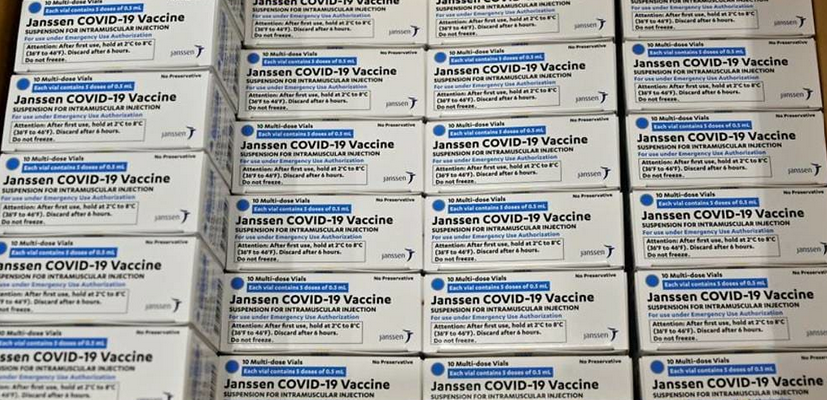
WASHINGTON: The United States on Thursday (Jun 23) will ship 3 million doses of the Johnson & Johnson one-shot COVID-19 vaccine to Brazil, the country with the second-highest coronavirus death toll in the world, a White House official said on Wednesday.
The shipment – part of Washington’s pledge to donate 80 million vaccines – will depart Fort Lauderdale, Florida, on an Azul Airlines flight Thursday evening, bound for Campinas, a city in southeastern Brazil about 100km from Sao Paulo, the official said.
The donation comes as Brazil continues to battle the virus, which has claimed over half a million lives, aggravating deep political divides ahead of next year’s presidential election and sparking unrest around the country.
The White House said scientific teams and legal and regulatory authorities from both countries worked together to ensure prompt delivery.
The one-shot J&J vaccine is seen as particularly helpful in ensuring effective vaccination rates in remote areas since it does not require a second dose.
The official said the vaccines had been cleared by the US Food and Drug Administration (FDA) and would come from the supply that the United States had immediately available.
Brazil had already given regulatory approval to the Johnson & Johnson vaccine, providing the quickest path to getting a large number of doses to the country immediately, the official added.
Manufacturing of the Johnson & Johnson vaccines at Emergent BioSolutions Inc’s Baltimore plant was halted in April by the FDA following a production error that led to millions of doses being ruined.
The White House official underscored that the doses being shipped to Brazil were safe and stressed they came with no strings attached for the government of President Jair Bolsonaro.
“We are sharing these doses not to secure favours or extract concessions. Our vaccines do not come with strings attached. We are doing this with the singular objective of saving lives,” said the official.
Jokowi aims to vaccinate 7.5 million Jakartans by end August, but experts say herd immunity is not a given
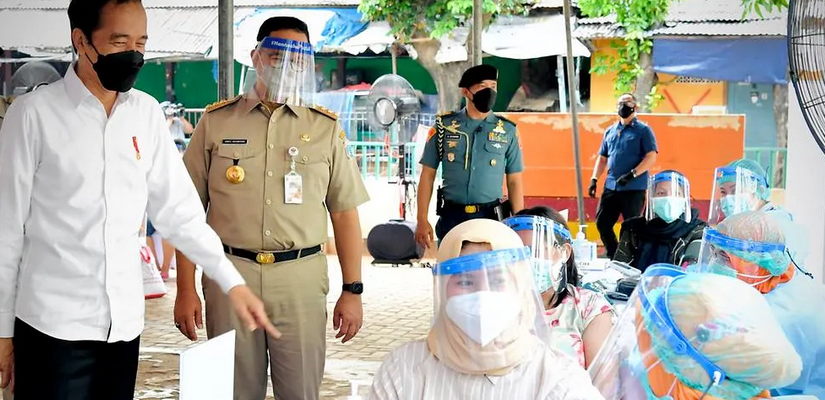
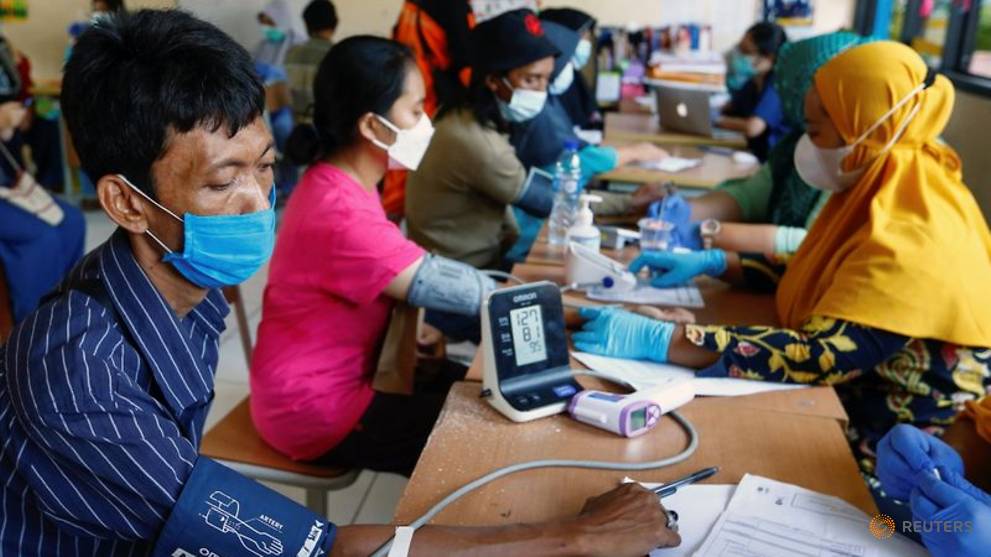
JAKARTA: President Joko Widodo has been criss-crossing vaccination centres in Jakarta, keeping tabs on the national vaccination programme and rallying those in the capital city to get inoculated quickly.
“I have conveyed to the governor of Jakarta that at the end of August, the target is that 7.5 million residents in Jakarta must have been vaccinated,” he said on Jun 14 when observing a mass vaccination event at a residential area.
With more than two million COVID-19 cases, Indonesia is currently grappling with a surge of infections following last month’s Idul Fitri holiday where people returned to their hometowns to be with loved ones and throngs of people crowded tourist spots.
Although Jokowi, as the president is popularly known, acknowledged that the target of inoculating 7.5 million Jakartans is quite ambitious, he said it has to be done in order to achieve herd immunity in the capital. Jakarta, which is the epicentre of the COVID-19 pandemic, is home to about 10.5 million people.

Experts interviewed by CNA said it is possible to inoculate 7.5 million Jakartans by the end of August as the capital has the infrastructure and enough vaccines. However, it is not a given that this will lead to herd immunity.
To reach herd immunity, time is needed for the antibodies to be reproduced, said Professor Tjandra Yoga Aditama who is a former director of the World Health Organization South-East Asia Regional Office (WHO SEARO).
He also noted that the effectiveness of the vaccines has yet to be fully known. “Every vaccine can practically handle the current variants, but the efficacy decreases (for the new variants of concern),” he said.
Indonesia has received around 104.7 million vaccines with the majority of them being from Sinovac, followed by AstraZeneca and Sinopharm.
As of Jun 21, at least 3.5 million people in Jakarta have received their first jab while about 1.8 million have received their second jab.
READ: Indonesia to get Pfizer-BioNTech COVID-19 vaccine from August
READ: COVID-19: Hurdles ahead for Indonesia as it aims to vaccinate 180 million people in 15 months
Prof Aditama, now a director for postgraduate studies at YARSI University in Jakarta, explained that in order to reach the target, at least five factors will play a role, namely vaccine availability, infrastructure, vaccine hesitancy, the ease of getting vaccinated and public communication.
He believed although generally vaccine availability and infrastructure are not major problems in Jakarta, factors such as the ease of getting vaccinated, vaccine hesitancy and public communication should not be taken lightly.
He suggested making access to vaccination centres easier by setting up vaccine centres in all health clinics besides in stadiums and malls in the city centres.

READ: WHO warns of fresh Indonesia COVID-19 surge fed by virus variants
READ: Indonesia travel agencies offer queue-beating US COVID-19 ‘vaccination tours’
Mdm Masdalina Pane, head of the Professional Development Division of the Indonesian Association of Epidemiology Experts (PAEI), also believed that the 7.5 million target can be achieved.
“It is relatively easier to achieve because, in Jakarta, access to healthcare is not an issue,” she said.
But she also questioned whether herd immunity can be easily achieved.
“Herd immunity can be achieved not only through vaccination. Those who have contracted COVID-19 also have some (antibodies).
“But there have been cases where even though the person was positive and recovered, the person did not develop an antibody.
“And secondly, there has been no evidence among those who have been vaccinated how long it (the vaccine) can give protection. Because if it can protect for six months, then those who got vaccinated in January – the vaccination programme kicked off on Jan 13 – by July they should be vaccinated again.”
She added: “Containment needs to involve a few activities, it cannot be done just by vaccination.”
On Wednesday (Jun 23), Indonesia logged a record 15,308 new COVID-19 cases. The national total is now 2,033,421.

To contain the spread of COVID-19, Mdm Pane suggested stronger measures need to be taken such as closing borders and having a longer quarantine period for those who arrive in Indonesia from abroad.
Indonesia currently imposes a five-day quarantine policy for people arriving from overseas, with the exception of travellers from India, Pakistan and the Philippines who need to be quarantined for 14 days.
She also said tracing needs to be done rigorously and correctly, especially for people arriving from abroad.
“In Indonesia, if the tracing is done strongly, variants of concern can still be contained. The problem is … testing is done on the first day of contact (between a person with COVID-19 and another).
She also noted that during quarantine, the exit test is done on day five.
“For COVID-19, the incubation period is two to 14 days. On average it is five days …. but there are many who only exhibit symptoms after day five, there are some who even display symptoms after day 14.”
Despite the unknowns when it comes to attaining herd immunity by end of August, epidemiologist from the University of Indonesia Pandu Riono said that authorities should just focus on vaccinating as many people in Jakarta as possible.
“People, the private sector, they all should be involved,” he said.
Mr Riono also noted that there are many people who work or live in Jakarta but their ID says they live elsewhere and this could hinder vaccination.
“Don’t focus on whether they have a Jakarta ID or not. That’s a very outdated approach.”
He added: “Just vaccinate as many people as possible … Vaccines can only work if they are injected into people.”
Source: CNA/ks
Covid-19 (June 23) – 5,244 new cases, Klang Valley, N Sembilan still epicentres
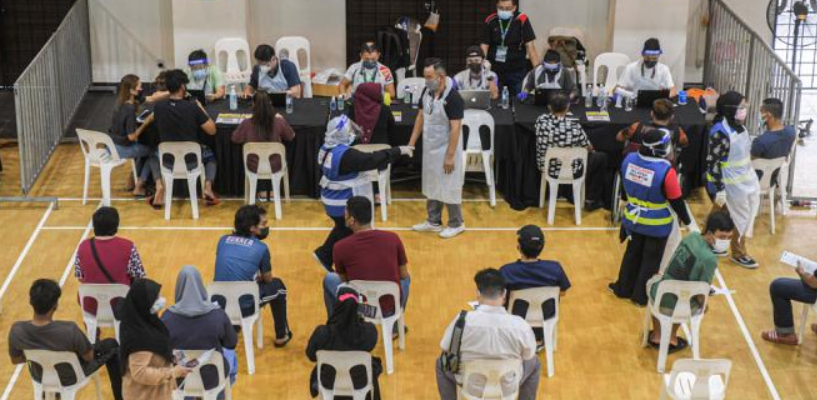
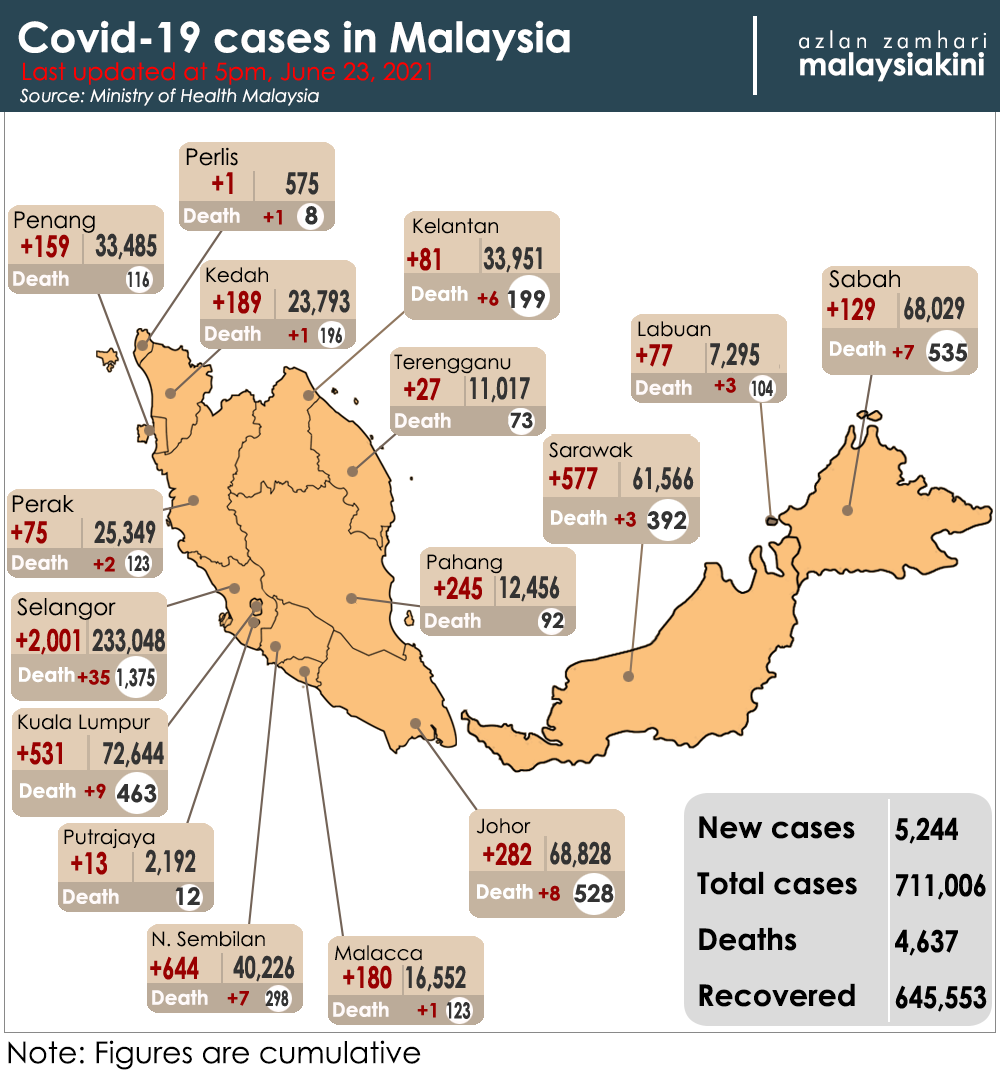
COVID-19 | The Health Ministry today reported 5,244 new Covid-19 cases and 83 deaths.
Most of the new cases were detected in the Klang Valley (48.6 percent). Non-citizens made up 18.06 percent of the new cases.
The number of active Covid-19 cases is currently on an 18-day continous downtrend while the number of patients requiring intensive care has also been trending lower since peaking on June 16.
- Active cases: 60,816
- Patients in ICUs: 879
- Intubated: 433
Breakdown by state:
- Selangor (2,001)
- Negeri Sembilan (677)
- Sarawak (577)
- Kuala Lumpur (531)
- Johor (282)
- Pahang (245)
- Kedah (189)
- Malacca (180)
- Penang (159)
- Sabah (129)
- Kelantan (81)
- Labuan (77)
- Perak (75)
- Terengganu (27)
- Putrajaya (13)
- Perlis (1)
There is little to suggest that things are improving in the Klang Valley or Negeri Sembilan in the past week.
The number of new cases in the Klang Valley (2,545) was slightly higher than the average seen over the past 14 days.
Pahang (245) reported its highest number of new cases in 18 days while things are generally looking better in most parts of the country.
As of yesterday, the R-naught figure for the country is holding steady at 0.96, up from a recent low of 0.90 as seen on June 12.
As long as the R-naught remains below 1.00, it is an indication that the spread of Covid-19 is slowing down.
The only region where the R-naught was more than 1.00 was Negeri Sembilan (1.03). The regions with the lowest R-naught figures are Terengganu (0.69), Putrajaya (0.75) and Pahang (0.80).
Deaths
The Health Ministry reported another 83 deaths attributed to Covid-19 today, bringing the cumulative national death toll to 4,637.
As of today, 1,841 people were reported to have died of Covid-19 in this month alone. That’s an average of 80 victims a day and 3.33 victims an hour.
Selangor (35) reported the highest number of deaths followed by Kuala Lumpur (9), Johor (8), Sabah (7), Negeri Sembilan (7), Kelantan (6), Sarawak (3), Labuan (3), Perak (2), Perlis (1), Kedah (1) and Malacca (1).
The youngest victim was 26. There were seven victims who were pronounced dead upon arrival at the hospital.
Details of the victims are documented on Malaysiakini’s Covid-19 tracker page.
Clusters
Currently, 851 active Covid-19 clusters – one more compared to yesterday – are being monitored by the Health Ministry.
There were 24 new clusters that were classified today of which 15 were related to workplaces and seven related to community spreads, mostly in Sarawak.
Industri Jalan Bacang cluster
Category: Workplace
State(s): Selangor
District(s): Gombak
Total infected: 38 out of 74 screened
Tapak Bina Warisan Puteri cluster
Category: Workplace
State(s): Selangor
District(s): Sepang
Total infected: 65 out of 105 screened
Jalan Perdagangan Alam Jaya cluster
Category: Workplace
State(s): Selangor
District(s): Kuala Selangor
Total infected: 19 out of 72 screened
Jalan Enam Selatan Dua cluster
Category: Workplace
State(s): Selangor
District(s): Sepang, Kuala Langat, Petaling, Klang, Hulu Selangor and Hulu Langat
Total infected: 92 out of 330 screened
Jalan Bandar Satu cluster
Category: Workplace
State(s): Selangor
District(s): Gombak
Total infected: 25 out of 28 screened
Industri Jalan Kidamai Dua cluster
Category: Workplace
State(s): Selangor
District(s): Hulu Langat
Total infected: 18 out of 34 screened
Industri Perusahaan Utama cluster
Category: Workplace
State(s): Selangor
District(s): Hulu Langat
Total infected: 30 out of 43 screened
Industri Jalan Macalister cluster
Category: Workplace
State(s): Penang
District(s): Timur Laut and Seberang Perai Utara
Total infected: 21 out of 83 screened
Tingkat Perusahaan 6A cluster
Category: Workplace
State(s): Penang
District(s): Seberang Perai Tengah, Seberang Perai Utara and Seberang Perai Selatan
Total infected: 14 out of 137 screened
Industri Jalan Usaha Dua cluster
Category: Workplace
State(s): Malacca
District(s): Melaka Tengah and Alor Gajah
Total infected: 31 out of 588 screened
Jalan Mangga Satu cluster
Category: Workplace
State(s): Malacca
District(s): Melaka Tengah
Total infected: 25 out of 51 screened
Jalan Raja Bot cluster
Category: Workplace
State(s): Kuala Lumpur
District(s): Titiwangsa
Total infected: 19 out of 30 screened
Jalan Kukuban cluster
Category: Workplace
State(s): Kuala Lumpur
District(s): Titiwangsa
Total infected: 34 out of 44 screened
Jalan Kempas Permatang cluster
Category: Workplace
State(s): Johor
District(s): Johor Bahru
Total infected: 8 out of 32 screened
Pasar Kemunting cluster
Category: Workplace
State(s): Pahang
District(s): Kuantan
Total infected: 17 out of 118 screened
Nanga Tada cluster
Category: Community
State(s): Sarawak
District(s): Kanowit
Total infected: 107 out of 179 screened
Jalan Kuala Tatau cluster
Category: Community
State(s): Sarawak
District(s): Tatau and Bintulu
Total infected: 22 out of 29 screened
Sungai Kotak cluster
Category: Community
State(s): Sarawak
District(s): Meradong
Total infected: 34 out of 101 screened
Tanjong Lelengau cluster
Category: Community
State(s): Sarawak
District(s): Pakan
Total infected: 52 out of 90 screened
Lorong Tun Mamat Dua cluster
Category: Community
State(s): Malacca
District(s): Melaka Tengah
Total infected: 28 out of 37 screened
Kampung Segambut Dalam cluster
Category: Community
State(s): Kuala Lumpur
District(s): Kepong
Total infected: 70 out of 573 screened
Jerung Surau cluster
Category: Community
State(s): Terengganu
District(s): Marang and Hulu Terengganu
Total infected: 33 out of 139 screened
Jalan Sepang cluster
Category: High-risk group
State(s): Selangor
District(s): Sepang
Total infected: 18 out of 89 screened
Tembok Jelebu cluster
Category: Detention Centre
State(s): Negeri Sembilan
District(s): Jelebu
Total infected: 44 out of 557 screened
Source:Malaysiakini
Johor sultan gives consent to reconvene state assembly on Aug 12

KUALA LUMPUR: Johor ruler Sultan Ibrahim Iskandar said on Wednesday (Jun 23) that he has given consent for the state assembly to reconvene on Aug 12.
A statement issued by the Royal Press Office said that the sultan will open the state assembly sitting in Kota Iskandar, the administrative centre of the state government.
“I want all state assemblymen to unite and convene in the interest of the people and Johor. Especially with regard to an action plan to aid the lives of the people that have been affected by the COVID-19 pandemic and to sort (out) a recovery plan for the Johor economy.
“I feel very sad looking at the lives of the people who are in difficulty, fear and anxiety at the moment. I am also disappointed because to date, the spread of the COVID-19 virus has still not been resolved,” said the statement.
The statement also said that the sultan had made the decision after granting an audience to Johor chief minister Hasni Mohammad, state secretary Azmi Rohani and state prosecution director Amir Nasruddin on Wednesday morning.
READ: UMNO urges Malaysian government to reconvene parliament within 14 days; failure to do so considered ‘treason’
Johor is among the states that are moving towards reconvening their respective legislatures soon. In contrast, the federal government has earlier indicated that parliament could reconvene in September or October this year, during the third phase of a national recovery plan.
The sultan’s announcement was welcomed by state opposition politicians.
In a joint statement on Wednesday, Pakatan Harapan (PH) leaders in the southern state expressed gratitude to the sultan for giving consent to reconvene the state assembly.
“The Johor PH is ready to contribute ideas and energy in the interest of the people especially for the action plan to help those affected by the COVID-19 pandemic,” said the statement.
Noting that only 14.6 per cent of the state population has been vaccinated against COVID-19, PH said state assembly and parliament needs to convene immediately to carry out its functions and duties.
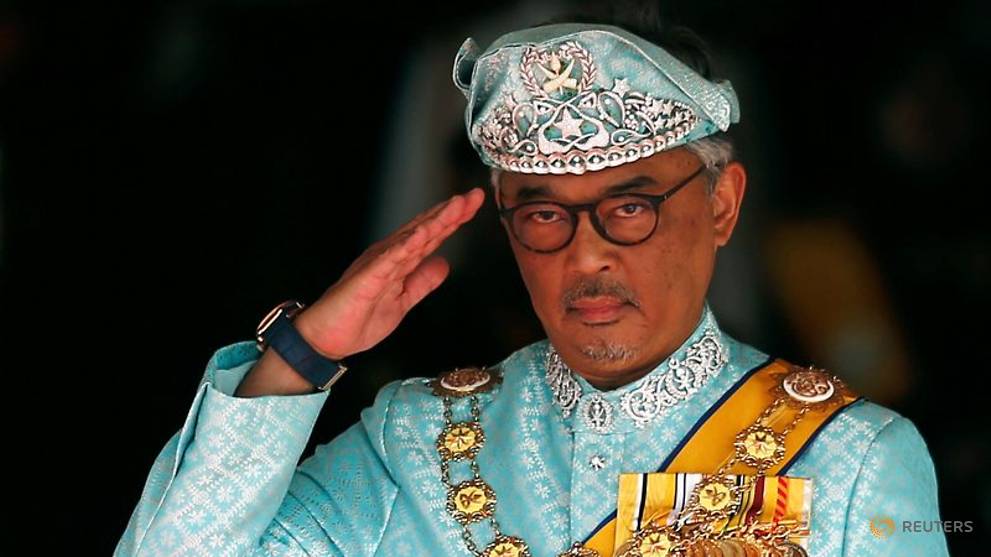
King Al-Sultan Abdullah Ri’ayatuddin Al-Mustafa Billah Shah first declared a state of emergency on Jan 12 to curb the spread of COVID-19. The emergency was scheduled to last until Aug 1 or earlier depending on the state of coronavirus infections.
Since it was declared, federal parliamentary sessions and state legislative assemblies have not sat. No elections were held during this period.
The suspension of parliament was seen as a move that helped prime minister Muhyiddin Yassin avoid an immediate challenge to his razor-thin majority in the august house.
Opposition leaders have pleaded with the king against extending the state of emergency and called for parliament to reconvene.
On Jun 16, Istana Negara issued a statement for parliamentary sittings to reconvene as soon as possible, after the king chaired a special rulers’ conference.
On the same day, the Malay rulers also released a statement saying there was no need to extend the state of emergency beyond Aug 1.
The rulers were also of the opinion that legislative assemblies in their respective states should also convene as soon as possible.
“The assembly methods and procedures currently practised in a few countries, which were proven to be able to curb the spread of the COVID-19 virus, should be introduced and accepted in this country,” the statement said.
READ: Malaysian government acknowledges king’s views, says PMO after palace calls for parliament to reconvene
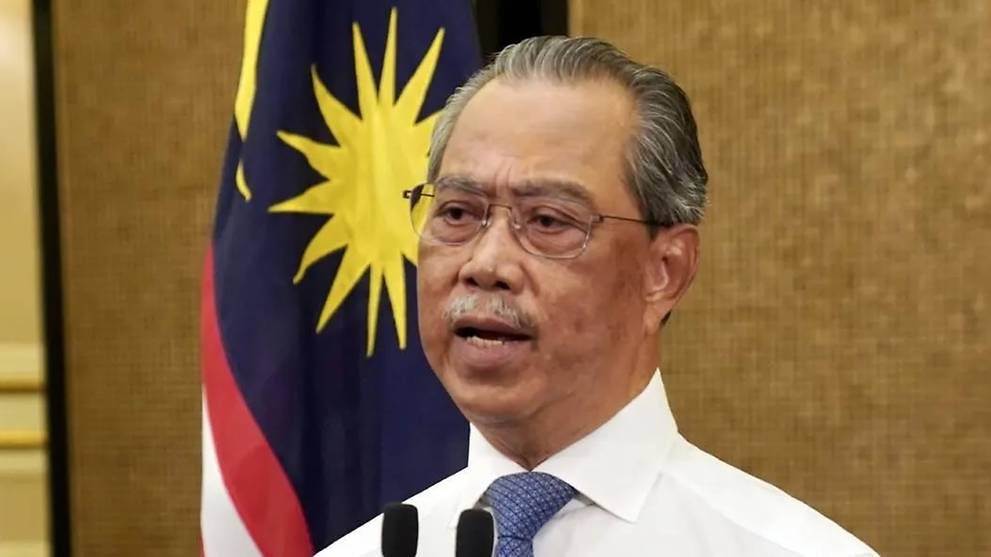
Over the weekend, Mr Muhyiddin said a committee comprising government and opposition representatives has been formed to look into important aspects before parliament is reconvened.
He said that the committee will consider whether the sitting would be a hybrid or a physical parliamentary sitting.
Adding that the government had to look into all matters to avoid problems after the implementation, Mr Muhyiddin stressed that he had no intention to delay the reconvening of parliament.
Source: CNA/kd
Covid-19 (June 22): New cases at 4,743, Selangor top with 1,566
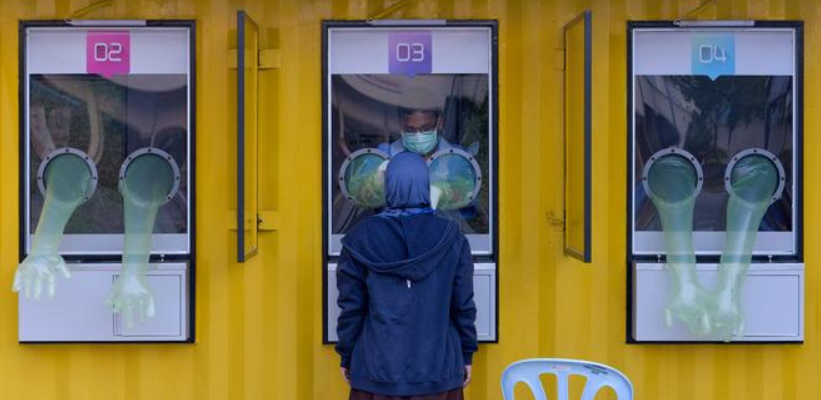
The number of new Covid-19 cases today is at 4,743, marking a slight increase from yesterday’s tally of 4,611, according to the latest release by the Health Ministry.
It should be noted that the number of samples being taken for Covid-19 tests has been trending down since the start of the month. The Health Ministry calculates positivity rate on a weekly based. Details here.
The number of active Covid-19 cases is currently on a 17-day continous downtrend, which is good.
The number of patients requiring intensive care also has been trending lower since peaking on June 16. The number of patients requiring a ventilator is largely unchanged over the past week.
- Active cases: 62,027
- Patients in ICU: 875
- Intubated: 445
States
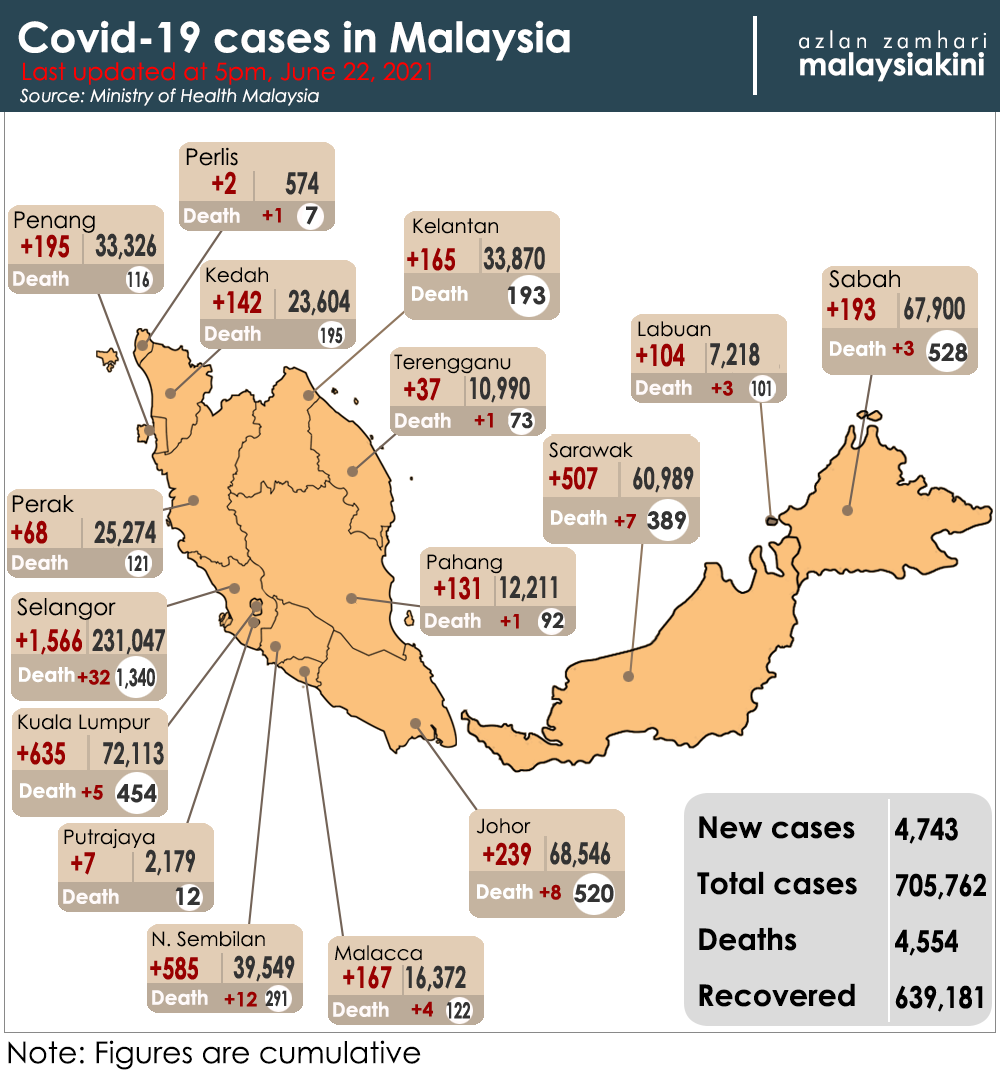
Selangor has the highest number of fresh cases with 1,566 followed by Kuala Lumpur (635), Negri Sembilan (585) and Sarawak (507).
Aside from that Johor (239), Penang (195) Sabah (193), Malacca (167), Kelantan (165), Kedah (142), Pahang (131), Labuan (104), Perak (68), Terengganu (37), Putrajaya (7) and Perlis (2) all reported new cases.
Generally, most regions are slowly seeing the spread of Covid-19 slow down [view chart below].
As of yesterday the R-naught for the country was 0.96, down from 0.97 recorded the day before. As long as the the R-naught remains below 1.00, it would suggest that the spread of Covid-19 was decelerating, which is good.
The only region where the R-naught was more than 1.00 were Negeri Sembilan (1.02) and Perak (1.02).
The two regions with the lowest R-naught are Terengganu (0.68), Pahang (0.77) and Penang (0.79).
Deaths
The Health Ministry reported another 77 deaths attributed to Covid-19 today. The cumulative total has reached 4,554.
Selangor (32) reported the most number of deathsThe new deaths followed by Negeri Sembilan (12), Johor (8), Sarawak (7), Kuala Lumpur (5), Malacca (4), Labuan (3), Sabah (3), Perlis (1), Terengganu (1) and Pahang (1).
Cumulatively, Klang Valley region – Selangor, Kuala Lumpur and Putrajaya – has reported 1,806 deaths due to Covid-19 or 39.7 percent of the national total.
There were four victims who were age 40 and below and another 11 with no known comorbidity. There were 11 victims who were pronounced dead upon arrival at the hospital.
Details of the victims are documented on Malaysiakini’s Covid-19 tracker page.
Clusters
There are 850 active Covid-19 clusters being monitored currently, up 58.9 percent from exactly a month ago.
The Health Ministry today classified another 21 new clusters of which 13 are workplace clusters and five involved community spread.
Jalan Persiaran Enam cluster
Category: Workplace
State(s): Selangor
District(s): Kuala Selangor
Total infected: 14 out of 176 screened
Industri SS Lapan Sungai Way cluster
Category: Workplace
State(s): Selangor
District(s): Petaling, Klang, Hulu Selangor, Kuala Selangor, Gombak and Hulu Langat
Total infected: 97 out of 1,058 screened
Tapak Bina Laluan Klang cluster
Category: Workplace
State(s): Selangor
District(s): Klang
Total infected: 24 out of 287 screened
Jalan Permata 22 cluster
Category: Workplace
State(s): Selangor
District(s): Gombak
Total infected: 14 out of 15 screened
Industri Kampung Bukit Angkat cluster
Category: Workplace
State(s): Selangor
District(s): Hulu Langat
Total infected: 28 out of 188 screened
Jalan Kebun Baru cluster
Category: Workplace
State(s): Selangor
District(s): Kuala Langat
Total infected: 10 out of 18 screened
Taman Pusat Kepong cluster
Category: Workplace
State(s): Kuala Lumpur
District(s): Kepong
Total infected: 22 out of 142 screened
Jalan Kepong Usaha cluster
Category: Workplace
State(s): Kuala Lumpur
District(s): Kepong
Total infected: 29 out of 89 screened
Jalan Tasik Selatan cluster
Category: Workplace
State(s): Kuala Lumpur
District(s): Cheras
Total infected: 15 out of 83 screened
Jalan Sri Hartamas cluster
Category: Workplace
State(s): Kuala Lumpur
District(s): Kepong
Total infected: 21 out of 28 screened
Industri Jalan Teknologi Lima Nilai cluster
Category: Workplace
State(s): Negeri Sembilan
District(s): Seremban and Port Dickson
Total infected: 30 out of 1,352 screened
Industri Jalan Senawang Empat cluster
Category: Workplace
State(s): Negeri Sembilan
District(s): Seremban, Jempol, Kuala Pilah and Rembau
Total infected: 13 out of 727 screened
Jalan Maju Lima cluster
Category: Workplace
State(s): Johor
District(s): Johor Bahru and Kota Tinggi
Total infected: 35 out of 146 screened
Kampung Bukit Tanah cluster
Category: Community
State(s): Kelantan
District(s): Pasir Puteh
Total infected: 11 out of 31 screened
Kampung Kubang Hakim cluster
Category: Community
State(s): Kelantan
District(s): Pasir Mas
Total infected: 10 out of 16 screened
Kampung Pulau Tukang Dollah cluster
Category: Community
State(s): Kelantan
District(s): Kota Bharu
Total infected: 41 out of 63 screened
Lunyim cluster
Category: Community
State(s): Sarawak
District(s): Telang Usan
Total infected: 21 out of 63 screened
Sungai Long Seripa cluster
Category: Community
State(s): Sarawak
District(s): Sebauh
Total infected: 40 out of 108 screened
Dah Perdana Tinggi cluster
Category: Higher Education
State(s): Kedah
District(s): Kulim
Total infected: 15 out of 255 screened
Tembok Ulu Teris cluster
Category: Detention centre
State(s): Selangor
District(s): Sepang
Total infected: 16 out of 337 screened
Jalan Laksamana Cheng Ho cluster
Category: High-risk group
State(s): Malacca
District(s): Melaka Tengah
Total infected: 26 out of 51 screened
Source:Malaysiakini
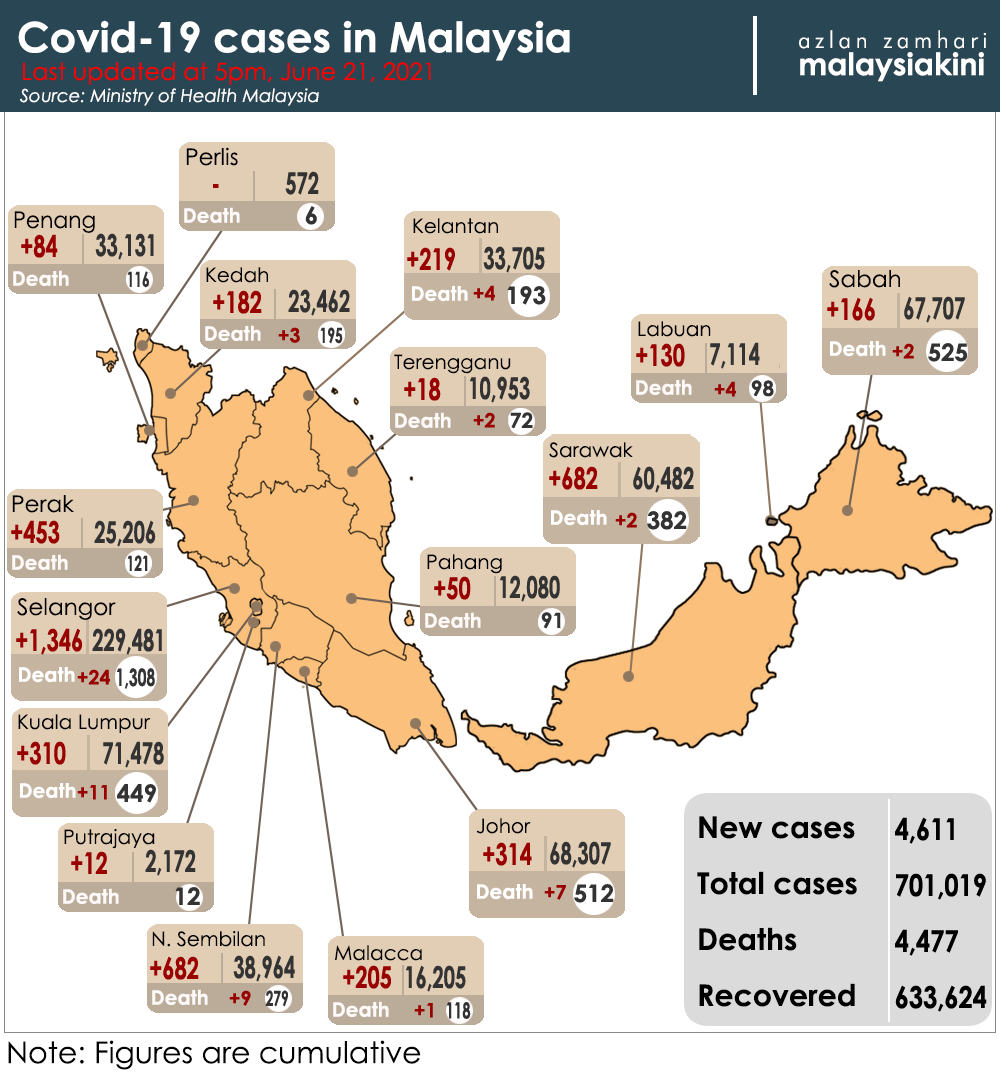
Covid-19 (June 21): 4,611 new cases – lowest since mid-May
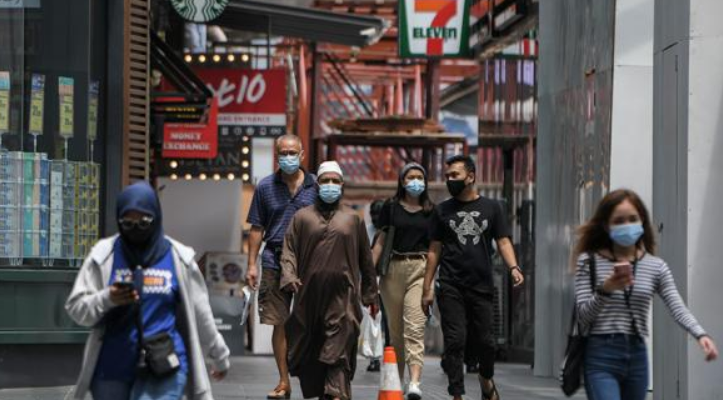
The Health Ministry today reported 4,611 new Covid-19 cases amidst another 69 deaths reported today.
Malaysia has not seen new case numbers reach this low since mid-May. For details on testing numbers, read more here.
The number of active cases is currently on a 16-day downtrend, while the number of Covid-19 patients requiring intensive care has remain unchanged compared to yesterday.
Ventilator use has reduced marginally compared to yesterday but remains largely unchanged throughout the past two weeks.
- Active cases: 62,918
- Patients in ICU: 880
- Intubated: 452
States
- Selangor (1,346)
- Sarawak (682)
- Perak (453)
- Negeri Sembilan (437)
- Johor (314)
- Kuala Lumpur (310)
- Kelantan (219)
- Malacca (205)
- Kedah (182)
- Sabah (166)
- Labuan (130)
- Penang (84)
- Pahang (50)
- Terengganu (18)
- Putrajaya (15)
- Perlis (0)
In Selangor (1,346) new Covid-19 cases were detected as a result of a victim – who is not related to a cluster or is a close contact – getting tested only after experiencing symptoms.
While most regions are showing progress in reducing new case numbers, Sarawak (682) reported slightly more new cases today compared to the average over the past 14 days.
As of yesterday the R-naught for the country was 0.97, continuing on an upward trend since hitting a recent low of 0.90 on June 12.
As long as the the R-naught remains below 1.00, it would suggest that the spread of Covid-19 was decelerating, which is good.
The only region where the R-naught was more than 1.00 is Negeri Sembilan (1.05).
Deaths
The Health Ministry reported another 69 deaths that was attributed to Covid-19, bringing the national death toll to 4,477.
Selangor (24) reported the most deaths followed by Kuala Lumpur (11), Negeri Sembilan (9), Johor (7), Kelantan (4), Labuan (4), Kedah (3), Sarawak (2), Terengganu (2), Sabah (2) and Malacca (1).
There were six victims who were age 40 or under. Five victims were pronounced dead upon arrival at the hospital.
Details of the victims are documented on Malaysiakini’s Covid-19 tracker page.
Clusters
Currently, the Health Ministry is monitoring 844 active Covid-19 clusters. This represents a 59.5 percent increase compared to May 21.
The Health Ministry classified another 22 new clusters of which 14 are related to workplaces while another seven are related to community spread.
Industri Jalan Bebas Tiga cluster
Category: Workplace
State(s): Selangor
District(s): Klang and Petaling
Total infected: 24 out of 240 screened
Industri Jalan Enggang Ampang cluster
Category: Workplace
State(s): Selangor
District(s): Gombak
Total infected: 8 out of 54 screened
Industri Jati Kiri cluster
Category: Workplace
State(s): Selangor
District(s): Klang and Petaling
Total infected: 184 out of 404 screened
Industri Batu Besar cluster
Category: Workplace
State(s): Selangor
District(s): Klang
Total infected: 130 out of 229 screened
Tapak Bina Gunung Satu cluster
Category: Workplace
State(s): Johor
District(s): Johor Bahru
Total infected: 15 out of 106 screened
Perindustrian Sri Plentong cluster
Category: Workplace
State(s): Johor
District(s): Johor Bahru
Total infected: 14 out of 53 screened
Jalan Pekeliling Industri cluster
Category: Workplace
State(s): Johor
District(s): Johor Bahru
Total infected: 26 out of 421 screened
Jalan Bioteknologi Dua cluster
Category: Workplace
State(s): Johor
District(s): Johor Bahru
Total infected: 9 out of 233 screened
Industri Bukit Tengah cluster
Category: Workplace
State(s): Penang
District(s): Seberang Perai Tengah
Total infected: 24 out of 94 screened
Lebuh Kurau Tiga cluster
Category: Workplace
State(s): Penang
District(s): Seberang Perai Utara, Seberang Perai Tengah and Seberang Perai Selatan
Total infected: 12 out of 12 screened
Jalan Jelai – Rompin cluster
Category: Workplace
State(s): Negeri Sembilan
District(s): Jempol
Total infected: 42 out of 334 screened
Samedra cluster
Category: Workplace
State(s): Sabah
District(s): Kota Kinabalu
Total infected: 25 out of 82 screened
Jalan Merbok Ayer Keroh cluster
Category: Workplace
State(s): Malacca
District(s): Melaka Tengah and Jasin
Total infected: 21 out of 117 screened
Jalan Baru Tatau – Bintulu cluster
Category: Workplace
State(s): Sarawak
District(s): Tatau
Total infected: 22 out of 66 screened
Kampung Muara Tebas cluster
Category: Community
State(s): Sarawak
District(s): Kuching
Total infected: 19 out of 332 screened
Kevok cluster
Category: Community
State(s): Sarawak
District(s): Telang Usan
Total infected: 58 out of 280 screened
Quadruplex Lapan Enam cluster
Category: Community
State(s): Sarawak
District(s): Miri
Total infected: 20 out of 61 screened
Kampung Tiong cluster
Category: Community
State(s): Kelantan
District(s): Kota Bharu
Total infected: 13 out of 24 screened
Jalan Jeram Pasu cluster
Category: Community
State(s): Kelantan
District(s): Pasir Puteh
Total infected: 29 out of 39 screened
Taman Rantau Mas cluster
Category: Community
State(s): Kelantan
District(s): Pasir Mas
Total infected: 10 out of 21 screened
Serudung Baru cluster
Category: Community
State(s): Sabah
District(s): Tawau
Total infected: 19 out of 56 screened
Jalan Tok Jangggut cluster
Category: High-risk group
State(s): Kelantan
District(s): Bachok, Kota Bharu, Machang and Pasir Puteh
Total infected: 16 out of 72 screened
Covid-19: N Sembilan, Klang Valley and Labuan see double-digit positive rate

The regions of Negeri Sembilan, Klang Valley and Labuan had double digits positivity rate for Covid-19 tests during the week of June 13 to 19.
The new Covid-19 case count for Negeri Sembilan increased sharply over the past week, which Menteri Besar Aminuddin Harun attributed to the ramping up of tests by employers.
Labuan is currently grappling with a Delta variant outbreak, which is stretching health resources to the limit.
At the national level, the positivity rate was 6.93 percent, which was 0.3 percent higher than the previous week.
The World Health Organisation has recommended that governments keep the positivity rate below five percent to ensure adequate testing.
The positivity rate was released by the National Institutes of Health and Health Ministry’s weekly Covid-19 situation report.
Notably, the number of Covid-19 tests done during this period (week 24, June 13-19) was down 10.9 percent compared to the previous week.
Other salient points from the report:
- New cases in a week (38,911) – ↓ 6.5 percent
- Active cases on June 19 (68,462) – ↓ 16 percent
- Deaths in a week (504) – ↓ 8.9 percent
- Average daily ventilator use (450) – ↓ 0.9 percent
- Average public ICU beds occupancy (85 percent) – ↓ 2 percent
- Average public ICU beds occupied (1,516)
- Average daily ICU cases (910) – ↑ 0.6 percent
- Covid-19 hospital beds occupied (7,913) – ↑ 5 percent
- Workplace clusters (97) – 67.7 percent of 142 new clusters
- National Covid-19 Community Transmission level – 4 (Very high incidence)
- At least one dose of Covid-19 vaccines – 12.5 percent of population
- Fully vaccinated – 4.86 percent of population
Source:Malaysiakini
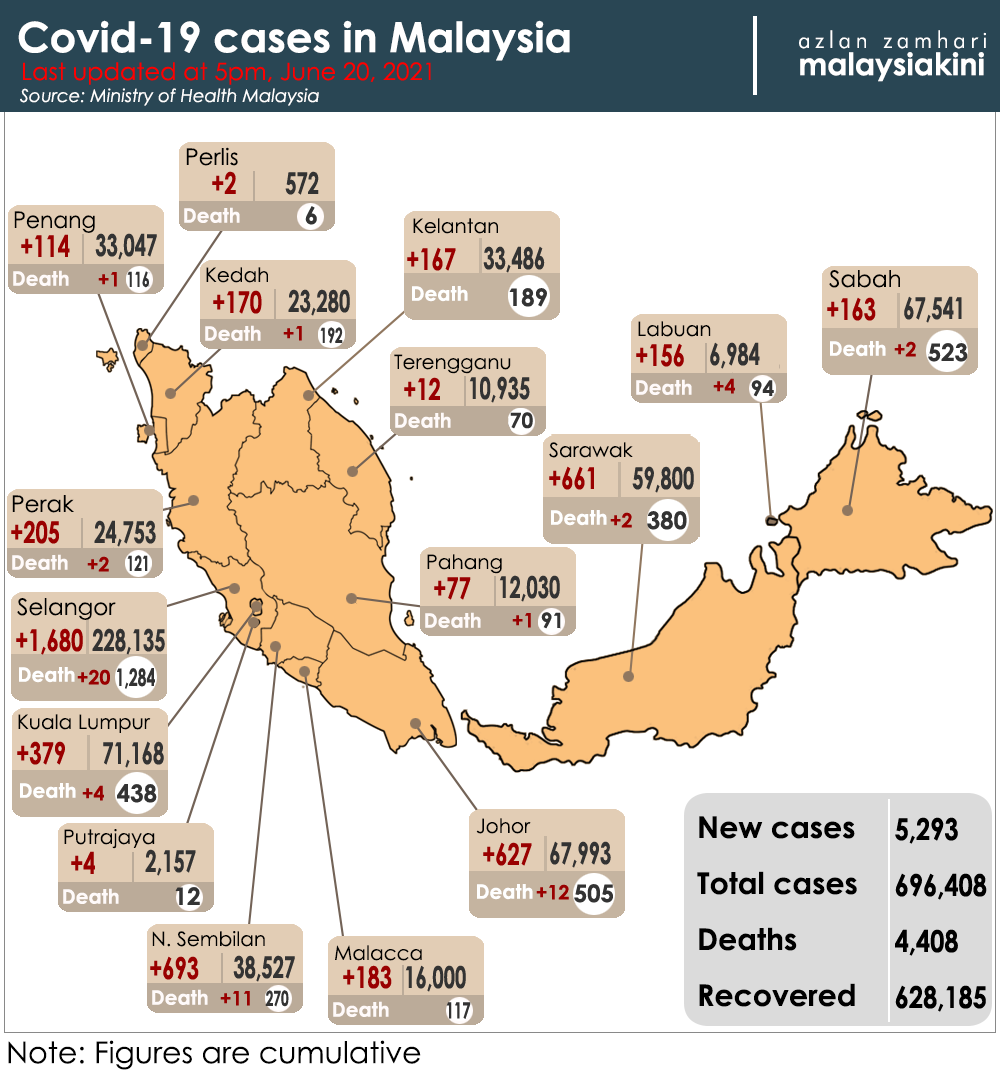
Covid-19 (June 20): New cases at 5,293, Selangor top with 1,680
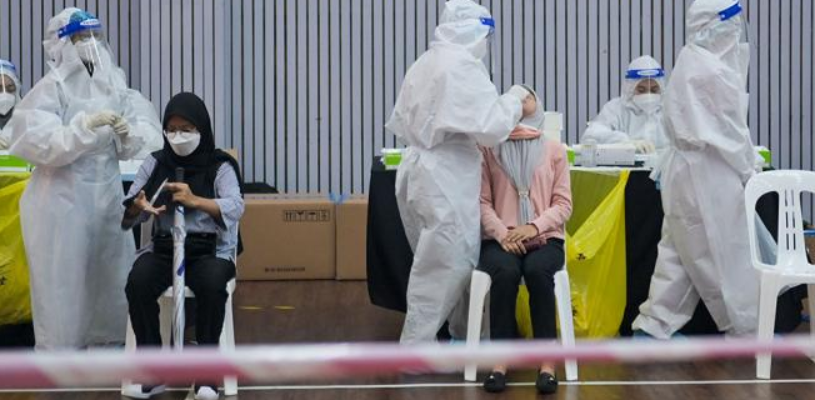
The Health Ministry today reported 5,293 new Covid-19 cases and 60 deaths.
The new locally transmitted infections comprised 73.67 percent Malaysians and 26.33 percent non-citizens.
The Klang Valley accounted for 39.03 percent (2,063 cases) of new local infections while East Malaysia made up 18.54 percent (980 cases).
New recoveries of 5,941 outpaced fresh cases, helping to reduce the number of active cases
- Active cases: 63,815
- Patients in ICUs: 880
- Intubated: 454
Deaths
There were 60 fatalities today, bringing the death toll to 4,408.
The new deaths were recorded in Selangor (20), Johor (12), Negeri Sembilan (11), Labuan (4), Kuala Lumpur (4), Sabah (2), Sarawak (2), Perak (2), Pahang (1), Kedah (1) and Penang (1).
The youngest victim was a 28-years-old non-citizen woman who died at Kajang Hospital. The remaining deaths were aged between 38 and 89.
for a detailed breakdown of the reported deaths today, please refer to our Covid-19 tracker site.
New cases by state
Selangor (1,680)
Negeri Sembilan (693)
Sarawak (661)
Johor (627)
Kuala Lumpur (379)
Perak (205)
Malacca (183)
Kedah (170)
Kelantan (167)
Sabah (163)
Labuan (156)
Pulau Pinang (114)
Pahang (77)
Terengganu (12)
Putrajaya (4)
Perlis (2)
Clusters
A total of 834 out of 2,623 clusters are still active. This includes the 19 new clusters reported today.
This is compared to 766 active clusters a week ago (June 13).
Details of the new clusters are as follow:
Industri Lebuh Satu
Category: Workplace
State(s): Selangor
District(s): Klang, Kuala Selangor and Petaling
Total infected: 18 out of 170 screened
Industri Solok Waja Satu
Category: Workplace
State(s): Selangor
District(s): Klang
Total infected: 22 out of 114 screened
Industri Meranti Dua
Category: Workplace
State(s): Selangor
District(s): Sepang
Total infected: 39 out of 51 screened
Tapak Bina Perindustrian Olak Lempit
Category: Workplace
State(s): Selangor
District(s): Kuala Langat
Total infected: 36 out of 43 screened
Tapak Bina Persiaran Hamidiah
Category: Workplace
State(s): Selangor
District(s): Hulu Langat
Total infected: 244 out of 332 screened
Tapak Bina Jalan Seri Tanjung Pinang
Category: Workplace
State(s): Penang
District(s): Timur Laut
Total infected: 25 out of 177 screened
Jalan Bundusan
Category: Workplace
State(s): Sabah
District(s): Kota Kinabalu and Penampang
Total infected: 9 out of 9 screened
Indera Mahkota 16
Category: Workplace
State(s): Pahang
District(s): Kuantan
Total infected: 9 out of 140 screened
Lorong Empat Jerantut
Category: Workplace
State(s): Pahang
District(s): Jerantut
Total infected: 9 out of 21 screened
Kampung Kubang Panjang
Category: Workplace
State(s): Kelantan
District(s): Pasir Mas and Kota Bharu
Total infected: 36 out of 61 screened
Industri Lukut Tiga
Category: Workplace
State(s): Negeri Sembilan
District(s): Port Dickson
Total infected: 35 out of 112 screened
Kampung Tok Kamis
Category: Community
State(s): Kelantan
District(s): Pasir Puteh
Total infected: 19 out of 65 screened
Kampung Pulau Panjang
Category: Community
State(s): Kelantan
District(s): Kota Bharu
Total infected: 14 out of 30 screened
Lorong Perlis Empat
Category: Community
State(s): Sarawak
District(s): Miri and Subis
Total infected: 33 out of 769 screened
Beladau Selat
Category: Community
State(s): Terengganu
District(s): Kuala Terengganu
Total infected: 24 out of 70 screened
Kampung Nelayan Tengah
Category: Community
State(s): Sabah
District(s): Sandakan
Total infected: 25 out of 45 screened
Jalan Kemboja Tujuh
Category: High-risk group
State(s): Negeri Sembilan
District(s): Seremban
Total infected: 27 out of 51 screened
Iris Garden
Category: High-risk group
State(s): Sarawak
District(s): Kuching
Total infected: 23 out of 46 screened
Tembok Sungai Udang 2
Category: Detention Centre
State(s): Malacca
District(s): Melaka Tengah
Total infected: 81 out of 256 screened
 English
 简体中文
简体中文 Bahasa Indonesia
 Bahasa Melayu