
Sydney faces ‘scariest period’ in pandemic amid COVID-19 Delta outbreak
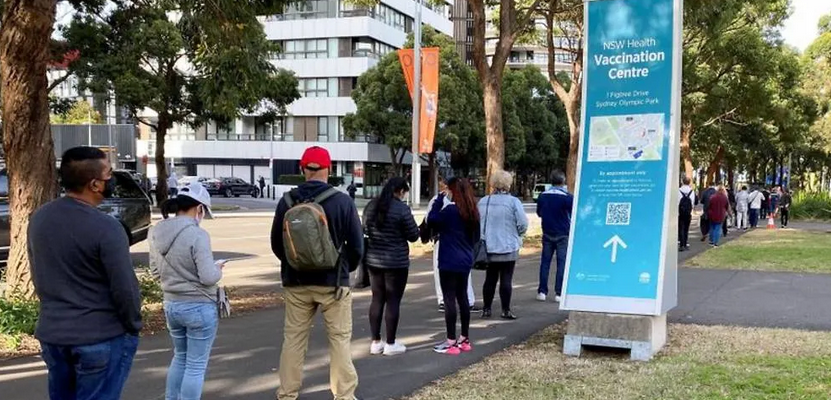
SYDNEY: Australia’s most populous state, New South Wales (NSW), reported a double-digit rise in new locally acquired cases of COVID-19 for the third straight day as officials fight to contain an outbreak of the highly contagious Delta variant.
“Since the pandemic has started, this is perhaps the scariest period that New South Wales is going through,” state Premier Gladys Berejiklian told reporters in Sydney.
NSW has imposed tough restrictions in Sydney, Australia’s largest city and home to a fifth of the country’s 25 million population, with health officials saying transmission could be happening even through minimal contact with infected persons.
READ: Sydney residents banned from leaving city as COVID-19 cluster grows
NSW officials have so far resisted calls for a hard lockdown although Australia has a good record of successfully suppressing past outbreaks through snap lockdowns, tough social distancing rules and swift contact tracing.
Australia has reported just under 30,400 cases and 910 deaths since the pandemic began.
Berejiklian said despite the virus variant being very infectious, her government was “at this stage comfortable” with the current level of restrictions.
Western Australia state premier Mark McGowan has urged NSW authorities to place the state in a lockdown to “crush and kill” the virus, warning “light touch” curbs could trigger a spike in infections. Western Australia has closed its border to NSW.
NSW authorities have imposed mandatory masks in all indoor locations in Sydney, including offices, restricted residents in seven council areas in Sydney’s east and inner west from leaving the city, and limited home gatherings to five to contain the state’s first outbreak in more than a month.
The state has been effectively isolated from the rest of the country after some states, like Western Australia, slammed their borders shut while others introduced tough border rules.
Eleven new local cases were reported on Thursday (Jun 24), taking the total infections in the latest outbreak to more than 40. Thursday’s data includes six cases detected after the 8pm cut-off deadline, which will be included in Friday’s tally.
READ: Mandatory mask rules extended in Sydney as COVID-19 cluster grows
NSW state parliament on Thursday released a restricted list of politicians allowed into the chamber after state Agriculture Minister Adam Marshall tested positive for COVID-19 and Health Minister Brad Hazzard in isolation after he was deemed to be a possible close contact of a positive case.
Victoria state, which shares its border with NSW, on Thursday reported its first case likely linked to the NSW outbreak after a man in his 60s tested positive after returning home from Sydney.
It reported another case earlier in the day linked to an existing cluster.
Queensland state reported three new local cases but officials said the infections pose low risk to the community as they were in isolation when they contracted the virus.
Neighbouring New Zealand reported no new local cases on Thursday, a day after it raised the alert level in the capital Wellington over exposure concerns after an Australian tourist tested positive for COVID-19 upon returning to Sydney after a weekend visit.
Wellington moved to a ‘level 2’ alert, or one short of a lockdown, until Sunday midnight as a precaution against any potential outbreak.
Source: Reuters
Alms for terror: Indonesian extremists finance militancy with charity scams
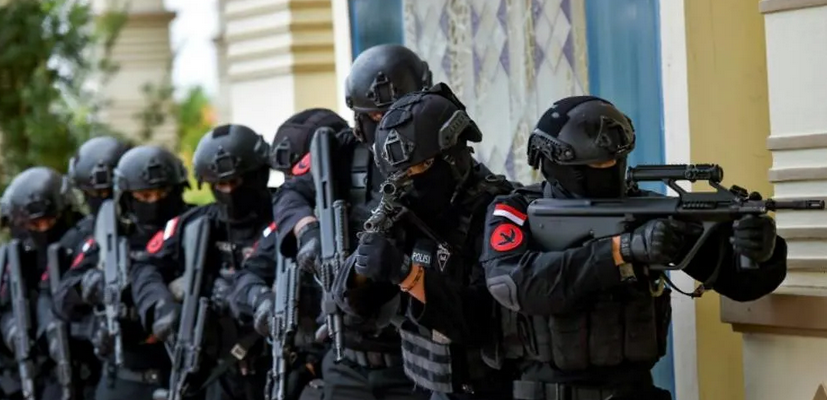
JAKARTA: Generous Indonesians donating their spare change to the poor and needy are unwittingly helping finance deadly terror attacks and militant training camps in a scam that has netted big money for extremist groups.
Former radical Khairul Ghazali once spent his days visiting restaurants, convenience stores and supermarkets to drop off charity boxes, wearing an official-looking uniform to avoid suspicion.
Passers-by would slot in coins and crumpled banknotes in the belief that they were helping the impoverished, orphaned children or maybe a Palestinian aid organisation.
But Ghazali’s boxes secretly belonged to Jemaah Islamiyah (JI) – the notorious network behind Indonesia’s deadliest terror attack, the 2002 Bali nightclub bombings.
“People can’t tell the difference between these and other charity boxes,” said Ghazali, 56, who now runs an Islamic boarding school and tries to deradicalise former extremists.
“The money collected is usually used to pay for terrorism.”
With little outside funding, hardline Islamist groups depend on the charity box scam to pay for operations across Indonesia, the world’s biggest Muslim-majority nation, which has suffered a series of hotel bombings and other attacks over the years.
North Sumatra police said in March they had seized more than 500 boxes suspected to be funding pipelines for the Islamic State group and radicals linked to Al Qaeda.
The seizure, weeks before an IS-inspired married couple blew themselves up at a church on Good Friday, was the tip of the iceberg.
A JI militant arrested last year admitted that one foundation linked to the notorious terror group was running more than 20,000 boxes nationwide, police said at the time.

READ: Indonesian police say new Jemaah Islamiyah cell was recruiting, training
“MASSIVE SCALE”
There are no official figures on the number of illicit charity boxes around Indonesia, but experts believe they are in every city and region across the sprawling Southeast Asian archipelago.
“This is not new but the scale of it, which is now massive, is something new,” said Jakarta-based security analyst Sidney Jones.
Most Indonesian terror groups now rely “overwhelmingly” on domestic funding to pay for day-to-day operations, she said.
Terror groups have also raised cash from member and sympathiser donations, online fundraising and laundering money through legitimate businesses, such as Indonesia’s many palm oil plantations.
“But the attacks that have happened after the Bali Bombing have been mainly funded through charity box funds,” Ghazali said.

Funds from the scam have been traced to militant training camps in ultra-conservative Aceh province and the East Indonesia Mujahideen, a radical group blamed for beheading four Christian farmers on the island of Sulawesi last month.
They are also used to help families of radicals jailed or killed by Indonesia’s counter-terror squad, and police suspect they have been used to pay for militants’ trips to Syria.
It has proved a dependable way for extremists to raise funds under the radar with one box raising about US$350 every six months or so, Ghazali said.
“It is more convenient and risk-free,” he added.
“There’s no chance of bloodshed like in a robbery.”
Ghazali spent five years in prison for masterminding a 2010 bank heist – once a staple funding source for extremist groups – that left a security guard dead.
It was around this time that terror groups began turning their back on robbery and other risky crimes in favour of more covert fundraising methods.
READ: IN FOCUS: How Indonesian prisons are battlegrounds for deradicalisation
“DANGEROUS HABIT”
Illicit boxes are usually linked to foundations backed by extremist groups or their sympathisers – and registered with authorities to appear legitimate.
They are required to report income and some revenue usually does go to charitable causes.
But that is after money is siphoned off to fund extremist operations.
“So, there are actually orphans or poor people being taken care of through these boxes, but it’s a cover up,” University of Indonesia terrorism expert Ridlwan Habib told AFP.
The cash nature of donations makes it tough for authorities to root out shady organisations.
“That’s how they can survive for years by raising money this way without being noticed,” Ghazali said.
And the scheme’s success means that extremists are likely to keep manipulating the goodwill of Indonesians, who are among the world’s most generous in terms of charitable giving.
“Indonesians like to donate money and they’ll give away 2,000 or 5,000 rupiah (15 to 35 cents) without thinking twice,” said Sofyan Tsauri, a former militant familiar with the scheme.
“But it can be a dangerous habit because you don’t know how the money is being used.”
Some in North Sumatra were shocked when police revealed the scam had been operating in the province this year.
“My intention is only to help others when I donate money,” said Medan resident Sri Mulyani.
“I never thought it would be used for terrorism.”
Source: AFP/vc
Hong Kong bans passenger flights from Indonesia over COVID-19 fears
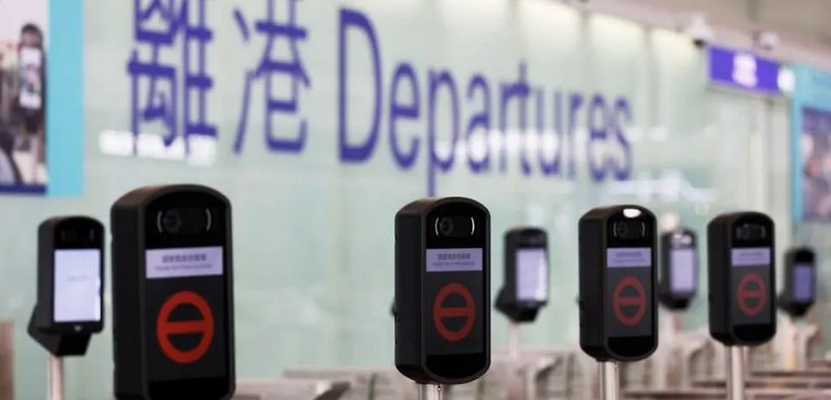
HONG KONG: The Hong Kong government said on Wednesday (Jun 23) it will ban passenger flights from Indonesia from Friday, deeming the country’s arrivals “extremely high risk” for COVID-19.
Authorities said flights would be suspended after the number of imported COVID-19 cases from Indonesia crossed thresholds set by the global financial hub.
READ: Daily new COVID-19 caseload in Indonesia hits record high; total infections surpass 2 million
Hong Kong has already banned travellers from India, Nepal, Pakistan and the Philippines using a flight suspension rule triggered when there are five or more passengers who test positive on arrival for variants of COVID-19.
The rule is also triggered when 10 or more passengers are found to have any strain of the coronavirus while in quarantine.
READ: Jokowi aims to vaccinate 7.5 million Jakartans by end August, but experts say herd immunity is not a given
READ: COVID-19: Hurdles ahead for Indonesia as it aims to vaccinate 180 million people in 15 months
The Chinese special administrative region has recorded over 11,800 cases and 210 deaths due to the coronavirus. Most of the city’s recent cases over the past month have been imported.
Indonesia’s Foreign Ministry said in a statement that Hong Kong’s ban was “temporary” and that migrant workers affected by the new regulation should contact their employers and agents.
Hong Kong employs thousands of migrant workers from countries including Indonesia and the Philippines.
Source: Reuters/vc
Calls grow to evacuate Afghans to Guam as US troops leave
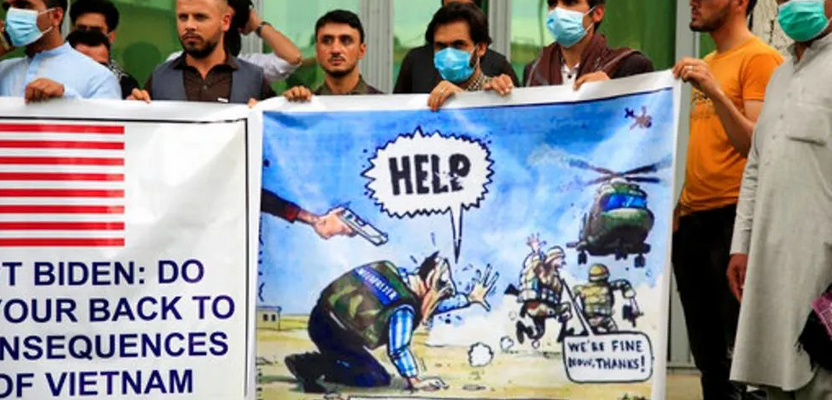
SAN DIEGO: In the chaotic, final hours of the Vietnam War, the US evacuated thousands of South Vietnamese who supported the American mission and were at risk under the communist government.
With US and NATO forces facing a Sep 11 deadline to leave Afghanistan, many are recalling that desperate, hasty exodus as they urge the Biden administration to evacuate thousands of Afghans who worked as interpreters or otherwise helped US military operations there in the past two decades.
Despite unusual bipartisan support in Congress, the administration hasn’t agreed to such a move, declining to publicly support something that could undermine security in the country as it unwinds a war that started after the 9/11 attacks.
“We have a moral obligation to protect our brave allies who put their lives on the line for us, and we’ve been working for months to engage the administration and make sure there’s a plan, with few concrete results,” Republican Representative Peter Meijer of Michigan said during a House hearing last week.
Lawmakers have urged the administration to consider temporarily relocating Afghans who worked for American or NATO forces to a safe overseas location while their US visas are processed. Some have suggested Guam, a US territory that served a similar purpose after the Vietnam War. Kurdish refugees also were flown to the Pacific island in 1996 after the Gulf War.
Guam’s governor recently wrote to President Joe Biden to say the territory was ready to help if needed.
READ: Taliban say ‘Islamic system’ only way to Afghan peace, women’s rights
The Biden administration for now is focusing on accelerating a special visa program for Afghans who helped US operations and pouring resources into relieving the backlog.
“We are processing and getting people out at a record pace,” White House press secretary Jen Psaki said Wednesday. “We are working with Congress right now to streamline some of the requirements that slow this process down and we’re doing the kind of extensive planning for potential evacuation, should that become necessary.”
Zalmay Khalilzad, the State Department’s special representative for Afghanistan reconstruction, warned lawmakers in May that “the departure of all educated Afghans” would “signal panic” and hurt the morale of the country’s security forces.
“This is a delicate, complicated balance that we have to keep,” Khalilzad said.

Democratic Representative Jason Crow of Colorado recently introduced legislation that would nearly double the number of visas available this year, to 8,000, and ease eligibility requirements.
But he said congressional action will not be quick enough or sufficient.
Even if the legislation passed immediately, the number of visas would fall far short of the estimated 18,000 Afghans waiting to be processed. That figure does not include their spouses and children, who would bring the total to about 70,000 people.
And the average wait is more than three years. The process has been also hampered by the coronavirus pandemic, which led the US embassy in Afghanistan to suspend visa interviews.
Crow, a former Army ranger who served in Afghanistan, said he prefers the government “evacuate our Afghan partners to a temporary evacuation site where we can safely conduct robust visa processing without threat to applicants’ safety by the Taliban.”
In a statement this month, the Taliban vowed not to attack those who worked for Western interests, urging Afghans to remain at home and warning their ranks against revenge killings.
Still, many Afghans are desperate for a visa, fearing violence not only from the Taliban but heavily armed warlords allied with the US and seeing now as their last chance to leave Afghanistan.
READ: Taliban launch major offensives in northern Afghanistan
The American withdrawal began May 1, when the number of US troops was between 2,500 and 3,500, and could be completed by Jul 4. Some 7,000 NATO forces are set to leave by Sep 11.
Independent Senator Angus King of Maine said the government needs to find a “creative” approach to helping Afghans who worked with the US military. That could include sending more people from the State Department or the military to process visas in Afghanistan or evacuating people to a safe place to be vetted.
“It’s not only a moral issue, it’s a national security issue,” said King, who sits on both the Intelligence and Armed Services committees, adding that “we also have a practical responsibility, in terms of do we want people to help us in the future?”
More than 300 interpreters have been killed in Afghanistan since 2016, according to No One Left Behind, an organization that advocates on their behalf.
Former Army Major Matt Zeller said a military evacuation is the only viable option for thousands of Afghans facing threats who have been protected by the presence of US troops.
“I’m only alive because my Afghan, Muslim translator saved my life by killing two Taliban fighters who were about to kill me in a battle,” said Zeller, whose interpreter waited three years for a visa.
READ: The US’ hasty exit from Afghanistan is a gift to the Taliban
The US government should have learned from what happened in Vietnam, said Jim Jones, a Vietnam veteran and former Idaho Supreme Court chief justice.
Initially fearing a mass evacuation would undermine the South Vietnamese military, the US watched for weeks as the North Vietnamese Army overtook South Vietnam before starting to fly out Americans and allies. The effort ended with the largest helicopter evacuation in history in the final hours of the war.

In less than 24 hours, Marine helicopters airlifted about 7,000 US military personnel, South Vietnamese who supported the American mission and their dependants.
Many South Vietnamese soldiers and government officials left behind were killed or held in “reeducation” camps. They included troops who had helped Jones stay alive as an Army artillery officer.
“We had a moral obligation to extract as many as possible but, instead, we abandoned them to a horrific fate,” Jones wrote in the Military Times. “We simply cannot allow that kind of tragedy to happen again with the Afghans. I pray that this great nation does not again turn its back on beleaguered people who placed their trust in us.”
Pentagon leaders say they are ready to help in any way they can and downplayed concerns that history will repeat itself.
“I don’t see Saigon 1975 in Afghanistan,” General Mark Milley, chairman of the Joint Chiefs of Staff, recently told lawmakers.
Source: AP/ec
US to send 3 million Johnson & Johnson COVID-19 vaccine doses to Brazil
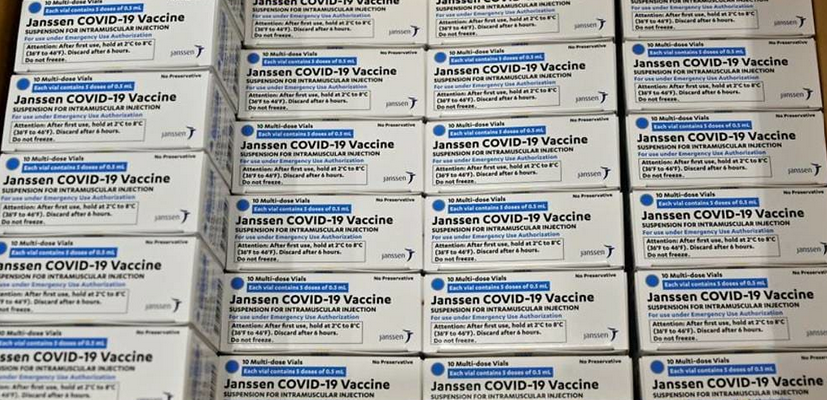
WASHINGTON: The United States on Thursday (Jun 23) will ship 3 million doses of the Johnson & Johnson one-shot COVID-19 vaccine to Brazil, the country with the second-highest coronavirus death toll in the world, a White House official said on Wednesday.
The shipment – part of Washington’s pledge to donate 80 million vaccines – will depart Fort Lauderdale, Florida, on an Azul Airlines flight Thursday evening, bound for Campinas, a city in southeastern Brazil about 100km from Sao Paulo, the official said.
The donation comes as Brazil continues to battle the virus, which has claimed over half a million lives, aggravating deep political divides ahead of next year’s presidential election and sparking unrest around the country.
The White House said scientific teams and legal and regulatory authorities from both countries worked together to ensure prompt delivery.
The one-shot J&J vaccine is seen as particularly helpful in ensuring effective vaccination rates in remote areas since it does not require a second dose.
The official said the vaccines had been cleared by the US Food and Drug Administration (FDA) and would come from the supply that the United States had immediately available.
Brazil had already given regulatory approval to the Johnson & Johnson vaccine, providing the quickest path to getting a large number of doses to the country immediately, the official added.
Manufacturing of the Johnson & Johnson vaccines at Emergent BioSolutions Inc’s Baltimore plant was halted in April by the FDA following a production error that led to millions of doses being ruined.
The White House official underscored that the doses being shipped to Brazil were safe and stressed they came with no strings attached for the government of President Jair Bolsonaro.
“We are sharing these doses not to secure favours or extract concessions. Our vaccines do not come with strings attached. We are doing this with the singular objective of saving lives,” said the official.
Jokowi aims to vaccinate 7.5 million Jakartans by end August, but experts say herd immunity is not a given
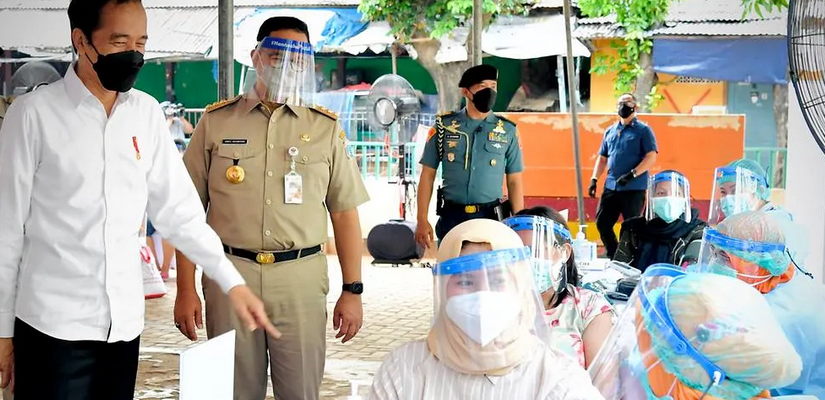
JAKARTA: President Joko Widodo has been criss-crossing vaccination centres in Jakarta, keeping tabs on the national vaccination programme and rallying those in the capital city to get inoculated quickly.
“I have conveyed to the governor of Jakarta that at the end of August, the target is that 7.5 million residents in Jakarta must have been vaccinated,” he said on Jun 14 when observing a mass vaccination event at a residential area.
With more than two million COVID-19 cases, Indonesia is currently grappling with a surge of infections following last month’s Idul Fitri holiday where people returned to their hometowns to be with loved ones and throngs of people crowded tourist spots.
Although Jokowi, as the president is popularly known, acknowledged that the target of inoculating 7.5 million Jakartans is quite ambitious, he said it has to be done in order to achieve herd immunity in the capital. Jakarta, which is the epicentre of the COVID-19 pandemic, is home to about 10.5 million people.

Experts interviewed by CNA said it is possible to inoculate 7.5 million Jakartans by the end of August as the capital has the infrastructure and enough vaccines. However, it is not a given that this will lead to herd immunity.
To reach herd immunity, time is needed for the antibodies to be reproduced, said Professor Tjandra Yoga Aditama who is a former director of the World Health Organization South-East Asia Regional Office (WHO SEARO).
He also noted that the effectiveness of the vaccines has yet to be fully known. “Every vaccine can practically handle the current variants, but the efficacy decreases (for the new variants of concern),” he said.
Indonesia has received around 104.7 million vaccines with the majority of them being from Sinovac, followed by AstraZeneca and Sinopharm.
As of Jun 21, at least 3.5 million people in Jakarta have received their first jab while about 1.8 million have received their second jab.
READ: Indonesia to get Pfizer-BioNTech COVID-19 vaccine from August
READ: COVID-19: Hurdles ahead for Indonesia as it aims to vaccinate 180 million people in 15 months
Prof Aditama, now a director for postgraduate studies at YARSI University in Jakarta, explained that in order to reach the target, at least five factors will play a role, namely vaccine availability, infrastructure, vaccine hesitancy, the ease of getting vaccinated and public communication.
He believed although generally vaccine availability and infrastructure are not major problems in Jakarta, factors such as the ease of getting vaccinated, vaccine hesitancy and public communication should not be taken lightly.
He suggested making access to vaccination centres easier by setting up vaccine centres in all health clinics besides in stadiums and malls in the city centres.

READ: WHO warns of fresh Indonesia COVID-19 surge fed by virus variants
READ: Indonesia travel agencies offer queue-beating US COVID-19 ‘vaccination tours’
Mdm Masdalina Pane, head of the Professional Development Division of the Indonesian Association of Epidemiology Experts (PAEI), also believed that the 7.5 million target can be achieved.
“It is relatively easier to achieve because, in Jakarta, access to healthcare is not an issue,” she said.
But she also questioned whether herd immunity can be easily achieved.
“Herd immunity can be achieved not only through vaccination. Those who have contracted COVID-19 also have some (antibodies).
“But there have been cases where even though the person was positive and recovered, the person did not develop an antibody.
“And secondly, there has been no evidence among those who have been vaccinated how long it (the vaccine) can give protection. Because if it can protect for six months, then those who got vaccinated in January – the vaccination programme kicked off on Jan 13 – by July they should be vaccinated again.”
She added: “Containment needs to involve a few activities, it cannot be done just by vaccination.”
On Wednesday (Jun 23), Indonesia logged a record 15,308 new COVID-19 cases. The national total is now 2,033,421.

To contain the spread of COVID-19, Mdm Pane suggested stronger measures need to be taken such as closing borders and having a longer quarantine period for those who arrive in Indonesia from abroad.
Indonesia currently imposes a five-day quarantine policy for people arriving from overseas, with the exception of travellers from India, Pakistan and the Philippines who need to be quarantined for 14 days.
She also said tracing needs to be done rigorously and correctly, especially for people arriving from abroad.
“In Indonesia, if the tracing is done strongly, variants of concern can still be contained. The problem is … testing is done on the first day of contact (between a person with COVID-19 and another).
She also noted that during quarantine, the exit test is done on day five.
“For COVID-19, the incubation period is two to 14 days. On average it is five days …. but there are many who only exhibit symptoms after day five, there are some who even display symptoms after day 14.”
Despite the unknowns when it comes to attaining herd immunity by end of August, epidemiologist from the University of Indonesia Pandu Riono said that authorities should just focus on vaccinating as many people in Jakarta as possible.
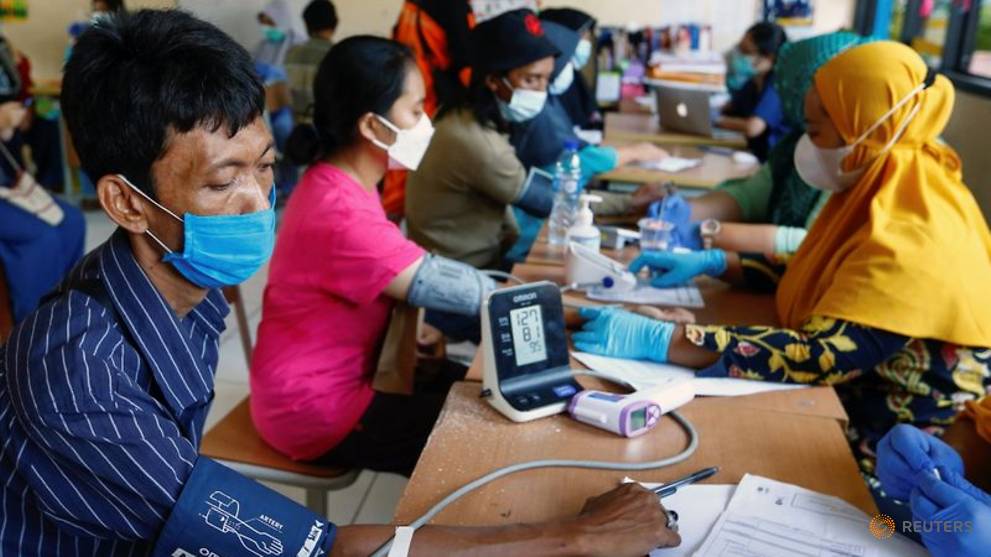
“People, the private sector, they all should be involved,” he said.
Mr Riono also noted that there are many people who work or live in Jakarta but their ID says they live elsewhere and this could hinder vaccination.
“Don’t focus on whether they have a Jakarta ID or not. That’s a very outdated approach.”
He added: “Just vaccinate as many people as possible … Vaccines can only work if they are injected into people.”
Source: CNA/ks
 English
 简体中文
简体中文 Bahasa Indonesia
 Bahasa Melayu