
Covid-19 (July 7): 7,097 cases with Klang Valley worst-hit, Pahang fails Phase 2 criteria

COVID-19 | The Health Ministry today reported 7,097 new Covid-19 cases with the Klang Valley still contributing the most number of new infections.
Selangor saw 3,119 new Covid-19 cases, the second consecutive day where fresh infections numbered above 3,000 for the state.
Kuala Lumpur recorded a four-digit increase with 1,005 new infections. It was also a four-digit increase yesterday.
Negeri Sembilan witnessed a surge with 788 new cases, the highest in 19 days.
Meanwhile, Pahang, which entered Phase 2 of the National Recovery Plan (NRP) on July 5, has regressed.
The state needed to maintain its new daily number of Covid-19 cases under 206 in order to qualify for Phase 2 but the seven-day average of new cases for the state has risen to 224.
The number of active cases are continuing on a 13-day uptrend, while the number of patients under intensive care have reached a new record.
- Active cases: 74,344
- Patients in ICUs: 948
- Intubated: 441
Breakdown by state:
- Selangor (3,119)
- Kuala Lumpur (1,005)
- Negeri Sembilan (788)
- Malacca (358)
- Sarawak (289)
- Pahang (258)
- Sabah (244)
- Johor (224)
- Kedah (198)
- Perak (187)
- Penang (140)
- Kelantan (123)
- Labuan (93)
- Terengganu (43)
- Putrajaya (26)
- Perlis (2)
The R-naught for the country has climbed to 1.09. The figure has been steadily rising since a recent low of 0.90 seen on June 12.
A R-naught of more than 1.00 suggests that the spread of Covid-19 was accelerating.
At the state level, Pahang, notably, had a R-naught of 1.18, which suggests the spread of Covid-19 in the state was not slowing down.
The only regions where the R-naught figure was less than 1.00 are Perak, Johor, Terengganu, Labuan, Sarawak, Kelantan and Perlis.
Deaths
There were 91 fatalities today, bringing the death toll to 5768.
Selangor (47) reported the most deaths followed by Negeri Sembilan (16), Kuala Lumpur (10), Johor (4), Malacca (4), Sarawak (3), Perak (2), Pahang (1), Kelantan (1), Labuan (1), Kedah (1) and Terengganu (1).
There were 10 victims who were pronounced dead upon arrival at the hospital.
Details of the victims are documented on Malaysiakini’s Covid-19 tracker site.
Clusters
The number of active Covid-19 clusters monitored by the Health Ministry is 850. This figure has been steadily reducing since reaching a high of 887 on June 29.
The Health Ministry has classified 18 new clusters today, of which six were replaced to workplaces and nine were related to community spread.
Lorong Tiga Kampung Siol Kandis
Category: Community
State(s): Sarawak
District(s): Kuching and Samarahan
Total infected: 69 out of 213 screened
Sungai Bedil Besar
Category: Community
State(s): Sarawak
District(s): Kuching
Total infected: 31 out of 94 screened
Pintasan Kota Belud
Category: Community
State(s): Sabah
District(s): Kota Belud
Total infected: 18 out of 34 screened
Siasai Dundau
Category: Community
State(s): Sabah
District(s): Kota Belud
Total infected: 35 out of 149 screened
Jalan Bukit 17
Category: Community
State(s): Johor
District(s): Johor Bahru
Total infected: 16 out of 32 screened
Jalan Pulasan 18
Category: Community
State(s): Johor
District(s): Johor Bahru
Total infected: 14 out of 28 screened
Taman Dovenby
Category: Community
State(s): Perak and Selangor
District(s): Kuala Kangsar, Kinta, Larut, Matang, Selama and Gombak
Total infected: 34 out of 61 screened
Jalan Panchang
Category: Community
State(s): Selangor
District(s): Sabak Bernam
Total infected: 14 out of 33 screened
Jalan Nik Yusuf
Category: Community
State(s): Kelantan
District(s): Pasir Mas
Total infected: 14 out of 26 screened
Tasik Utama 2
Category: Workplace
State(s): Negeri Sembilan
District(s): Seremban and Port Dickson
Total infected: 27 out of 448 screened
Industri Lengkok Emas Nilai
Category: Workplace
State(s): Negeri Sembilan
District(s): Seremban and Port Dickson
Total infected: 68 out of 1,300 screened
Industri Jalan TMP Lapan
Category: Workplace
State(s): Malacca
District(s): Melaka Tengah
Total infected: 22 out of 69 screened
Jalan Tun Razak Peringgit
Category: Workplace
State(s): Malacca
District(s): Melaka Tengah
Total infected: 29 out of 114 screened
Jalan Metro Perdana
Category: Workplace
State(s): Kuala Lumpur and Selangor
District(s): Kepong, Titiwangsa, Gombak, Petaling and Kuala Selangor
Total infected: 19 out of 116 screened
Pasar Orkid Sentosa
Category: Workplace
State(s): Selangor
District(s): Hulu Selangor
Total infected: 20 out of 63 screened
Sejantung
Category: Pendidikan Tinggi
State(s): Selangor
District(s): Hulu Selangor
Total infected: 96 out of 152 screened
Jalan Limau Kampung Pasir
Category: High-risk group
State(s): Johor
District(s): Johor Bahru
Total infected: 8 out of 20 screened
Jalan Parit Mahang
Category: High-risk group
State(s): Selangor
District(s): Kuala Selangor
Total infected: 45 out of 71 screened
Source:Malaysiakini
Life after lockdown: How places around the world are reopening as COVID-19 vaccination speeds up
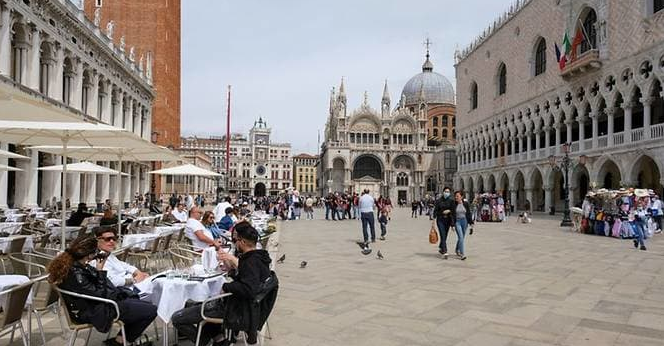
SINGAPORE: As vaccinations gather pace, a number of places around the world have lifted COVID-19 restrictions and some countries have begun reopening borders to immunised travellers.
Singapore authorities have signalled that living with the coronavirus is the way forward, and are drawing up reopening plans for when vaccination rates reach a higher level here.
In a ministerial statement on Monday (Jul 5), Finance Minister Lawrence Wong said that vaccinations will enable the country to progressively reopen and reconnect with the world. He added that Singapore would be able to reach a “very high level of vaccination coverage” in the next one to two months.
READ: Reopening borders vital to recovery, but COVID-19 vaccinations must first be sped up: Lawrence Wong
More than 5 million doses of vaccine jabs have been given in Singapore and over 2 million people are fully vaccinated, according to the Ministry of Health (MOH).
But even as pandemic safety measures are eased, the World Health Organization (WHO) has warned about the spread of the highly transmissible Delta variant and urged vaccinated people to continue wearing masks.
What lies ahead? We take a look at how parts of the world are opening up after more than a year of hunkering down during the pandemic.
RESTRICTIONS LIFTED AFTER VACCINATION
Israel and Iceland are two countries that lifted domestic COVID-19 restrictions after vaccinating a large proportion of their population. But Israel reintroduced masks shortly after as cases rose.
Iceland lifted all COVID-19 restrictions on Jun 26 and has vaccinated about 60 per cent of people eligible for the jabs.
Relatively unscathed from the pandemic, the country, which has a population of about 364,000, has reported more than 6,600 infections and 30 coronavirus-related deaths.

Israel had one of the fastest vaccination programmes in the world and Reuters reports that nearly 60 per cent of its population of 9 million is vaccinated.
READ: Israel requires masks indoors again as Delta variant drives up COVID-19 cases
It lifted most of its restrictions on Jun 15 but 10 days after that, reimposed a requirement to wear masks indoors amid a rise in coronavirus cases. The country has also postponed the reopening of borders to vaccinated tourists by one month.
It also warned on Monday that rising cases there suggest the Pfizer/BioNTech jab it is using might not guard so well against mild illness (64 per cent), even if it is highly effective in reducing severe disease and hospitalisations (93 per cent).
Singapore, meanwhile, is aiming to vaccinate two-thirds of its population by National Day in August. Currently, more than 37 per cent of Singapore residents are fully vaccinated.
READ: Singapore to accelerate COVID-19 vaccination programme, increasing daily doses by 70%
Health Minister Ong Ye Kung said that some relaxation of COVID-19 restrictions can be expected later in July when 50 per cent are inoculated, and there will be more easing again in August. Mask-wearing will be among the last of measures that will be reviewed, he said in an interview with The Straits Times published on Jul 1.
ENGLAND, GERMANY TO REOPEN
Despite a rising number of coronavirus cases, England is set to lift most COVID-19 restrictions from Jul 19 after which people will no longer have to wear masks or maintain social distance indoors.
The UK’s other nations – Scotland, Wales and Northern Ireland – set their own health policies and are expected to open up more slowly.
The announcement came a day before the country reported the highest daily number of new COVID cases since Jan 29 on Tuesday, at 28,773 new cases. There were 37 deaths, the greatest number since Apr 23.
More than 86 per cent of adults in the UK have received at least one jab, with 64 per cent fully vaccinated, said AFP, quoting National Health Service data.
Prime Minister Boris Johnson is betting that vaccinations, which have weakened the link between infections and hospital admissions, can prevent the health service being overwhelmed by a new wave of COVID-19 cases.
READ: England to end COVID-19 lockdown: No face masks, no distancing, no WFH order
READ: UK PM Johnson outlines plans to end England’s COVID-19 restrictions
But Mr Johnson warned cases were predicted to rise to 50,000 a day later this month and that “we must reconcile ourselves, sadly, to more deaths from COVID”, BBC reported.
Germany has also announced that it should be lifting all remaining COVID-19 social and economic curbs by next month, as soon as everyone has been offered a vaccine.
Around 56.5 per cent of people in Germany have received at least one dose and almost 39 per cent are fully vaccinated.
FEWER RESTRICTIONS FOR VACCINATED PEOPLE
In a number of cities that have opened up, vaccinated people are subject to fewer restrictions than those who have not been immunised. This could be the scenario in Singapore as well when it reopens.
United Arab Emirates capital Abu Dhabi will allow only vaccinated people in many public places from Aug 20. However, this does not apply to children under 15 and those exempt from vaccination such as pregnant women and those with medical conditions.
The city’s health app, which details testing and vaccination history, will indicate people with “green” status – who will be allowed more freedom of movement. The UAE has vaccinated more than 78 per cent of its population, according to Reuters data.
READ: Seoul delays relaxation of social distancing as COVID-19 cases surge
New York and California lifted restrictions on businesses and social distancing on Jun 15 after about 70 per cent of adults received at least one dose of the vaccine.
Unvaccinated individuals still need to wear masks indoors and maintain social distancing, according to the guidance from the US Centres for Disease Control and Prevention. It remains unclear how a person’s vaccination status will be checked in order for the measure to be enforced.
DELTA VARIANT POSES THREAT
Even as many places reopen or plan to do so, coronavirus variants are putting a spanner in the works.
WHO has warned that the Delta variant, which was first detected in India, is the most transmissible variant of concern identified so far.
Britain is battling a surge in infections caused by the Delta variant prompting European countries such as Portugal, Spain and Malta to tighten entry requirements for visitors from the UK.
READ: COVID-19 cases in Europe up again after 10 weeks of decline: WHO Europe
READ: Delta COVID-19 variant threatens new pandemic challenge
The variant is now spreading rapidly across Europe and WHO said that hundreds of cases have been detected among spectators attending Euro 2020 football matches.
Calling Delta a “game-changer”, the premier of Australia’s New South Wales state on Wednesday extended a lockdown in Sydney for another week, hoping to curb an outbreak of the highly contagious variant.
Experts had initially believed “herd immunity” could be reached with 70 per cent of a population fully vaccinated, but now judge it to be 80 per cent or more, given Delta’s infectiousness and because vaccines are less effective against it.
WHO has called for vigilance around all major summer gatherings and continued mask-wearing.
COME IF YOU’RE VACCINATED

Singapore is also holding out hope for borders to reopen and for leisure travel to resume by the end of the year.
The examples of territories like Phuket, which opened with much fanfare to tourists on Jul 1, will be closely watched. More than 80 per cent of the island’s population have been vaccinated with at least one dose, and about 65 per cent were fully vaccinated as of June 30, CNN reports.
The Phuket “sandbox” allows vaccinated travellers to tour the island without quarantine. Tourists must remain in Phuket for a fortnight if they wish to travel to the rest of Thailand, and take three coronavirus tests during this period.
READ: Thailand’s popular resort island Phuket reopens to international tourism
But Southeast Asia continues to grapple with the virus. Another regional tourist hotspot, Bali, has put off reopening as virus cases surged to record levels in Indonesia.
On Tuesday, Jakarta said about 10,000 concentrators – devices that generate oxygen – were to be shipped from nearby Singapore as it battles a surge in cases.
Many European countries have eased travel restrictions, particularly for vaccinated individuals and those from countries with low infection rates.
France includes Singapore among a list of “green” countries, while Italy needs visitors from Singapore to be fully vaccinated, recovered from COVID-19 or to present a negative COVID-19 test.

Spain welcomes anyone who has been fully vaccinated, although it has reimposed a test requirement for visitors from Britain after cases there spiked.
If you’re from Singapore, and a few other regions, you no longer even need proof of vaccination or a negative COVID-19 test. Visitors who can enter Spain freely include those from Australia, South Korea, the United States, Israel, Japan, New Zealand, Thailand, Taiwan, China, Hong Kong and Macao.
The thing is, you will have to be quarantined in Singapore when you return.
Source: CNA/hm(ac)
Sydney extends COVID-19 lockdown as Delta cluster grows
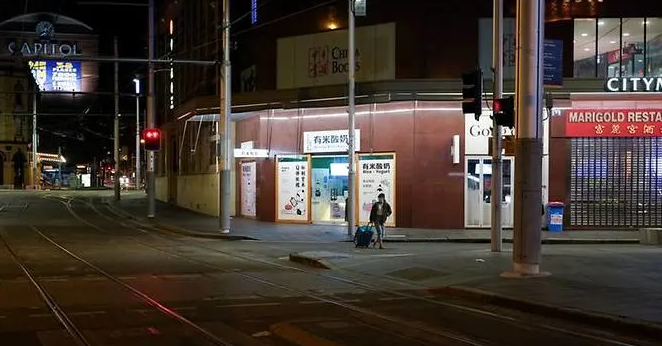
SYDNEY: More than 5 million Sydney residents will spend at least another week in coronavirus lockdown, Australian authorities said on Wednesday (Jul 7), after detecting another 27 new cases.
Stay-at-home orders have already been in place in the country’s biggest city for two weeks, as authorities try to curb an outbreak of the highly contagious Delta variant.
State officials said progress had been made, but light-touch measures – allowing residents to leave home for work, exercise and shopping – needed to continue.
“This Delta strain is a game-changer, it’s extremely transmissible,” said New South Wales premier Gladys Berejiklian, saying it must be eradicated from the community.
“We don’t want to be in a position where we are constantly having to move between lockdown, no lockdown, lockdown, no lockdown.”
Berejiklian said an extension – which includes school closures – was the “best chance of making sure this is the only lockdown we have until the vast majority of our citizens are vaccinated”.
READ: Australia’s New South Wales says next 2 days ‘critical’ as COVID-19 outbreak grows
The lockdown is now expected to end on Jul 16.
Australia’s “COVID zero” approach has seen a series of snap lockdowns in cities across the country and its international borders closed for the last 15 months.
The strategy has allowed Australians to live relatively normally throughout the pandemic, while avoiding the high death tolls seen around the world.
Since the pandemic began, Australia has detected just over 30,000 virus cases and reported 910 deaths.
READ: Australia tightens border further to curb COVID-19 outbreak
But there are growing questions about how long the country can continue to fend off the virus and remain cut off from the rest of the world.
The Sydney outbreak has so far seen just 357 cases, underscoring the strictness of the strategy.
In contrast, Britain is considering lifting virus restrictions with 27,000 new infections each day.
READ: After early COVID-19 response, Australia stuck in vaccine slow lane
Australia’s opening up has been hampered by a glacial vaccine roll-out, which has seen under 8 per cent of the population vaccinated so far.
A top health official this week likened Australians’ efforts to get the jab to the Hunger Games – a fictional battle-to-the-death contest.
Prime Minister Scott Morrison has outlined a four-step plan to allow the country to gradually open up when so-far-undefined vaccine targets are met.
Source: AFP/ec/dv



US military withdrawal from Afghanistan more than 90% complete
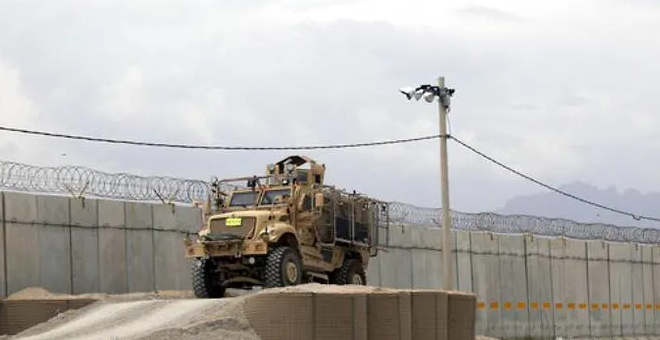
WASHINGTON: Afghan authorities on Tuesday (Jul 6) vowed to retake all the districts lost to the Taliban as the pullout of US forces from the country neared completion.
Hundreds of commandos were deployed to counter the insurgents’ blistering offensive in the north, a day after more than 1,000 government troops fled into neighbouring Tajikistan.
The US Central Command announced that the American withdrawal from the country, ordered in April by President Joe Biden, was now more than 90 per cent completed, underscoring that Afghan forces were increasingly on their own in the battle with the hardline Taliban.
Fighting has raged across several provinces, but the insurgents have primarily focused on a devastating campaign across the northern countryside, seizing dozens of districts in the past two months.
“There is war, there is pressure. Sometimes things are working our way. Sometimes they don’t, but we will continue to defend the Afghan people,” National Security Adviser Hamdullah Mohib told reporters.
“We have plans to retake the districts,” he added.
US PULLOUT ON TRACK
The Pentagon said on Tuesday they were well on track to completing their pullout of thousands of American forces and civilian contractors by the end of August, just days after turning over the last and largest of seven US bases, Bagram air base north of Kabul, to the Afghan government.
Pentagon spokesman John Kirby underscored that the US and NATO coalition partners would continue to support Afghan security forces in the fight with the Taliban, even if there were no coalition troops on the ground.
“We still have the authority to assist the Afghans in the field if they need it,” Kirby said, specifying the possibility of air strikes.
He also said negotiations were underway to ensure that US civilian technicians, who have been essential to keeping Afghan air force aircraft flying, would be able to stay.
But he underscored that US forces were leaving by August.
“We have spent a lot of time, a lot of effort, a lot of resources in improving the competency and the capability of the Afghan national security forces, and now it’s their turn, it’s their time, to defend their people.”
TALIBAN GAIN IN NORTH
Troops and pro-government militiamen were deployed in the northern provinces of Takhar and Badakhshan where the Taliban has captured large swathes of territory at lightning speed, often with little resistance.

Afghan defence officials have said they intend to focus on securing major cities, roads and border towns in the face of the Taliban onslaught.
But the fighting in the north has also forced Moscow to close its consulate in the large city of Mazar-i-Sharif, near the border with Uzbekistan.
And the US exit from Bagram, which provided essential air support, has heightened the crisis facing Afghan government forces.
AFGHAN FORCES FLEE
The speed and ease of the Taliban’s effective takeover of areas in the north represent a massive psychological blow to the Afghan government.
The area once served as the stronghold for the anti-Taliban Northern Alliance during the gruesome civil war in the 1990s and was never routed by the militants.
President Ashraf Ghani blamed the Taliban for all the “bloodshed and destruction”, adding that his government will not “surrender” to the militants, a palace statement said.
But on Monday, more than 1,000 Afghan troops fled into neighbouring Tajikistan.
“We had to abandon our base because there was no coordination or interest among our commanders to counter the attack,” said one of the soldiers, Mohammad Musa.
But Mohib said the soldiers who fled were returning and rejoining the security forces.
“They may have abandoned their posts because they ran out of ammunition or they ran out of supplies, but by no means has anyone defected to the Taliban,” he said.
STEALTHY EXIT
Meanwhile a psychological war has also been taking shape online.
The Taliban has used social media to post live updates on their takeover of districts and videos of Afghan soldiers surrendering.
The Afghan government in turn has released its own footage of air strikes on Taliban positions, boasting of inflicting heavy casualties on the militant group.
But the government appears to have been embarrassed by the stealthy US exit from Bagram early on Friday morning, leaving many Afghans surprised and the base unoccupied for hours.
Kirby, the Pentagon spokesman, said that Afghan officials were told of the impending departure two days ahead of time, but not given the specific time.
“The exact hour of departure was not divulged for operational security purposes,” Kirby said.
“In general we felt it was better to keep that information as closely held as possible,” he said.
Source: AFP/ec
Searchers at Florida condominium collapse site ‘not seeing anything positive’
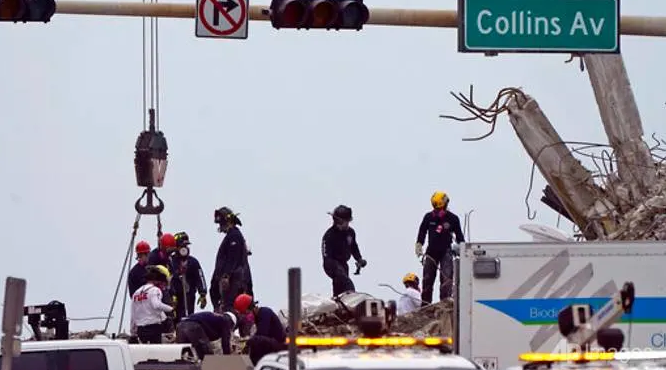
SURFSIDE, Florida: Officials overseeing the search at the site of the Florida condominium collapse sounded increasingly sombre on Tuesday (Jul 6) about the prospects for finding anyone alive, saying they have detected no new signs of life in the rubble as the death toll climbed to 36.
Crews in yellow helmets and blue jumpsuits searched the debris for a 13th day while wind and rain from the outer bands of Tropical Storm Elsa complicated their efforts. Video released by the Miami-Dade County Fire Rescue Department showed workers lugging pickaxes and power saws through piles of concrete rubble barbed with snapped steel rebar. Other searchers could be seen digging with gloved hands through pulverised concrete and dumping shovels of debris into large buckets.
Search-and-rescue workers continued to look for open spaces where people might be found alive nearly two weeks after the disaster struck at the Champlain Towers South building in Surfside.
“We’re actively searching as aggressively as we can,” Miami-Dade County Fire Chief Alan Cominsky said at a news conference. But he added: “Unfortunately, we are not seeing anything positive. The key things – void spaces, living spaces – we’re not seeing anything like that.”
While officials still call the efforts a search-and-rescue operation, Miami-Dade Mayor Daniella Levine Cava said families of those still missing are preparing for news of “tragic loss”.
“I think everybody will be ready when it’s time to move to the next phase,” said Levine Cava, who stressed that crews would use the same care as they go through the rubble even after their focus shifts from searching for survivors to recovering the dead.
“Really, you will not see a difference,” she said. “We will carefully search for bodies and belongings, and to catalog and respectfully deal with any remains that we find.”

No one has been rescued alive since the first hours after the collapse, which struck early on Jun 24, when many of the building’s residents were asleep.
Officials announced on Tuesday that teams had recovered eight additional bodies – the highest one-day total since the collapse. More than 100 people remain unaccounted for.
Severe weather from Elsa threatened to hinder search efforts. Lightning forced rescuers to pause their work for two hours early on Tuesday, Miami-Dade Assistant Fire Chief Raide Jadallah said. And stiff winds of 32kmh, with stronger gusts, hampered efforts to move heavy debris with cranes, officials said.
READ: Florida condominium collapse lawsuits seek to get answers, assign blame
However, the storm’s heaviest winds and rain were expected to bypass Surfside and neighbouring Miami as Elsa strengthened before making landfall somewhere between Tampa Bay and Florida’s Big Bend on a path across northern Florida.
“Active search and rescue continued throughout the night, and these teams continue through extremely adverse and challenging conditions,” Levine Cava said. “Through the rain and through the wind, they have continued searching.”

Crews have removed 112 metric tonnes of debris from the site, Cominsky said.
Workers have been freed to search a broader area since the unstable remaining portion of the condo building was demolished Sunday amid fears that the structure could fall. Officials said the demolition gave rescuers access to spaces that were previously closed off, including bedrooms where people were believed to be sleeping at the time of the disaster.
Source: AP/ec
 English
 简体中文
简体中文 Bahasa Indonesia
 Bahasa Melayu