
2 Singaporean teens among 6 new imported Covid-19 cases in Singapore
SINGAPORE – Two Singaporean teenagers were among the six new coronavirus cases announced by the Ministry of Health (MOH) on Thursday (Dec 10).
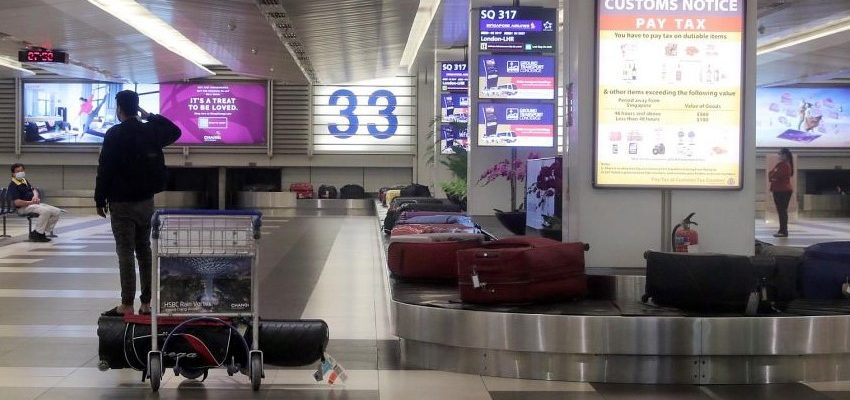
The Singaporean girls, aged 18 and 19, returned from the United Kingdom and were asymptomatic.
All the six new cases were imported and placed on stay-home notices on arrival in Singapore, taking Singapore’s total to 58,297.
Besides the two teens, the other imported cases were two Singaporeans, a permanent resident and a dependant’s pass holder.
One of the Singaporeans, a 33-year-old man who travelled from Indonesia, was symptomatic on Monday.
The permanent resident, a 54-year-old man, travelled from Pakistan and started to have symptoms on Sunday.
The remaining two cases were asymptomatic and were detected through proactive screening and surveillance, MOH said.
One is a 47-year-old Singaporean man who returned from the United States and the other is a 21-year-old Russian dependant’s pass holder who arrived from Russia.
All the cases were tested while serving their stay-home notice at dedicated facilities.
There were no new cases from worker’s dormitories and none in the community, said MOH.
The ministry said the number of new cases in the community has remained low, with a total of one case in the past week that was linked to a previous case.
With six cases discharged on Thursday, 58,173 patients have fully recovered from Covid-19.
A total of 20 patients were in hospital, with none in the intensive care unit, while 60 patients were recuperating in community facilities.
Singapore has had 29 deaths from Covid-19 complications, while 15 who tested positive have died of other causes.
Source : From https://www.straitstimes.com/singapore/2-singaporean-teens-among-6-new-imported-covid-19-cases
Online food delivery during the Covid-19 pandemic
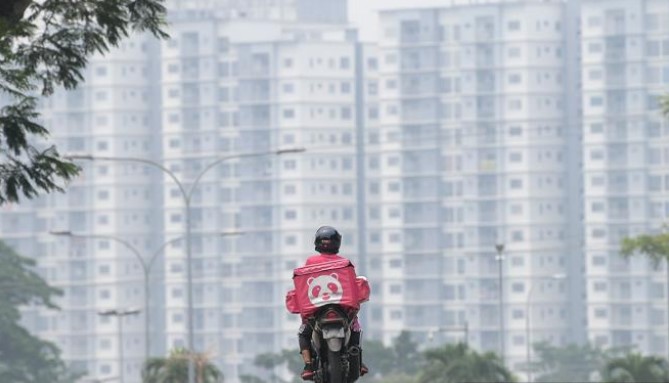
As we are urged to maintain physical distancing and stay home during this Covid-19 pandemic, there has been a surge of demand for food delivery services.
With the decline of business through dining in and with the availability of good internet access and high smartphone ownership, many food outlets provide online order and delivery. There are also third-party apps that allow consumers to view menus, make orders, and receive food delivered directly to their doorstep.
We are spoilt for choice as we can order from a variety of menus through a single app. The varieties available also allow us to try out new food every day. Food delivery provides convenience for individuals who choose to maintain physical distancing by not eating out or those with no time to shop, prepare or cook food.
As people start working from home amid the Covid-19 pandemic, busy workers can order food without leaving their desks or interrupting their work. However, prices of food from food delivery can be 10 to 30 percent higher than buying directly from the eateries.
Sometimes, consumers are forced to buy additional side dishes or purchase a minimum amount for a delivery which may result in over-consumption or food wastage. In addition, there is usually a delivery charge to be paid. The delivered food may also generate more packaging waste which contributes negatively to the environment.
On the other hand, online food delivery has provided employment opportunities to many who lost their livelihood due to the pandemic. However, delivery workers may have higher risk of accidents when they race against the clock to meet deadlines as they fail to abide by traffic rules. They may also face higher risks of Covid-19 infection as they are exposed to many people.
When considering the increasing rates of obesity, the effects of online food delivery could be a great concern. Due to the diverse and competing food delivery platforms, consumers have the potential to select unhealthy options when opting to use digital ordering.
Consumers are also at greater risks of ordering extra portions when discounts are given if the order exceeds a certain amount. The convenience may present a great risk to adverse health outcomes such as being overweight/obese or non-communicable diseases such as diabetes, hypertension, and heart disease.

Therefore, all parties concerned namely the consumers, online food providers, and policymakers should take action to ensure healthy, delicious, and reasonably priced food are provided to maintain consumers’ good health and the food providers’ survival and sustainability, in addition to protecting the environment.
Consumers should order wisely by selecting healthy choices with appropriate portions, not to get influenced by discounts that come with larger portions. This will avoid the negative health outcomes associated with overconsumption, reduce the chance of wasting money or food that is not consumed, and providing both economic and health benefits.
In order to provide informed choices to the consumers for healthier food options, online food providers should provide nutritional information on the menus or label food options as healthy, based on nutritional content.
Through the application of technology, accessibility to healthier food could be improved. This can be implemented using choice architecture; where the online system encourages or ‘nudges’ consumers towards healthier choices during the order process.
For example, when presented with available menu options, choice architecture techniques include setting healthy items as defaults, restructuring the menu to highlight healthier options using methods such as promotional tagging, or recommending a healthier alternative to a previously ordered meal to encourage healthy options.

These changes could be implemented with relative ease and may work in promoting healthy choices among consumers. The potential for online food delivery platforms as the channel to improve diet-related health outcomes should be explored.
To improve economic sustainability, online platform food providers could help to tackle the food waste problem by exploring ways to better communicate with their consumers about appropriate portion sizes and to avoid pressuring or unduly incentivising consumers to over purchase.
With regard to environmental sustainability, online food providers should consider working with packaging producers and the restaurant sector to explore developing and using more sustainable packaging materials.
Policymakers should consider how to better regulate to ensure appropriate working conditions for delivery workers for their safety and economic sustainability. Policymakers could raise public awareness of sustainability and healthy eating habits through education.
Regarding environmental sustainability, policymakers could encourage the packaging industry to develop new packaging material through incentives, such as taxation, subsidies, and industrial support.
During this Covid-19 pandemic, the popular and widely-used online food delivery will impact the population’s health greatly. All relevant parties should work together to improve the accessibility of healthy food, provide economic and environmental sustainability to achieve the Sustainable Development Goals set by the United Nations.
Source : From https://www.malaysiakini.com/letters/554722
Covid-19 (Dec 10): Record 2,234 new cases in a day, 70pct in Klang Valley alone
Covid-19 | A record-setting 2,234 new Covid-19 cases have been reported by the Health Ministry today, of which 70 percent were in the Klang Valley region alone.
The last record (2,188) was set on Nov 24.
According to the Selangor Health Department, the massive spike in Selangor was due to new cases detected from the Seruling cluster involving workplace testing.
The new cases mainly involved the Kapar and Klang locality but has spread across various districts in the state.
There was also a large spike in the Hentian cluster, an existing cluster which emerged from the Kajang bus station.
Leading indicators:
- Active cases: 11,867 ↑ (1,119 more than the previous day)
- Patients in ICU: 124 ↓ (3 less than the previous day)
- Intubated patients: 60 ↓ (1 less than the previous day)
- Deaths: 3
[For 14-day cumulative new cases count at mukim (locality) level, click here. For details of new cases by clusters, click here. There may be delays to updates by the respective state health departments.]
Health director-general Dr Noor Hisham Abdullah did not hold a press conference today and communicated to the press through a press release.
He explained that the spike in the new cases from the Seruling and Hentian cluster was due to targeted screening of workers.
“New cases in Selangor are expected to remain high after the expansion of the foreign worker screening programme by Socso and proactive efforts by employers in the Klang Valley,” he said.
Selangor also reported 97 new cases that were categorised as “other screenings”, an umbrella term for screenings on people with symptoms, pre-surgery screening, workplace screenings and pre-departure screenings, among others.
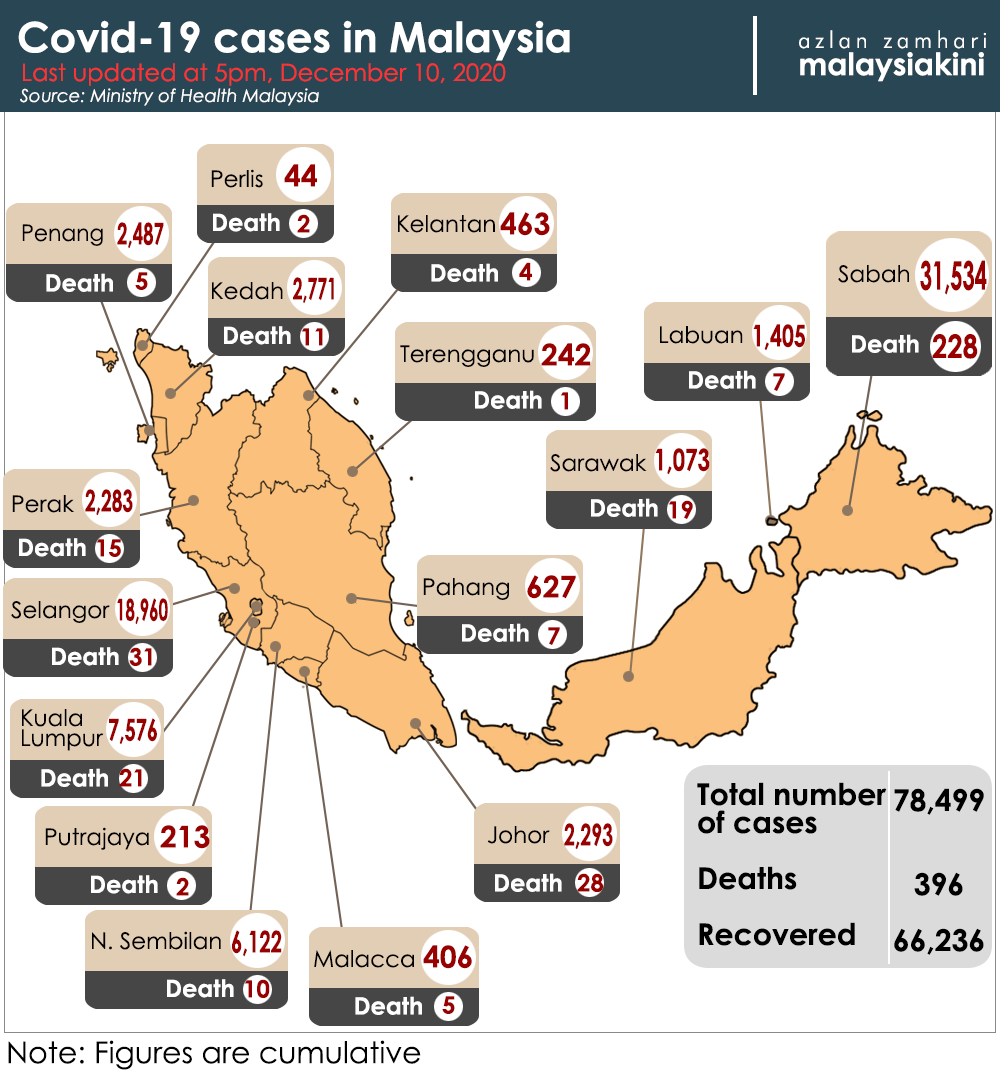
Two deaths were reported in Sabah. The cumulative Covid-19 death toll for Sabah has reached 228 or 57.8 percent of the national total (396).
Details of the victims – all Malaysians – are as follows:
Patient 56,860 – Male, 72, died at the Keningau Hospital.
Patient 59,752 – Male, 26, died at the Labuan Hospital.
Patient 75,507 – Female, 63, dead on arrival at the Duchess of Kent Hospital, Sandakan.
Breakdown of new cases:
Selangor (1,428)
Existing clusters: 1,200
New cluster (Tapak Bina Jalan Bukit): 39
Close contact: 92
Other screening: 97
Sabah (274)
Existing clusters: 100
Close contact: 113
Other screening: 61
Kuala Lumpur (136)
Existing clusters: 79
New cluster (Tapak Bina Condong, Tapak Bina Jalan Stadium): 25
Close contact: 11
Other screening: 17
Imported: 4
Perak (115)
Existing clusters: 111
Close contact: 1
Other screening: 2
Imported: 1
Johor (100)
Existing clusters: 52
New cluster (Jalan Dalam, Tenum Merah): 9
Close contact: 26
Other screening: 13
Negeri Sembilan (67)
Existing clusters: 51
Close contact: 6
Other screening: 10
Pahang (45)
Existing clusters: 40
Other screening: 5
Penang (42)
Existing clusters: 3
Close contact: 29
Other screening: 10
Kedah (14)
Existing clusters: 11
Close contact: 1
Other screening: 2
Malacca (5)
Existing clusters: 3
Close contact: 1
Other screening: 1
Kelantan (3)
Existing clusters: 2
Other screening: 1
Terengganu (3)
Existing clusters: 1
Other screening: 2
Sarawak (1)
Other screening: 1
Putrajaya (1)
Close contact: 1
The Health Ministry said there are 187 active Covid-19 clusters in the country of which 57 reported new cases today.
The clusters which saw the largest number of new cases are the Seruling (843), Hentian (315) and Tembok (104).
The Seruling cluster was a new cluster classified yesterday involving several districts in Selangor and was detected through workplace screening. There are scant details on this cluster.
The Hentian cluster has been active for several weeks and involved workers’ dorms in the Kajang bus station vicinity, which is still under the enhanced movement control order (MCO) lockdown since October.
The Tembok cluster originated from a Kedah prison and has been active since September.
The Health Ministry today classified five new clusters of which three – Tapak Bina Jalan Bukit (47 cases total, Hulu Langat, Selangor), Tapak Bina Condong (24, Kuala Lumpur) and Tapak Bina Jalan Stadium (15, Kuala Lumpur) – involved constructions sites in the Klang Valley.
The naming convention for clusters usually loosely describes the vicinity of where the cluster originated. It is worth noting that there is only one Jalan Stadium in Kuala Lumpur and it is the site of the Merdeka 118 project.
Two new clusters – Jalan Dalam (13 cases) and Tenum Merah (23 cases) – both involved Johor, where the index cases were diagnosed with Covid-19 after reporting symptoms.
Source : From https://www.malaysiakini.com/news/554717
UPDATED 5.11PM | List of locations affected by Covid-19 (Dec 10)
BUSINESSES
– DV Ristorante Pizzeria, Damansara Heights, Kuala Lumpur
A customer who visited this business on Dec 4 tested positive for Covid-19 on Dec 7, the restaurant said in a notice today.
Other customers who visited here with the patient all tested negative on Dec 9.
The restaurant is closed for sanitation while all staff will undergo Covid-19 screening.https://www.facebook.com/plugins/post.php?href=https%3A%2F%2Fwww.facebook.com%2FDvRistorantePizzeria%2Fposts%2F3245920788845715&show_text=true&width=552&height=727&appId
GOVERNMENT BUILDINGS
– Ministry of Health, Putrajaya
A private media contractor who visited Health Minister Adham Baba’s office on Saturday (Dec 5) was later tested positive for Covid-19.
The minister posted on Facebook today that he was identified as one of the individual’s close contacts, and was issued a home surveillance order until Dec 18.
Adham said he will be working from home until the order expires.
– Penang Island City Council, Komtar Building, Penang
A council staff member attached to the Treasury Department tested positive for Covid-19 on Dec 9.
He was last at the Treasury Department on Dec 4, and worked from home since Dec 7 after one of his children tested positive for Covid-19.
Disinfection has been conducted at the Treasury Department on Level 15 of Komtar, and other frequented locations in the building including the surau, counters and toilets.
The Treasury Department is closed until Dec 13, it said in a statement.
Ten out of 15 other staff members identified as the patient’s close contacts have undergone Covid-19 screening while the rest will do so soon.
The public is advised to use the council’s online services to limit physical contact.

OFFICES
– Menara Mutiara Bangsar, Kuala Lumpur
A staff member at a lower ground office has tested positive for Covid-19.
Disinfection of possible contaminated areas are underway, the management said in a notice yesterday.
Owners and tenants are advised not to visit the management office, and conduct all dealings online or via phone.
RESIDENCES
– Casa Green, Bukit Jalil, Kuala Lumpur
A resident of Block C has tested positive for Covid-19, while the patient’s immediate family members are in home quarantine, the management said.
Disinfection of possible infected areas of Block C and common lifts will be done by in-house cleaners and an external professional team.
The gymnasium is closed for 14 days while surface disinfection will be done for common areas in Blocks A and B.
New residents are barred from moving in during this period while renovations are not allowed, unless for urgent repairs, it added.
– Simfoni Heights Condominium, Batu Caves, Selangor
A tenant at Block E has tested positive, the management said in a notice on Dec 5.
All necessary steps have been taken to ensure minimal risks to other residents, it said.
– Jalan Pending, Bandar Puteri Klang, Selangor
The mother of PSM activist Khalid Ismath was found positive for Covid-19 earlier today.
This was announced by Khalid on Facebook. When contacted, he said that his mother’s house is located in Jalan Pending.
Following this, Khalid and his siblings have been ordered to self-quarantine for 14 days.
– Koi Tropika Condominium, Puchong, Selangor
Three individuals from a family, who live in a unit at Block D of this condominium located in Jalan Puchong, have been tested positive for Covid-19.
The incident was announced by Koi Tropika management office through a notice issued today. They urge all other residents to follow SOPs in Covid-19 prevention and to seek immediate medical attention should they show symptoms for the virus.
All events, ping pong games, playground and public toilets at the condominium are closed until further notice to allow for deep sanitisation works. It is also closed for visitors and contractors at the time being.
– Suasana Lumayan, Bandar Tun Razak, Kuala Lumpur
A resident of Block C tested positive for Covid-19 today, the management said.
All frequently touched surfaces in common areas have been sanitised with commercial grade disinfectants.
It is arranging deep cleaning at common areas, prioritising areas accessed by the infected patient by tomorrow or Saturday.
Source : From https://www.malaysiakini.com/news/554620
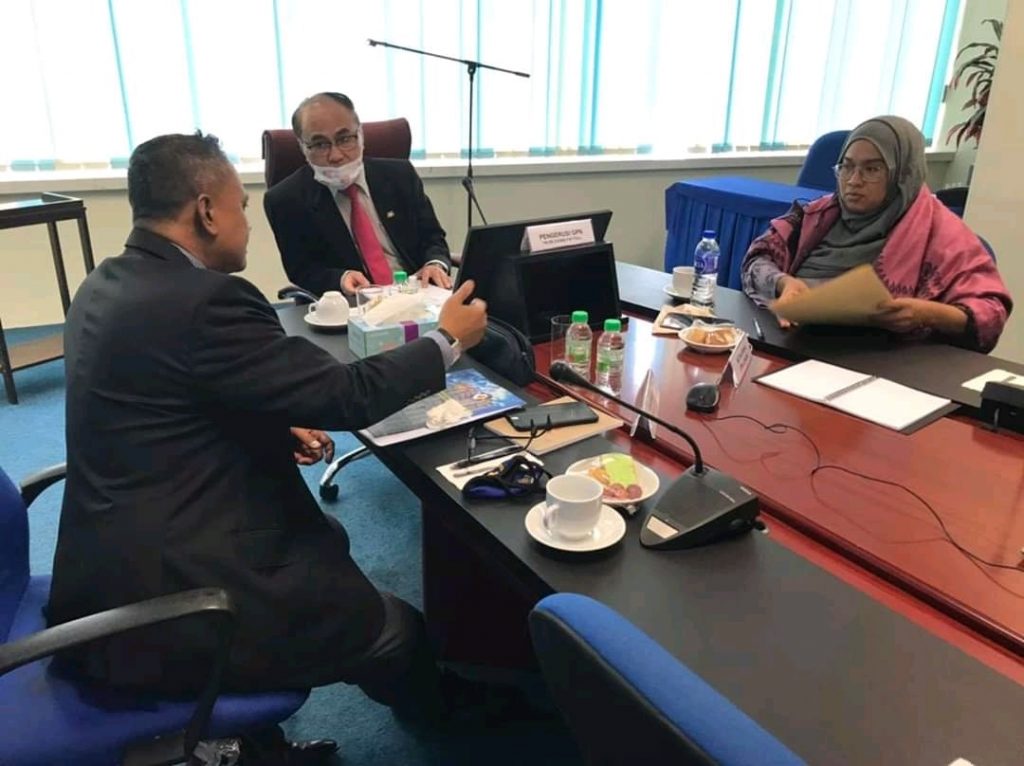
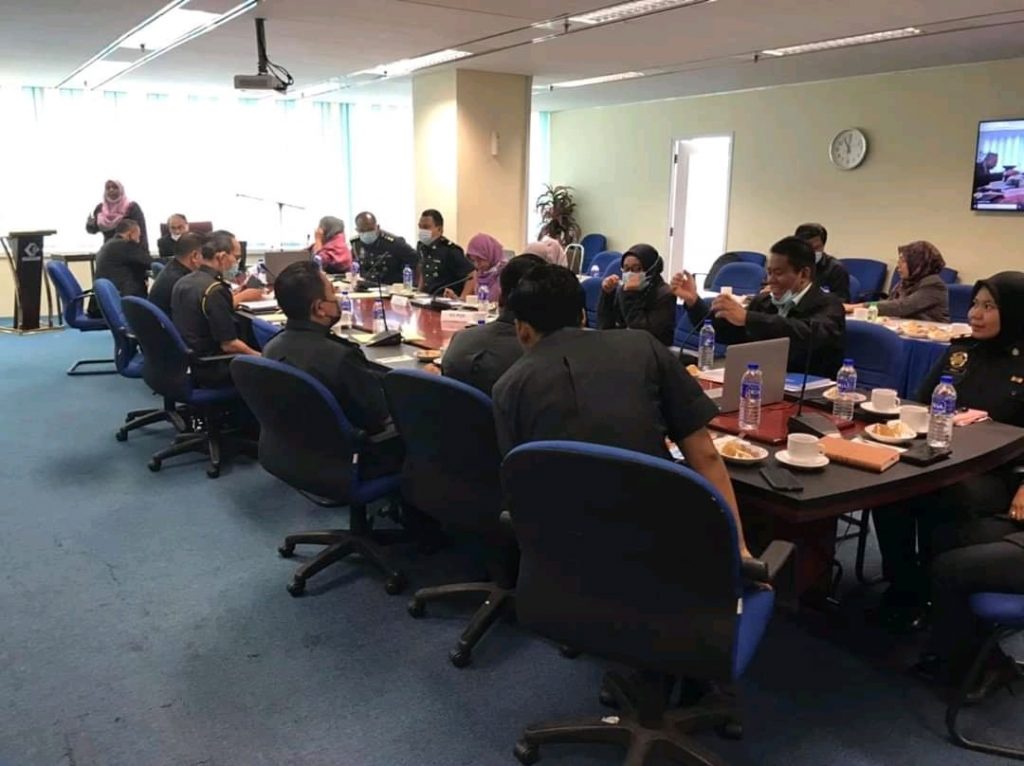
MTPN Johor participated in the Johor State Consumer Movement Meeting (MGPN) 2020

December 10, 2020 MTPN Johor participated in the Johor State Consumer Movement Meeting (MGPN) 2020 which was conducted through Zoom Meeting yesterday.
The meeting was chaired by YB Dr Chong Fatt Ful Exco of Unity, Trade and Consumer Affairs. Various matters are discussed between price control methods during festive seasons.
With the cooperation of Ngo2 and Kpdnhep and the relevant government agencies can further strengthen all the planning that have been developed and will be implemented.
Now, the onus is on us to strictly adhere to SOPs
We need to look for each other in exchange for our freedom of movement.’
Govt to end CMCO in most areas, cites RM300m per day loss to economy
Interstate, inter-district travel ban lifted among new SOPs
CMCO 3.0 (Dec 9): New guidelines, what you can and can’t do
Pokokelapa: The CMCO (conditional movement control order) has failed to control the infection, which has resulted in community spread. How that happened is the people’s fault.
Now the floodgates are open with the easing of travel, dining and socialising. After a long stay at home, the exodus will start, especially with schools, institutions and universities closed.
Many who have accumulated leave since early this year will take time off to move around. I pity the frontliners, whose leaves are frozen and morale is low.
When the numbers were lower, we had a full clampdown with higher SOP (standard operating procedure) compliance and it worked. Learning from the earlier scenario seems not the way.
The Covid-19 infection will continue at a rate which will be alarming, and the sad part is that we all have to live with it. The battle is still on and casualties will be unpredictable.
Moreover, the vaccine will not be here for a few months and its success cannot be guaranteed, at least in the near term.
Pegasus: Had they quarantined the Sabah returnees, we wouldn’t have this CMCO or EMCO (enhanced MCO) and we wouldn’t be losing RM300 million a day.
It’s the incompetent government that is to be blamed.
Iphonezours: If the issue is the economy then the CMCO for Kuala Lumpur and Selangor should be lifted with EMCO instituted in targeted areas.
KL and Selangor are key economic hubs in Malaysia and this CMCO extension is in no way helping our economy.
Mugi: Indeed, substantial economic activities are in KL and Selangor. The bulk of RM300 million daily loss is mainly in these areas. What have you achieved, Senior Minister (Security) Ismail Sabri Yaakob by continuing CMCO there?
You are fully aware where the clusters are and the CMCO should be limited to those areas. Please have some common sense and intelligence. Don’t burn the house down just because of a mosquito.
Velarooks: @Mugi, as a KL resident, it honestly feels like they have given up. Some malls here are quite packed.
I’ve seen whole families coming out of cars in malls and there are new cases reported all over the place. I don’t know how can you target lockdown/clusters at this point.
Newday: For a big city spread over a large area with clusters confined to specific areas, why is all of KL still under CMCO?
This blanket over the entire city of 5 million people is too much. It makes me wonder whether Covid-19 outbreak information is being disseminated to the public.
I am aware of a surau in my area that has been infected, via reliable local grapevine. There has been no mention of this at all in any press release or news conference.
Velarooks: Yes, I am in KL too. I don’t see official information about these “other screening data” numbers. KL for the last few days has seen a high 80-120s in other screening cases outside known clusters.
I get building management notices shared on social media about nearby cases. It looks like Bukit Bintang had a fair number of positive cases recently but no media mention (two condos, Imbi Plaza, a bank, etc). This is my worry overall.
You want to lift the CMCO and allow more travel, then make sure the SOPs are followed.
I’ve barely seen any enforcement measures. The hawker area around my office in Pudu has a lot of non-mask-wearing staff. I don’t see any checks during lunch hours.
Jetson: Let us be practical. We have been downgraded by Fitch Ratings.
Within a few more weeks, billions of ringgit more will be lost. The business people will still be affected despite facing such rules and regulations.
It is time to open up the nation and remind the people to follow the SOPs strictly, especially the wearing of masks in public places and the washing of hands constantly.
Kamrul: MCO, CMCO, RMCO, EMCO, COCONUT, CUCUMBER. Five persons to a table? Two, then three, then no limit to persons to a car? Only two from the same house can leave the house?
All this formulated by the same man who started Low Yat 2 which failed miserably.
Anonymous 540: After listening to Ismail’s briefing, the conclusion is that travelling interstate and interdistrict is now allowed, except for those under EMCO.
The onus now is on individual and family responsibility in adhering to the Covid-19 SOPs.
You are encouraged, but it is not mandatory, to take a swab test before travelling to protect yourself and others.
No more police roadblocks or police permits needed nationwide except those EMCO areas which are deemed high risk.
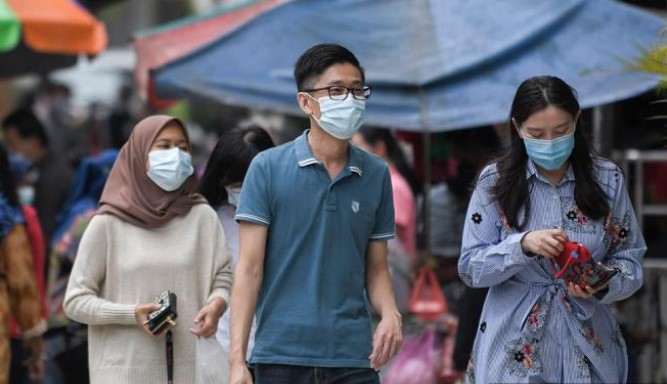
To balance health and economic concerns, the onus is now on us to strictly adhere to the SOPs. In other words, be reckless at your own risk.
Avoiding spontaneous EMCO enforcement will depend on us looking out for each other in exchange for our freedom of movement and the normalisation of the economy.
The above is a selection of comments posted by Malaysiakini subscribers. Only paying subscribers can post comments. In the past one year, Malaysiakinians have posted over 100,000 comments. Join the Malaysiakini community and help set the news agenda. Subscribe now.
These comments are compiled to reflect the views of Malaysiakini subscribers on matters of public interest. Malaysiakini does not intend to represent these views as fact.
Source : From https://www.malaysiakini.com/news/554596
 English
 简体中文
简体中文 Bahasa Indonesia
 Bahasa Melayu