
UPDATED 6.47PM | List of locations affected by Covid-19 (Feb 5)
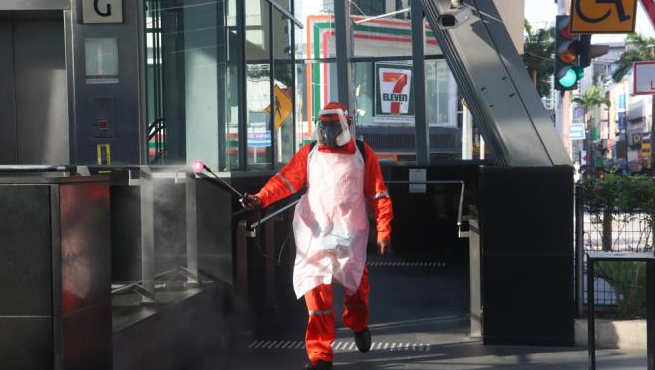
GOVERNMENT BUILDINGS
– Segamat district police headquarters (IPD), Johor
It was reported that two detainees at the Segamat IPD have tested positive for Covid-19.
Since then, 36 detainees and police officers who were identified as close contacts have been isolated.
– Matu and Daro local council offices, Sarawak
The Matu and Daro local council offices will be closed from Jan 25 until further notice after one of its staff tested positive for Covid-19, according to a notice on Facebook.
This location is believed to be linked to the Jalan Pengiran cluster as the local council headquarters are on Jalan Pengiran.
The Health Ministry had also described the cluster as being located at a public administration office while the Sarawak government had identified it as a district administration office.
BUSINESSES
– Various Public Bank locations
Public Bank announced that there have been Covid-19 cases detected among its staff based at Menara Public Bank (Level 8 and 20), Setapak HP Centre, Overseas Union Garden branch in Kuala Lumpur, Tampoi branch in Johor and the Kuala Dungun branch in Terengganu.
Deep sanitisation has been carried out at all affected branches. Close contacts have been placed under home quarantine.
The Kuala Dungun branch will also be closed temporarily from Jan 4.
– Pontian fish wholesale market, Johor
It was reported that Covid-19 cases have been detected at the Pontian fish wholesale market.
As such, the Health Ministry has ordered the market to be closed until Feb 14.
The market has since been disinfected.
– Toppen Shopping Centre, Johor Bahru, Johor
The management said on Facebook on Feb 4 that employees of their outsourced security company were confirmed positive for Covid-19 during a routine RTK-Antigen test.
The persons under investigation are waiting to be officially tested with the RT-PCR test.
Close contacts are being identified and common areas in the mall will be sanitised and disinfected.
OFFICES
– PichaEats, Jalan Ipoh, Kuala Lumpur
The management announced that a staff member based in the office had tested positive for Covid-19 on Feb 4.
The office has since been sanitised. Employees who have been in close contact with the patient all tested negative for Covid-19.
The management also reassured that all meals are produced and delivered directly from their chefs’ kitchens following strict guidelines, and remain unaffected by the case.
Only the Ready-to-Heat meals, which are packed in the office, will be affected, PichaEats said in a posting on Instagram.
Source : Malaysiakini
Covid-19 (Feb 5) – 3,391 new cases, 19 deaths
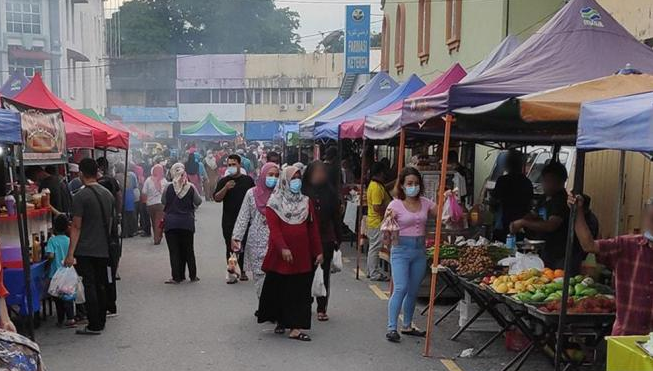
The Health Ministry today reported 3,392 new cases and 19 deaths.
- Active cases: 48,751
- Patients in ICUs: 310
- Intubated: 134
The Klang Valley region continues to report the highest number of new cases in the country with new cases mostly attributed to close contacts of Covid-19 positive patients or detected through “other screenings”.
In Selangor, one in six new cases were detected among those with symptoms but not linked to known clusters or close contacts.
There are seven regions where new cases are still trending upwards since the start of the second movement control order on Jan 13. They are Selangor, Kuala Lumpur, Johor, Sarawak, Perak, Malacca and Terengganu.
For a detailed list of new cases according to state, please scroll to the bottom half of this article.
Deaths
There were 19 new deaths and the national death toll stands at 854. Kuala Lumpur reported seven deaths, followed by Sabah (5), Selangor (3), Sarawak (3) and Perak (1).
The average age of the victims was 68. There were two victims who were foreigners. Details of the victims are on Malaysiakini‘s Covid-19 tracker page.https://e.infogram.com/c8a28e8e-d511-48c1-bc1b-3eec0f7c699a?parent_url=https%3A%2F%2Fwww.malaysiakini.com%2Fnews%2F561864&src=embed#async_embed
Clusters
The Health Ministry today classified 15 new clusters which included clusters involving six factories and two supermarkets.
Pahang continues to report clusters that are spread in-community. Kuala Lumpur had one cluster in a child care centre – Jalan Jubilee.
Details of the clusters are as follows:
Jalan Mokhtar cluster
District(s): Klang, Selangor
Locality/Source: Supermarket in Jalan Raja Mokhtar
Cluster category: Workplace
First case: Feb 2, targeted screening
Total infected: 26 out of 46 screened
Jalan Enam Belas cluster
District(s): Petaling, Selangor
Locality/Source: Supermarket in Seksyen 16, Subang Jaya
Cluster category: Workplace
First case: Jan 31, targeted screening
Total infected: A out of B screened
Bandar Teknologi cluster
District(s): Hulu Langat, Selangor
Locality/Source: Factory in Bandar Teknologi Kajang
Cluster category: Workplace
First case: Feb 4, targeted screening
Total infected: 30 out of 61 screened
Persiaran Jaya cluster
District(s): Hulu Langat, Selangor
Locality/Source: Factory in Persiaran Jaya
Cluster category: Workplace
First case: Jan 4, targeted screening
Total infected: 17 out of 57 screened
Jalan Lima cluster
District(s): Sepang and Hulu Langat, Selangor
Locality/Source: A company in Jalan KLIA S5
Cluster category: Workplace
First case: Feb 4, targeted screening
Total infected: 24 out of 434 screened
Jalan Rumbia Dua cluster
District(s): Johor Bahru, Johor
Locality/Source: Factory in Jalan Rumbia, Kawasan Perindustrian Tanjung Langsat, Pasir Gudang
Cluster category: Workplace
First case: Feb 5, targeted screening
Total infected: 133 out of 183 screened
Sri Sengkang cluster
District(s): Kulai, Johor
Locality/Source: Factory in Kawasan Perusahaan Sri Sengkang
Cluster category: Workplace
First case: Jan 13, targeted screening
Total infected: 126 out of 694 screened
Jun Heng cluster
District(s): Bintulu, Sarawak
Locality/Source: Two companies in Bintulu
Cluster category: Workplace
First case: Jan 30, index case with symptoms
Total infected: 19 out of 102 screened
Tapak Bina Jalan Valdor cluster
District(s): Seberang Perai Selatan, Pulau Pinang
Locality/Source: Construction site in Jalan Perusahaan Valdor, Kawasan Perindustrian Valdor, Simpang Ampat
Cluster category: Workplace
First case: Jan 20, targeted screening
Total infected: 53 out of 806 screened
Industri TTJ cluster
District(s): Seremban, Tampin, Port Dickson and Rembau, Negeri Sembilan
Locality/Source: Factory in Kawasan Perindustrian Tuanku Jaafar
Cluster category: Workplace
First case: Jan 12, index case with symptoms
Total infected: 61 out of 416 screened
Santong Paka cluster
District(s): Dungun and Kemaman, Terengganu
Locality/Source: Company in Jalan Santong, Paka
Cluster category: Workplace
First case: Feb 4, index case with symptoms
Total infected: 26 out of 127 screened
Industri Bentong Sebelas cluster
District(s): Bentong, Pahang
Locality/Source: Factory in Kawasan Perindustrian Bentong.
Cluster category: Workplace
First case: Jan 29, index case with symptoms
Total infected: 7 out of 43 screened
Hikmah Muadzam cluster
District(s): Rompin, Pahang
Locality/Source: No details, Muadzam Shah
Cluster category: Community
First case: Jan 24, index case with symptoms
Total infected: 7 out of 30 screened
Taman Murni cluster
District(s): Kuantan, Pahang
Locality/Source: Taman Murni
Cluster category: Community
First case: Jan 23, index case with symptoms
Total infected: A out of B screened
Jalan Jubilee cluster
District(s): Cheras, Kuala Lumpur
Locality/Source: Care centre in Jalan Jubilee
Cluster category: At-risk groups
First case: Feb 5, targeted screening
Total infected: 25 out of 39 screened
New cases according to regions, in brief:
Selangor (1,228)
Existing clusters: 119
New cluster(s): 46 (Jalan Mokhtar, Bandar Teknologi, Jalan Enam Belas, Persiaran Jaya and Jalan Lima)
Close contacts: 651
Imported: 2
Other screenings: 410
Johor (598)
Existing clusters: 94
New cluster(s): 245 (Jalan Rumbia Dua dan Sri Sengkang)
Close contacts: 115
Other screenings: 144
Kuala Lumpur (395)
Existing clusters: 67
New cluster(s): 25 (Jalan Jubilee)
Close contacts: 142
Imported: 1
Other screenings: 160
Sabah (196)
Existing clusters: 6
Close contacts: 132
Other screenings: 58
Sarawak (178)
Existing clusters: 69
New cluster(s): 12 (Jun Heng)
Close contacts: 34
Other screenings: 63
Penang (149)
Existing clusters: 42
New cluster(s): 44 (Tapak Bina Jalan Valdor)
Close contacts: 36
Other screenings: 27
Malacca (141)
Existing clusters: 99
Close contacts: 27
Other screenings: 15
Negeri Sembilan (116)
Existing clusters: 6
New cluster(s): 39 (Industri TTJ)
Close contacts: 31
Other screenings: 40
Perak (92)
Existing clusters: 38
Close contacts: 36
Other screenings: 18
Kedah (91)
Existing clusters: 23
Close contacts: 23
Other screenings: 45
Terengganu (84)
Existing clusters: 25
New clusters: 4 (Santong Paka)
Close contacts: 32
Other screenings: 23
Kelantan (58)
Close contacts: 42
Other screenings: 16
Pahang (51)
Existing clusters: 28
New clusters: 8 (Taman Murni, Hikmah Muadzam and Industri Bentong Sebelas;)
Close contacts: 10
Other screenings: 5
Labuan (7)
Close contacts: 5
Imported: 1
Other screenings: 1
Putrajaya (6)
Existing clusters: 1
Close contacts: 3
Other screenings: 2
Perlis (1)
Other screenings: 1
Source :Malaysiakini
Reunion dinner is different from visiting pasar malam
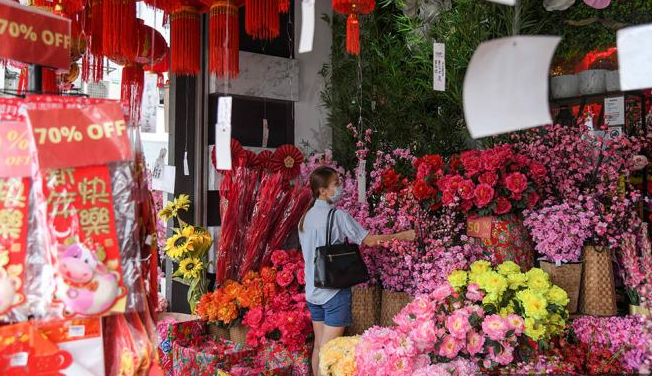
I think this piece that I am writing will probably get brickbats from many people, especially those about to celebrate the Chinese New Year. This is about prohibiting Chinese from holding their traditional reunion dinners of family members not living in the same household.
The common criticism of this ruling is, if pasar malam are allowed, why can’t the Chinese reunion dinners be held?
For me, it is simple. We have spent much time and effort to get the pandemic under control. Hence, an additional sacrifice of forgoing one reunion dinner is probably justified.
Why waste everything we have worked for just for the sake of wanting to celebrate the tradition?
We must bear in mind that those family members not living in the same household but eating together is very different from one going to pasar malam.
First, we can choose to go or not to go to pasar malam. Second, if we go, we can wear masks and keep our distance. Third, we can buy the essentials we need and leave the place quickly.
Having a reunion dinner, however, is entirely different. Imagine 20 to 30 members of an extended family not from the same household gathering together – talking, eating and drinking. The masks are off, I am sure. I think the likelihood of infection is definitely more probable than going to pasar malam.
Personally, I feel that anything non-essential should remain closed and this includes hair salons, barbershops and car wash outlets. It does not matter if there are no new clusters emerging from these locations. It is about close proximity and likelihood of infection.
I know it is a difficult time for many of us. Many can’t wait to get back to normalcy. But obviously, we can’t do things at half measure. Prematurely relaxing the regulations will only get us more extensions of MCO in the future.
Forgoing one reunion dinner will not cause us irreparable harm. Continuous extension of MCO will.
In the present circumstances, anything announced and enforced by the authorities will be looked at with contempt and dismay. This is natural, especially when we are not too happy with the present government, to begin with.
Be that as it may, let’s be vigilant and accommodative to the current situation. It is good to stand up for our rights but blind defiance will not get us anywhere but more hardship and trouble for ourselves.
Source : Malaysiakini
Prospects and risks for Msia’s economy in 2021
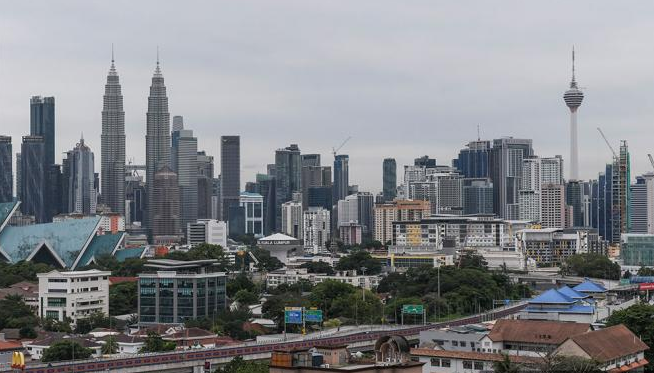
As a resurgence of Covid-19 cases and the return of strict movement restrictions in most states continue to dampen economic activity, the outlook for Malaysia’s economic growth is beginning to look increasingly grim.
A confluence of factors, both external and domestic, threaten to derail the engines of economic recovery and dampen growth prospects in the medium term. At the same time, if one looks far enough, there may be some cause for measured optimism on the horizon.
First, the Malaysian economy almost certainly already experienced the deepest recession in 2020 since the Asian Financial Crisis more than two decades ago. Since the onset of the coronavirus pandemic and the first movement control restrictions (MCO1), Malaysia has recorded the sharpest contraction in GDP in 2Q2020 amongst the major Asean economies (-17.1 percent), though this rate of decline has attenuated in 3Q2020.
Next week, the release of 4Q2020 GDP is anticipated to show that the Malaysian economy has contracted by upwards of -5.5 percent for the full year of 2020. Similarly, measures of labour market conditions suggest that recovery is still a ways away—with the headline unemployment rate lingering at decade highs while marginalised workers remain increasingly pushed to the margins.
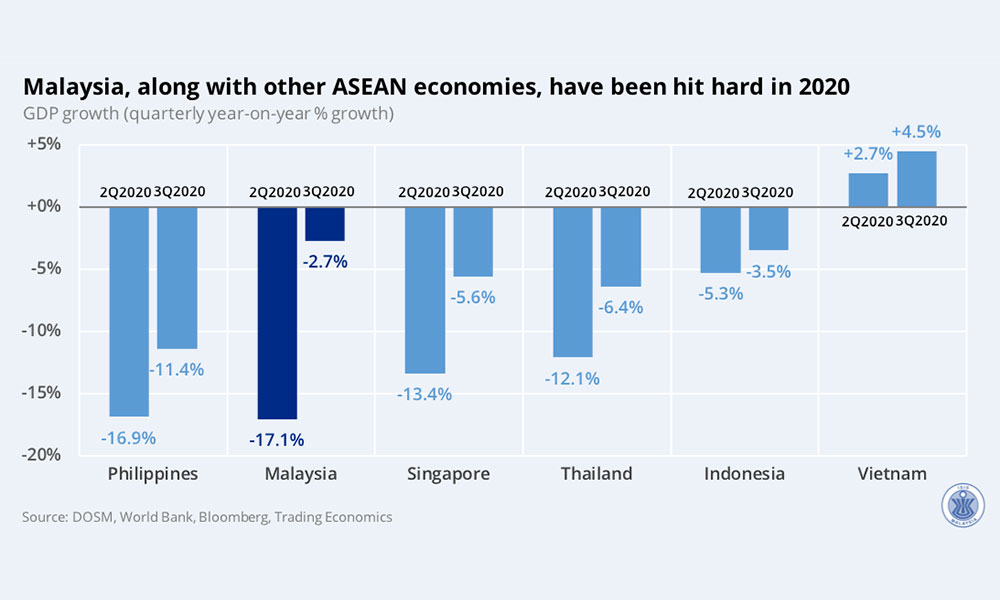
In an earlier publication, we observed that Malaysia’s economic recovery to pre-Covid levels will be sluggish — in sharp contrast with the swift recovery from the 2009 global financial crisis a decade ago. Back then, an upsurge in oil and electronics exports, along with rapid growth in foreign investment, allowed GDP to recover to pre-crisis levels in less than a year.
Today, tepid global energy prices and a large decline in foreign investment flows into Malaysia (-68 percent annual decline in 2020) make the prospects of a similar V-shaped recovery much more dubious. This is made worse by the recent return of stricter movement controls (CMCO2), which will continue to weigh on consumption and investment. Already, Google mobility data indicates that visits to locations — including retail and recreation and transit — have declined since the onset of MCO2/CMCO2 by almost as much as the first MCO1 in March 2020.
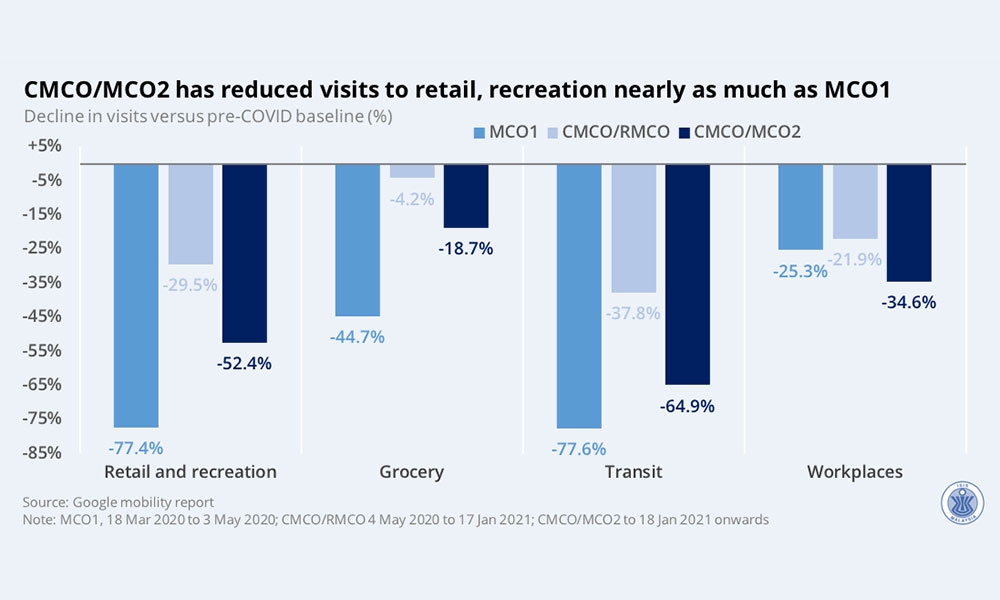
Secondly, forecasts of a brisk economic recovery in 2021 are underscored by a high degree of uncertainty. Indeed, many forecasts hinge on the assumption that the national vaccine plan will proceed smoothly. Yet, there are reasons to believe that at least a few snags are expected.
For one, the logistical and practical challenges are overwhelming. Healthcare experts suggest that nearly 80 percent of the population would have to be vaccinated before herd immunity can be achieved, particularly as new Covid-19 variants prove more infectious. As my colleague Harris Zainul notes, this, along with the fact that most vaccines are not available for people below 18 years of age, may mean that roughly every single Malaysian of age needs to receive the vaccine. As such, even a small segment of the population resisting or rejecting the vaccine could lead to disastrous implications for herd immunity.
Already, an Edge Markets straw poll hints that only about five out of 10 Malaysian respondents would choose to “immediately” agree to be vaccinated should a vaccine become available. There are other hurdles, too. A national shortage of healthcare professionals (exacerbated by recent Covid-19 outbreaks in hospitals), along with the challenge of infrastructure adequacy in remote areas remain. Put together, these factors provide a convincing case that the path to herd immunity may be far more perilous than many realise.
Glimmers of hope
Yet, gloom and doom notwithstanding, there are some faint glimmers of hope.
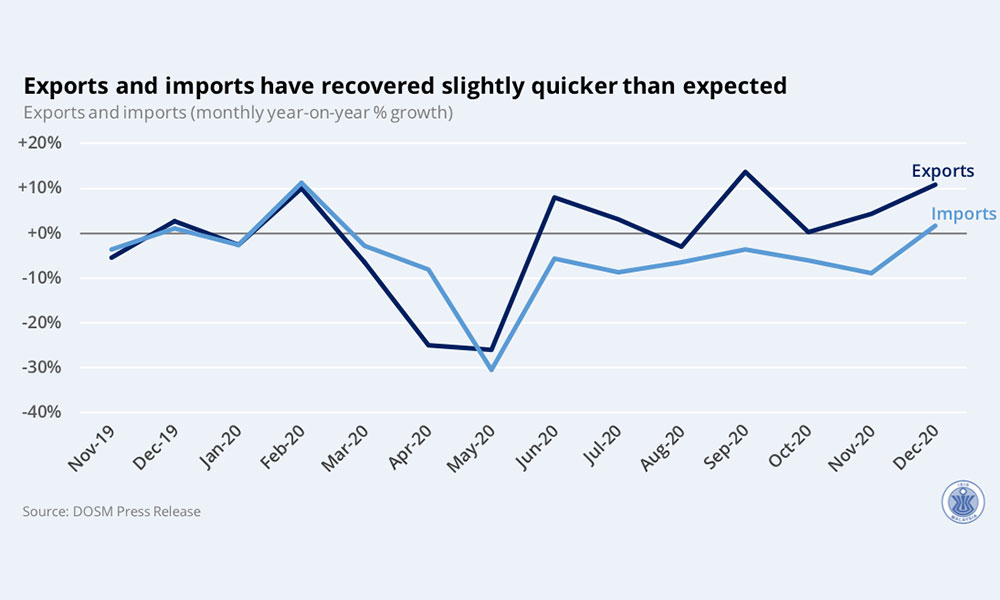
For one, Malaysia’s exports have recovered somewhat quicker-than-expected. Data for December 2020 show that exports grew by 10.8 percent year-on-year, allowing Malaysia’s export values to continue to exceed pre-crisis levels. This expansion in exports was driven by higher exports to China, Singapore and the United States — indicating that global demand may be healthier than expected, particularly as China’s economy continues to pick up pace.
Looking ahead, if the world’s major economies continue to recover and grow and vaccine plans in their own countries progress, an expansion in demand may allow Malaysian exporters a brief respite.
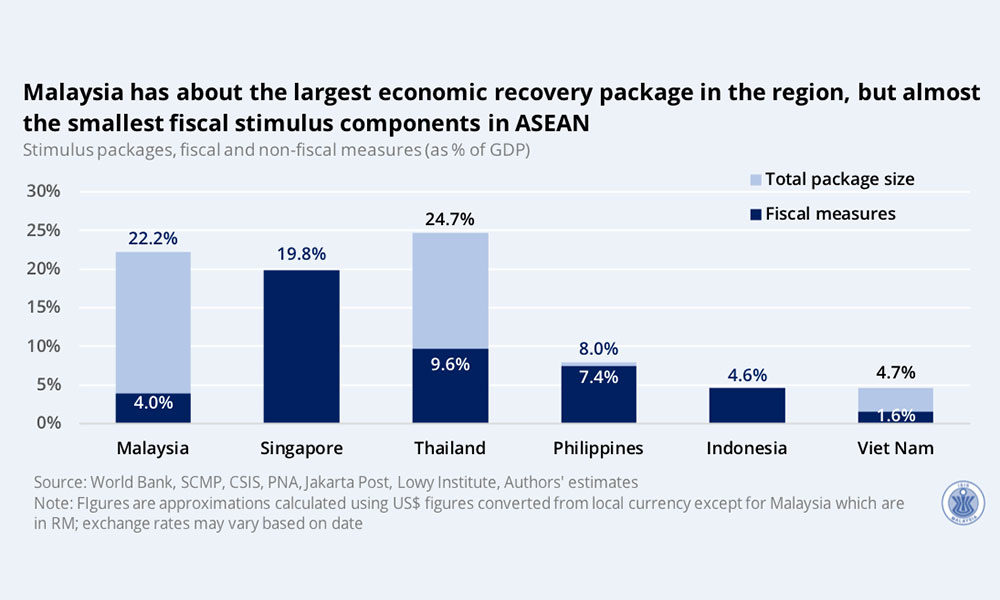
Besides, as case numbers continue to balloon and stricter measures are implemented, there is the hope that Malaysia’s fiscal policymakers will be cognizant of the need for further fiscal stimulus. As it stands, Malaysia’s fiscal-related measures (including Prihatin, Penjana and Permai) are amongst the lowest in the major Asean economies despite the colossal total package size. Here, targeted expansions of Malaysia’s existing social safety net programmes — particularly unemployment insurance — and a more decisive expansion of infrastructure spending would do a world of good.
A backdrop of still-low borrowing costs and still-low inflation and mounting evidence of rising inequalities between marginalised workers and households suggests that costs of inaction could rapidly outstrip the fiscal costs of additional spending.
Lastly, recent data along with a handful of new studies have suggested that there may be a quicker way for countries facing vaccine shortages to achieve some level of protection against the spread of the infectious coronavirus: spreading the two doses of a single vaccine (the prime and booster) across two different recipients — potentially allowing countries to more quickly offer a smaller amount of protection across a larger subset of the population.
If further research finds this strategy to be optimal, and if implemented well, this could carry outsize benefits to the Malaysian economy and Malaysians as a whole .
On the whole, the uncertainty surrounding Malaysia’s economy appears deeply asymmetric: downside risks loom on the horizon relative to the more modest collection of upside risks. In any case, we should also not lose sight of the myriad hazards that lie in wait beyond the pursuit of economic growth.
After all, even when the Malaysian economy manages to regain its footing and rebound past pre-crisis levels, the scars of the pandemic will linger for years to come.
Source : Malaysiakini
MCO 2.0 not working, new strategy is needed
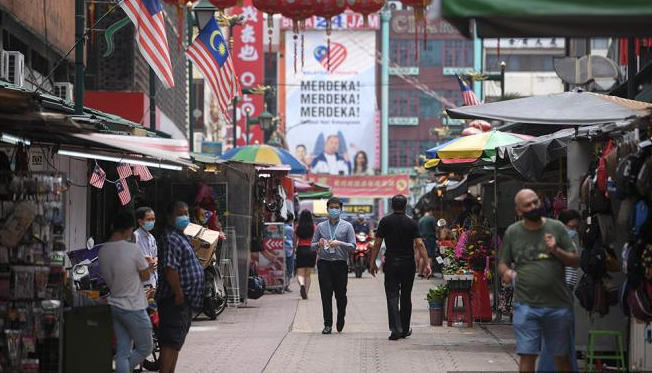
‘We cannot keep doing the same thing and expect a different result.’
MCO 2.0 extended with stricter measures
Vote4changejohor: The movement control order (MCO) from Jan 13 to Feb 4 is obviously not working. It is a failure and hence, an extension of the MCO is needed.
Towards the end of the third week of the lockdown, the number of cases rises to more than 5,000 for three days with a new record of 5,728 registered on Jan 31.
The obvious question and concern on many citizens’ mind are: If the lockdown in the past three weeks has failed to control the pandemic and not delivering the expected result, how is the lockdown in the next two weeks going to help?
The Perikatan Nasional (PN) government must go to the ground and find out why MCO 2.0 has failed.
Is there a need for a paradigm shift or new approach in how further/future MCO should be implemented? Is there a need for better coordination among the various ministries involved in fighting the pandemic?
The escalating number of new infections over the last one week despite the MCO showed obvious defects in the current method used to reduce the pandemic.
The authority should be more receptive/responsive to new ideas/input and contribution from the experts and the community in this war against the pandemic.
Johanian2: I agree. The government must first understand that in order to get good compliance, the rakyat have to believe that the leaders are making the right decisions.
Leaders must gain respect by being always in the know, not being vague in their responses, and be crystal clear in answering questions. All of which they are failing at the moment.
Leaders should not keep blaming the rakyat of being uncooperative. Look at your own behaviour first.
NC: I’m sorry but extending the MCO is not a wholistic approach. The best that the senior minister (Ismail Sabri Yaakob) can think is limiting supermarket patrons?
My suggestions:
1. A blanket shutdown of all construction sites and factories in the Klang Valley for two weeks.
2. A blanket shutdown of all malls in the Klang Valley because tenants will face penalties if they close down on their own.
3. Essential means real essential services – fabric shops and jewellery shops are not essential services.
4. If 30 percent workforce is allowed, then stick to it, but unfortunately, many premises are operating at 100 percent capacity.
5. No more excuses for politicians – if they flout the standard operating procedure (SOP), triple penalty for them plus immediate termination from government services – strip them off their ministerial or GLC (government-linked company) post.
6. Place a target. For example, if we failed to achieve certain set KPI, then impose an automatic MCO extension with stricter SOP or full lockdown.
Fair Comments: Growing up, I have always been told that Malaysia is one of the luckiest and wealthiest countries, blessed with plenty of natural resources and its wealth is shared among a relatively small population of 32 million.
But since the advent of the current pandemic, I am shocked to find out that Malaysia is not rich after all.
Wuhan, China, was in a complete lockdown for more than two months and the virus practically disappeared. So, there is no doubt that this is a proven and effective method to eliminate the virus.
However, Malaysia cannot even afford a total lockdown for two weeks, much less two months. The MCO 2.0 is hardly effective.
What has happened to our wealth? Norway discovered oil in the North Sea at about the same time as Petronas found oil.
From 1990, they regularly diverted a small part of their oil revenue to set up the Norwegian Sovereign Oil Fund which today is worth more than US$1.2 trillion – that’s about US$200,000 per Norwegian – and in 2020 the fund earned the equivalent of more than US$20,000 per Norwegian.
How I wish Petronas is as rich as them. Malaysia will then have no problem at all in completely locking down the country for two months to get rid of Covid-19. How sad to realise that this is only my wishful thinking.
Doc: In the last few days, many senior ministers and even the Health director-general indicated that continuing the MCO will have a major detrimental effect on the rakyat from the economic point of view.
In spite of that warning, the prime minister still wants to latch on to his beloved MCO. Till which point does our PM want to go on with extending the MCO? Till there is a sustained single-digit daily infection rate, I assume.
But once the MCO is lifted, people will go about trying to earn some income, thus, increasing the Covid-19 infection numbers again. And then what? Mr PM will impose another round of never-ending lockdowns.
Oct: This shows that the emergency is of no help and beneficial to the rakyat so far. Please terminate the emergency as the only purpose is to prevent Parliament from sitting. It has no correlation to the pandemic.
The emphasis is always that the rakyat are at fault and don’t follow SOP. In fact, the reality is the YBs and the VVIPs are the culprits that go around ignoring SOP. No action is being taken against them.
If the VVIPs and the YBs cannot follow SOP, why should the rakyat make to suffer? There should be no two sets of SOP.
Pegasus: They keep doing the same thing and expect a different result. If they want to extend the MCO then make sure more stringent and effective measures are in place.
Keep extending MCO but still using the same useless and weak measures, for what? What is the point of extending it then? Please come up with a better plan.
Anonymous1273649237: The government is incompetent. It cannot help us. It’s now up to us, we have to ‘kita jaga kita’.
Observe the SOP. Stay safe, don’t be infected. Make sure that we survive, and when the time comes, kick this government out.
Source :Malaysiakini
Biden ends US support for Yemen war, freezes Germany troop redeployment
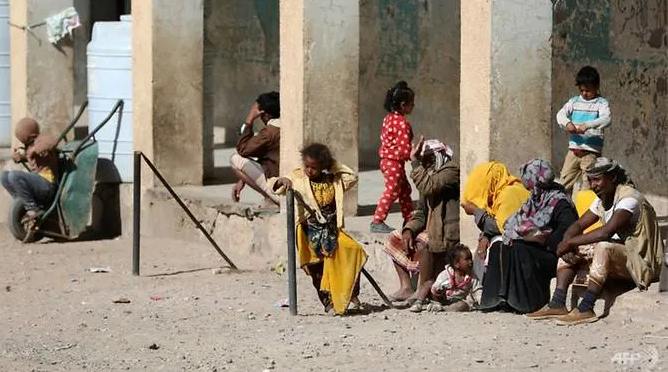
WASHINGTON: President Joe Biden on Thursday (Feb 4) ended US support for Saudi Arabia’s devastating war in Yemen and dramatically increased the welcome to refugees, ushering in a major reset in American foreign policy.
In his first major speech on foreign affairs as president, Biden also froze former president Donald Trump’s plans to redeploy troops from Germany and vowed a tough approach against what he described as a rising authoritarian threat from China and Russia.
Two weeks into their term, Biden and Vice President Kamala Harris travelled together to the State Department in a symbol of a renewed focus on diplomacy after Trump’s tumultuous four years.
“America is back. Diplomacy is back,” Biden told a socially distanced auditorium of diplomats.
In a speech shortly afterward in the ornate Benjamin Franklin room, Biden said the United States would end all support including connected arms sales for ally Saudi Arabia’s war in Yemen, which he said “has created a humanitarian and strategic catastrophe.”
He appointed a US special envoy for Yemen, veteran diplomat Timothy Lenderking, who Biden said would support UN efforts to reach a ceasefire and revive peace talks between the government and Huthi rebels who control much of the country including the capital Sanaa.
The United States will work “to ensure that humanitarian aid is reaching the Yemeni people who are suffering unendurable devastation.”
“This war has to end,” Biden said.
Activists have been pushing to end US support for the war in Yemen, where 80 percent of the population is surviving on aid in what the United Nations calls the world’s worst humanitarian crisis.
Trump offered US logistical assistance and sales including of precision-guided bombs, arguing that Saudi Arabia was creating US defence jobs.
Trump also viewed the war as a way to hit back at the Huthis’ ally Iran, a fixation for the last administration which saw the Shiite clerical regime as an arch-enemy.
Biden backs a return of diplomacy and a nuclear accord with Iran but, strikingly, he only indirectly mentioned Tehran in what was billed as a broad-brush speech on his international priorities.
Secretary of State Antony Blinken has said he will quickly revisit Trump’s last-minute designation of the Huthis as a terrorist group – a move that aid groups say effectively criminalises vital humanitarian work.
In Yemen, senior political official Hamid Assem voiced hope that Biden’s plan will mark the end of a six-year war that has left tens of thousands dead.
“The Biden administration saw that the war in Yemen carries a heavy cost and that America’s reputation has been tarnished by the killing of the people of Yemen,” he told AFP.
‘MORAL LEADERSHIP’ ON REFUGEES
In another sharp reversal, Biden said that the United States will welcome up to 125,000 refugees in the first fiscal year of his administration – far above the record-low 15,000 last approved by Trump, who was a vociferous critic of non-Western immigration.
“The United States’ moral leadership on refugee issues was a point of bipartisan consensus for so many decades when I first got here,” said Biden, who was elected to the Senate in 1972.
“We shine the light, the lamp, of liberty on oppressed people. And our example pushed other countries to open wide their doors as well.”
Among groups seeking asylum, Biden said his administration would welcome LGBTQ people fleeing persecution over their sexual orientation.
Biden also put on hold plans set in motion by Trump to reduce the US troop presence in Germany, a cornerstone of NATO security since the start of the Cold War.
Trump’s decision was seen as linked to his tense relationship with German Chancellor Angela Merkel – whose welcome to mostly Syrian migrants he belittled.
NO MORE ‘ROLLING OVER’ TO RUSSIA
Biden has pledged to keep up Trump’s hard stance on China – but also to toughen the US stance on Russian President Vladimir Putin, for whom the defeated US president voiced admiration.
“I made it clear to President Putin – in a manner very different from my predecessor – that the days of the United States rolling over in the face of Russia’s aggressive actions, interfering with our elections, cyber attack and poisoning its citizens are over,” Biden said.
“We will not hesitate to raise the cost on Russia and defend our vital interest in our people.”
Moments before the speech, the State Department said that Blinken spoke by telephone with Russian Foreign Minister Sergei Lavrov and, among other issues, raised the purported poisoning of opposition leader Alexei Navalny – who was arrested last month on his return to Moscow and has inspired thousands to take to the streets.
Biden vowed said the United States “must meet this new moment of advancing authoritarianism including the growing ambitions of China to rival the United States and the determination of Russia to damage and disrupt our democracy.” Source: AFP/ec
QAnon-backing Republican renounces conspiracies ahead of reprimand vote
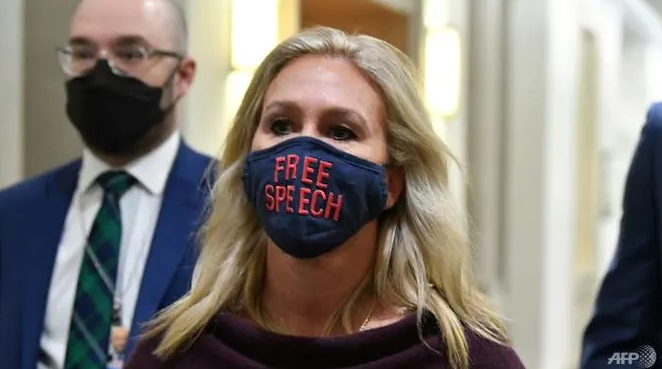
WASHINGTON: A US lawmaker who backed QAnon before entering Congress renounced the conspiracy movement on Thursday (Feb 4) and expressed regret for spreading misinformation, hours before the House was to reprimand her over extremist statements.
“These were words of the past, and these things … do not represent my values,” Republican congresswoman Marjorie Taylor Greene told the House of Representatives in a speech.
“I was allowed to believe things that weren’t true and I would ask questions about them and talk about them,” she added. “And that is absolutely what I regret.”
Greene added that she “walked away” from QAnon before she ran for Congress, and acknowledged that “school shootings are absolutely real” and that “9/11 absolutely happened” – US tragedies that she has cast doubt on in the past.
But while she described herself as “a sinner” before God, she also did not directly apologise in her 10-minute speech.
The posture of contrition came as she faced a disciplinary vote in the Democratic-led House after the chamber’s top Republican Kevin McCarthy baulked at punishing her over her rhetoric.
The furore over Greene has exposed deep party divisions in the wake of Donald Trump’s presidency.
Furious at the Republican leadership’s lack of accountability for one of their own, Democrats scheduled a Thursday afternoon floor vote to boot Greene from the education and budget committees.
The vote will force Republicans to go on record over Greene’s conduct, which includes her harassment of a teen school shooting survivor, trafficking in anti-Semitic and xenophobic tropes, and support of social media posts that endorsed assassinating Democratic lawmakers.
It will be a closely watched moment, as the party attempts the balancing act of accommodating base supporters of the still-influential Trump, and winning back traditional Republicans who have bristled at Greene’s unrestrained politics.
‘RESTORE THIS PARTY’
Republicans huddled in a closed-door session late Wednesday to debate the path forward. Dozens of members reportedly gave Greene a standing ovation when she addressed the group.
“The number one thing that happened in this conference was unity,” McCarthy insisted afterwards to reporters.
He notably made the remarks standing alongside conference chair Liz Cheney, the number three House Republican who faced a fierce backlash from conservatives for supporting Trump’s impeachment.

But she survived a caucus vote Wednesday to remove her from leadership, in what she called a “resounding acknowledgement that we need to go forward together.”
The Cheney vote was done by secret ballot, and congressman Adam Kinzinger said it was “unfortunate” that his fellow Republicans did not “have the courage to defend her” in a recorded vote.
“I think it says there needs to be a wake-up call,” he told MSNBC. “It is weird that there’s such a low bar right now but all we can do is try to restore this party.”
Before running for Congress, Greene “liked” Facebook posts that advocated the execution of Democrats including House Speaker Nancy Pelosi.
In 2018 she asserted that California wildfires were ignited by a space laser controlled by a Jewish family, and she supported QAnon conspiracy theories that a “deep state” cabal operated against Trump when he was president.
“When I started finding misinformation, lies, things that were not true in these QAnon posts, I stopped believing it,” Greene told the House.
Pelosi on Thursday curtly rejected the suggestion that voting to remove Greene from committees would set a bad precedent by emboldening Republicans to target Democrats for similar discipline should they win back the majority.
“If any of our (Democrats) threatened the safety of other members we’d be the first ones to take them off of the committees,” Pelosi said.
Source: AFP
Commentary: Implications of ‘long COVID’ mean faster vaccination programmes needed now
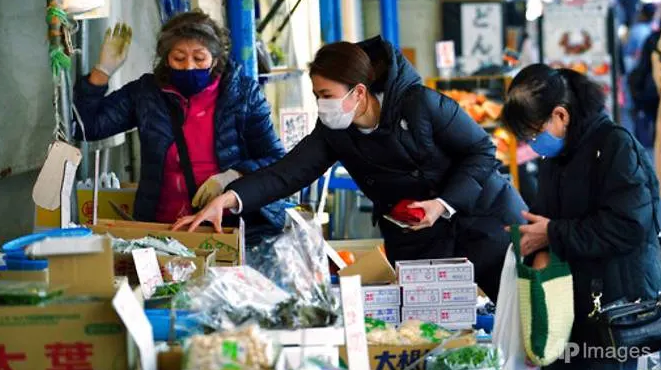
LONDON: When I listen to scientists talk about where we might be a year from now, two main scenarios emerge.
The first one is good: COVID-19 keeps circulating but loses its sting. Most people in rich countries, and the most vulnerable in developing countries, get vaccinated in 2021.
The vaccines prevent disease caused by all strains. COVID-19 weakens. Once it finds potential victims protected either by vaccination or past infection, it becomes at worst a nasty cold.
“The most likely thing is that it will mutate into a more benevolent form. That may solve the problem,” says Anthony Costello, a former director at the World Health Organization.
But there’s another scenario, less likely yet so momentous that we need to think it through: The world gets “long Covid”.
Vaccine-resistant mutations cause years of mass death, repeated lockdowns, economic disaster and political dysfunction. What determines which one comes true?
READ: Commentary: Vaccines have been oversold as the pandemic exit strategy
COVID-19 WEAKENING THE LIKELY OUTCOME BUT LONG COVID PLAUSIBLE
Precedent favours the benign outcome. “Four human coronaviruses … circulate endemically around the globe; they cause only mild symptoms,” write Jennie Lavine of Emory University and others in the journal Science.
These viruses may once have been deadly too, until humans acquired protective immunity through infection in infancy. When people were reinfected as adults, their immune systems knew how to fight back.
COVID-19 may make that same journey much faster, with vaccines hastening herd immunity. Even as mutations emerge, previous vaccines and infections should confer enough immunity to protect us at least from severe disease; some existing vaccines seem to be handling the British and South African mutations.
READ: Commentary: This 71-year-old wants you to get a COVID-19 vaccine once you can. Here’s why
In this benign scenario, poorer countries can wait for vaccines, as their young populations aren’t very vulnerable to COVID-19. (More than half of African people alive today were born this century.)
Yet the malign scenario remains plausible, says Costello. New variants have appeared fast. Philip Krause, chair of a WHO working group on COVID-19 vaccines, told Science: “If it is possible for the virus to evolve into a vaccine-resistant phenotype, this may happen sooner than we like.”
It may be happening now in the Brazilian city of Manaús: Devastated by the first wave of COVID-19, it’s being devastated again, possibly because victims of the first wave aren’t immune to the new strain.

Vaccine-makers could probably rejig them to combat new strains but it might take months. Then countries might struggle to summon millions of recently vaccinated people back for more jabs.
And new vaccines might be only 50 per cent effective, like the flu vaccine. We also don’t know how long vaccines will provide immunity against COVID-19. Will people return for booster shots?
INFECTIOUS MUTATIONS NEED HIGHER IMMUNISATION RATES
Worse, highly infectious mutations have raised a country’s bar for achieving herd immunity. Getting there might now require vaccinating 78 to 95 per cent of people aged over 12, warns the consultancy McKinsey.
Some will refuse vaccination. Meanwhile COVID-19 keeps circulating and mutating, especially in poor countries.
READ: Commentary: Fresh COVID-19 restrictions are turning Chinese New Year into a social landmine for families
By mid-January, 29 low-income countries combined had vaccinated just 55 people, all in Guinea, said the WHO.
Ian Goldin, professor of globalisation and development at Oxford, sees a more likely scenario than global long Covid: a new pandemic.
He notes the growing frequency of pandemics this century, as habitats of animals and humans become compressed, and global travel increases transmission.
READ: Commentary: Our flights of fancy have stopped but were they all that romantic anyway?
A PANDEMIC LASTING YEARS
Imagine a pandemic that lasts years, killing millions. Whole sectors — tourism, restaurants, the arts, aviation, conferencing — could collapse. So might democracies, as isolated people mainline conspiracy theories in their bedrooms.
Bankrupt states would helplessly print money. The jobless young might grow up unequipped to deal with people off-screen.
Many would rebel against lockdowns, fighting the forces of order. The mental-health pandemic would rage beyond control.

A few countries — New Zealand, Australia, Taiwan, Vietnam — would become oases besieged by would-be immigrants from everywhere else. Between deadly waves, people would seek relief in the wildest experiences.
To avoid global long Covid, states need to hurry. The quicker humanity achieves herd immunity, the less time the virus has to mutate beyond control.
We need to spend whatever it takes on wartime-style mobilisation to make, distribute and inject vaccines. Costello calls for a “Home Guard” of contact tracers and vaccine promoters, including retired doctors and nurses.
We also need to get vaccines to poor countries fast. The Covax facility — meant to ensure fair global distribution of vaccines — is fighting hard to reach 27 per cent of people in lower-income countries this year, in the face of underfunding and hogging of supplies by rich countries.
READ: No corners cut in Singapore’s COVID-19 vaccine rollout: Expert panel doctor
Covax’s funding target for 2021 is US$6.8 billion. Compare that to the cost of a week’s lockdown in a rich country.
In total, says Goldin, “Rich countries have found US$12 trillion for themselves, but only $100 billion has been pledged to developing countries.”
“No one is safe until everyone is safe,” Tedros Adhanom Ghebreyesus, the WHO’s directorgeneral, has warned. People in rich countries tend to dismiss such pieties.
We’ve learnt from experience that we can be safe even while pandemics decimate the world’s poor. For once, this may no longer be true.
Source : channelnewsasia
Kremlin confident it can ride out protests, ready to use more force: Report
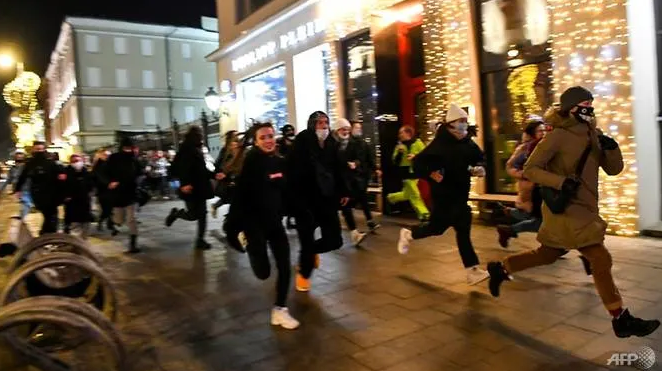
MOSCOW: The Kremlin believes it can easily ride out nationwide protests over the arrest and jailing of opposition politician Alexei Navalny and is ready to authorise the use of more force against demonstrators if necessary, two sources close to it said.
Navalny, President Vladimir Putin’s most prominent domestic critic, was jailed for nearly three years on Tuesday in a case that has prompted three nationwide protests, strident Western condemnation and talk of sanctions on Moscow.
Thousands have been detained, some of Navalny’s key allies are under house arrest or outside Russia, and police have resorted to increasingly harsh tactics, clubbing protesters, and, in some cases, lashing out at journalists.
“This is just a warm-up,” the first source said of the police response.
“The real adventures definitely come later. A scenario where we see an increasingly forceful reaction across the country is completely realistic.”
Kremlin spokesman Dmitry Peskov said on Thursday that the police had used tough but legal counter measures in response to what he called numerous attacks on them by protesters taking part in illegal demonstrations.
He said that the authorities were looking into individual allegations of brutality by police.
Both sources, who are familiar with the thinking in the Kremlin on the subject, pointed to neighbouring Belarus, where President Alexander Lukashenko, with Moscow’s support, has successfully withstood months of protests.
They also cited Venezuela, where President Nicolas Maduro has survived serious unrest. The Kremlin, said the two sources, had concluded it was in a stronger position than either of those two, and had nothing to fear.
“The scenario tested in Belarus proved effective. They (the Kremlin) will definitely not get down on their knees. Lukashenko held out. Maduro is fine. And what we have on our streets is a far cry from what they had,” said the first source.
The second source said the socio-economic situation in Russia, which has deteriorated due to the pandemic, was nowhere nearly as bad that of Venezuela and that Russia was dominated by a conservative majority who did not want change, meaning the opposition would struggle.
“The Kremlin is hardly afraid,” said the second source.
“Belarus has shown that repressive regimes have great capabilities. Venezuela shows this, and the people there are genuinely hungry – there are no salaries, terrible unemployment, and crime. There is none of this in Russia. Therefore, the Kremlin has huge resources.”
Some Western analysts believe the Kremlin’s confidence masks jitters.
“The more the Kremlin projects confidence that it can ride out any protests, the more worried it probably is: just as with the massive deployment of force on the streets, it’s all about trying to convince people that resistance is futile,” said Professor Mark Galeotti, a senior associate fellow at the London-based Royal United Services Institute.
Others, such as Dmitry Oreshkin, a Moscow-based independent political analyst, think the Kremlin is right to be confident. He said the protests posed no threat to it in the absence of a counter-elite or viable political alternative to Putin, who an independent poll showed on Thursday remained far more popular than Navalny.
“The people who sit in the Kremlin are pragmatists and have studied recent history in the region and seen that street protests die out sooner or later,” said Oreshkin.
“And the generals policing these protests understand that nobody will punish them for excessive violence, but that they could be punished for being too soft.”
Putin, 68, has dominated Russian politics since 2000 and could rule until 2036 under recent constitutional changes. He has successfully faced down street protests before, notably in 2012 when he returned to the presidency after a four-year hiatus.
Source: Reuters/ec
Red Cross boosts COVID-19 vaccine hopes for poor as jabs arrive in Iran
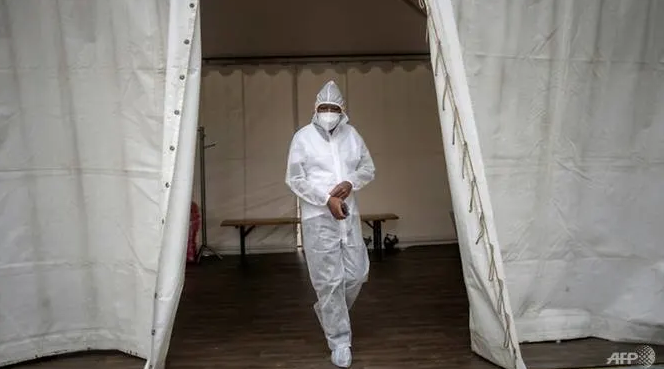
GENEVA: The Red Cross launched a campaign on Thursday (Feb 4) to help get 500 million vaccines to people in poorer countries, as Iran received its first jabs from Russia.
While mass vaccinations are ushering in hope that the pandemic will soon end, the World Health Organization is investigating the origins of the disease in China.
But a member of the team told AFP they would not be chasing fanciful theories, including one that the disease was developed in a Chinese lab.
Pressure is growing on richer countries to help in a global inoculation effort, with Red Cross chief Jagan Chapagain warning that the current unequal rollout “could backfire to deadly and devastating effect”.
“It could prolong or even worsen this terrible pandemic,” he said, promising to pour more than US$100 million into an effort to distribute vaccines and encourage uptake.
So far, more than 115 million doses have been distributed around the world, but the vast majority of those doses have gone to richer nations.

Experts warn that vaccines will only control the virus – which has killed more than two million – if the whole world is covered.
Otherwise, people will have to continue living under lockdowns with travel restrictions, curfews and closed businesses.
The economic devastation was once again underlined on Thursday with oil giant Royal Dutch Shell announcing more than US$21 billion in losses and shipbuilder Hyundai Heavy Industries losing more than US$700 million.
WHO NOT ‘CHASING GHOSTS’
The pace of new infections has slowed around the world in recent weeks and politicians in some countries are beginning to consider reopening.
“We can’t stay in this hard lockdown all winter. We would not tolerate that well as a society,” German Health Minister Jens Spahn told local media.
On the other hand, wealthy monarchies in the Gulf including Dubai and Saudi Arabia are tightening their containment measures despite the inevitable economic damage.
The World Health Organization has warned against relaxing the rules, emergencies director Michael Ryan saying: “The rain has eased but the sun is not out yet.”

As the policy debate rages around how best to handle the current phase of the pandemic, the UN’s health agency is investigating the origins of the virus.
“We’re not going to come up with the ultimate full understanding of the origins of this virus, but it will be a good first step,” WHO team member Peter Ben Embarek told AFP.
The team has visited an infectious disease lab in the city of Wuhan, which was accused by some US officials last year of allowing the virus to leak out.
But Ben Embarek said some of the theories surrounding the lab were more like movie plots, and promised to “follow facts” rather than “chasing ghosts”.
AFRICA’S MISINFORMATION BATTLE
Elsewhere, the focus is on vaccines – both developing them, and getting them into people’s arms.
The WHO-backed Covax initiative has laid out plans to deliver tens of millions of doses to poorer countries – including to North Korea, which has requested two million jabs despite insisting it has not suffered a single infection.
Britain’s Oxford University, which co-developed a vaccine with drug firm AstraZeneca, has announced it will start research into mixing and matching doses to see if it results in greater protection.
And the relative triumph of Russia’s Sputnik vaccine continues, with its first shipment arriving in Iran in the same week its trial data was approved by The Lancet medical journal.

Iran is fighting the Middle East’s deadliest outbreak but has ruled out using jabs developed by Western countries.
Few African countries have launched mass immunisation schemes but there is already growing scepticism about the jab, fuelled by conspiracy theories and distrust of elites.
“People told themselves this isn’t an illness that affects black people,” Mamadou Traore of Doctors Without Borders told AFP. “It is governments’ job to dispute all this misinformation.”
For South African health workers, battling the continent’s worst outbreak, mass vaccinations remain a distant dream.
They face not only an intensifying workload but also a heightened risk of infection and death.
“We are also in the queue of dying,” a health worker told AFP after experiencing the deaths of colleagues. “We are just waiting for our day.”
Source :channelnewsasia
 English
 简体中文
简体中文 Bahasa Indonesia
 Bahasa Melayu