
UPDATED 8.35PM | List of locations affected by Covid-19 (Feb 6)
FACTORIES AND INDUSTRIAL AREAS
- Samsung SDI Sdn Bhd, Senawang, Negeri Sembilan
The factory is closed until Feb 9 due to an outbreak among workers, Seremban police confirmed.
Up to Feb 4, 61 workers were detected to be Covid-19 positive, of which 20 are Malaysian, Health Minister Adham Baba told media after visiting the factory yesterday.
Some 416 workers had been tested up to Feb 4, making the positivity rate about 15 percent, he said.
- A poultry processing farm in Serkam, Jasin
It was reported that 604 workers at a poultry processing farm in Serkam, Jasin tested positive for Covid-19 between Feb 1 and 5.
This is linked to the Industri Serkam cluster.
A total of 443 local workers and 1,428 foreign workers underwent screening, while those who lived and worked nearby were also asked to get tested.
BUSINESSES
- Village Grocer, Bangsar Village, Kuala Lumpur
Two staff members at this outlet tested positive (up to Feb 5), the supermarket said.
One is a cashier who was last at the store on Feb 1, while another works in the storage support section and was at work yesterday morning.
The store will be sanitised while all staff at this outlet will be screened, Village Grocer said.
- Sibu Central Market
There have been 47 Covid-19 cases detected at the Sibu Central Market so far, involving council staff, traders and their family members.
As such, the market and the multi-storey car park adjacent to it will be closed for one week from Feb 8 to 14.
- Various businesses in Sarawak
EDUCATION INSTITUTIONS
- Sekolah Menengah Sultan Idris Shah II, Gerik, Perak
The school is placed under enhanced movement control order (EMCO) from today until Feb 19 following an outbreak in the school.
Up to Feb 2, 24 out of 81 individuals screened were found to be Covid-19 positive, Defence Minister Ismail Sabri Yaakob said.
RESIDENCES
- Kampung Raja, Besut, Terengganu
The Jalan Kubur Darau cluster is traced to social and family interactions in this village, the Health Ministry said.
To date, 15 of the 42 individuals screened have tested positive for Covid-19.
The index case was detected on Jan 28 through symptomatic screening.
- Kampung Sabako 1 and 2, Lundu, Sarawak
These two villages are placed under EMCO from today until Feb 19 due to a spike in Covid-19 cases there, the defence minister said.
Of the 790 individuals screened up to Feb 4, 31 have tested positive, he said.
- Taman Murni, Kuantan, Pahang
A cluster of cases was detected here, according to the Health Ministry.
Up to Feb 5, 13 cases have been detected in this cluster.
The index case is a 32-year-old man who was detected on Jan 23 through symptomatic screening.
- Setapak Ria Condominium, Kuala Lumpur
A resident of Level 1, Block A tested positive for Covid-19, the management said in a notice to residents.
A professional sanitising company will disinfect the main lobby, common areas at Level 1, Block A, the guardhouse and other common areas, it said.
GOVERNMENT BUILDINGS
- Lubok China police station, Ayer Limau, Malacca
A staff member from the Lubok China police station had tested positive for Covid-19.
As such, 13 other staff had to undergo home quarantine until Feb 8.
All duties at this station will be taken over by the nearby police stations in Kuala Sungai Baru and Masjid Tanah until the quarantine is over.
CARE HOMES
- Selangor King George V senior citizen care home, Jalan Jubilee off Jalan Loke Yew, Kuala Lumpur
The Health Ministry yesterday reported a cluster of cases at a care home on Jalan Jubilee.
A total of 25 of 39 cases were detected in this cluster, it said.
The care home is not named but is believed to be the Selangor King George V shelter home located on Jalan Jubilee.
The care home and daycare centre shelters senior citizens in need and relies on public donations to sustain operations.
Source : Malaysiakini
Covid-19 (Feb 6): 3,847 new cases, Klang Valley crosses 105k mark
The Health Ministry has reported 3,847 new cases of Covid-19 as of noon today with 12 deaths.
The Klang Valley region continues to report the highest number of new cases in the country with Selangor reporting in the four digits (1,481) while Kuala Lumpur had 402 new cases.
The total number of cases for the Klang Valley is now at 105,629. It crossed the 100,000 mark yesterday.
Johor had 585 new cases, while Malacca experienced a surge with 329 new cases.
- Active cases: 50,894 (new record)
- Patients in ICUs: 305
- Intubated: 139
Deaths
Of the new deaths today, Johor and Sabah had three deaths each, followed by Kuala Lumpur (2), Malacca (2), Selangor (1), and Kelantan (1).
The youngest fatality was 38 and the oldest was 84. Four of the deceased were foreigners.
Details of the victims are on Malaysiakini’s Covid-19 tracker page.
The national death toll is now at 857.
https://e.infogram.com/c8a28e8e-d511-48c1-bc1b-3eec0f7c699a?parent_url=https%3A%2F%2Fwww.malaysiakini.com%2Fnews%2F561992&src=embed#async_embed
Clusters
The Health Ministry today classified 12 new clusters which included one involving a school and another linked to a supermarket.
Details of the clusters are as follows:
Industri Kampung Baru cluster
District(s): Petaling, Selangor
Locality/Source: Kampung Baru, Sungai Buloh
Cluster category: Workplace (factories)
First case: Feb 6, targeted screening
Total infected: 167 out of 450 screened
Jalan Banting-Klang cluster
District(s): Kuala Langat, Selangor
Locality/Source: Telok Panglima Garang Industrial Estate
Cluster category: Workplace (factory)
First case: Feb 6, targeted screening
Total infected: 13 out of 287 screened
Gudang Salak Tinggi cluster
District(s): Sepang, Selangor
Locality/Source: Bandar Baru Salak Tinggi
Cluster category: Workplace (service sector)
First case: Feb 6, targeted screening
Total infected: 42 out of 455 screened
Jalan Kuala Selangor cluster
District(s): Kuala Selangor, Selangor
Locality/Source: Kampung Tanjong Karang
Cluster category: Workplace (school)
First case: Feb 6, close contact tracing
Total infected: 11 out of 87 screened
Lingkaran Cyber cluster
District(s): Sepang, Selangor
Locality/Source: Lingkaran Cyber Point Timur, Cyberjaya
Cluster category: Workplace (supermarket)
First case: Feb 5, targeted screening
Total infected: 24 out of 75 screened
Jalan Chester cluster
District(s): Tawau, Sabah
Locality/Source: Jalan Chester
Cluster category: Workplace (jeweller)
First case: Feb 2, index case with symptoms
Total infected: 10 out of 19 screened
Tapak Bina Sungai Besi cluster
District(s): Cheras, Kuala Lumpur
Locality/Source: Jalan Sungai Besi
Cluster category: Workplace (construction)
First case: Feb 6, targeted screening
Total infected: 12 out of 113 screened
Jalan Tun Mutalib cluster
District(s): Kota Tinggi, Johor
Locality/Source: Jalan Tun Mutalib, Bandar Tenggara
Cluster category: Workplace (factory)
First case: Jan 27, index case screened before returning to home country
Total infected: 6 out of 32 screened
Jalan Istimewa Tujuh cluster
District(s): Johor Bahru, Johor
Locality/Source: Taman Perindustrian Cemerlang, Ulu Tiram
Cluster category: Workplace (factory)
First case: Feb 2, index case with symptoms
Total infected: 29 out of 92 screened
Jalan Bayu Satu cluster
District(s): Johor Bahru, Johor
Locality/Source: Jalan Bayu Satu, Bandar Seri Alam, Masai
Cluster category: Workplace (factory)
First case: Feb 6, targeted screening
Total infected: 18 out of 35 screened
Gong Nering cluster
District(s): Besut, Terengganu
Locality/Source: Kampung Gong Nering
Cluster category: Workplace (service sector)
First case: Jan 12, index case with symptoms
Total infected: 26 out of 183 screened
Jalan Kubur Darau cluster
District(s): Besut, Terengganu
Locality/Source: Jalan Kubur Darau and Kampung Raja
Cluster category: High risk (family and social)
First case: Jan 28, index case with symptoms
Total infected: 15 out of 42 screened
New cases according to regions, in brief:
Selangor (1,481)
Existing clusters: 64
New clusters: 194 (Industri Kampung Baru, Jalan Banting-Klang, Gudang Salak Tinggi, Jalan Kuala Selangor, Lingkaran Cyber)
Close contacts: 859
Other screenings: 364
Johor (585)
Existing clusters: 197
New clusters: 47 (Jalan Istimewa Tujuh, Jalan Tun Mutalib, Jalan Bayu Satu)
Close contacts: 186
Imported: 2
Other screenings: 153
Kuala Lumpur (402)
Existing clusters: 44
New clusters: 12 (Tapak Bina Sungai Besi)
Close contacts: 139
Imported: 2
Other screenings: 205
Malacca (329)
Existing clusters: 288
Close contacts: 27
Other screenings: 14
Sabah (233)
Existing clusters: 52
New clusters: 7 (Jalan Chester)
Close contacts: 130
Other screenings: 44
Penang (211)
Existing clusters: 151
Close contacts: 10
Other screenings: 50
Sarawak (185)
Existing clusters: 81
Close contacts: 42
Other screenings: 62
Negeri Sembilan (133)
Existing clusters: 33
Close contacts: 55
Other screenings: 45
Kedah (64)
Existing clusters: 20
Close contacts: 21
Other screenings: 23
Kelantan (62)
Existing cluster: 22
Close contacts: 16
Other screenings: 24
Terengganu (56)
Existing clusters: 17
New clusters: 5 (Jalan Kubur Darau, Gong Nering)
Close contacts: 17
Other screenings: 17
Pahang (48)
Existing clusters: 32
Close contacts: 12
Other screenings: 4
Perak (36)
Existing clusters: 25
Close contacts: 10
Other screenings: 1
Labuan (10)
Existing cluster: 3
Close contacts: 1
Other screenings: 6
Putrajaya (8)
Close contacts: 5
Other screenings: 3
Perlis
Other screenings: 4
Source : Malaysiakini
Beware of the dark sides of cashless payments

The Covid-19 pandemic has accelerated the transition to cashless payments in most Southeast Asian countries to facilitate contactless transactions and further curb the spread of the virus.
Nevertheless, it is also crucial for us to be cautious because the method also has some drawbacks without us knowing it.
Indeed, cashless payment has become the most preferred payment method for both consumers and sellers in this pandemic era.
However, the blind use of cashless payments can have numerous adverse effects on people’s well-being, especially poor consumer behaviour, which is defined as a process through which an identifiable consumer group actually makes buying decisions.
Based on Accenture’s study titled “Covid-19: How consumer behaviour will change,” it is clear the crisis drives permanent changes in consumer behaviour. Consumer preferences have also been centred on the most basic needs, sending demand soaring for hygiene, cleaning and staple products, while non-essential categories are slumping.
Although it is definitely a positive thing to note that Covid-19 has triggered the high use of the cashless payment, individuals should be conscientious about its dire consequences, especially on how they spend and how much they spend on products.
Besides, the apparent factor of poor spending behaviour is that it can lead to panic buying, where individuals appear to overspend without even worrying about their financial condition.
The Covid-19 pandemic also seemed to provide individuals with a high degree of fear and anxiety, which later shifted their habits to panic buying that could adversely affect their income during the crisis.
This form of behaviour would have a positive effect on the economy as a whole, as it revs up private consumption spending essential to uplift the economy. At the same time, however, it may also have a direct impact on the customers. So, this would highly require people to spend moderately, depending on their actual ability to pay.
At first, some developed countries such as Denmark have entirely encouraged cashless society, but they have subsequently slowed down their initiatives for fear that it will mean that some people are unable to manage their money efficiently and cost-effectively.
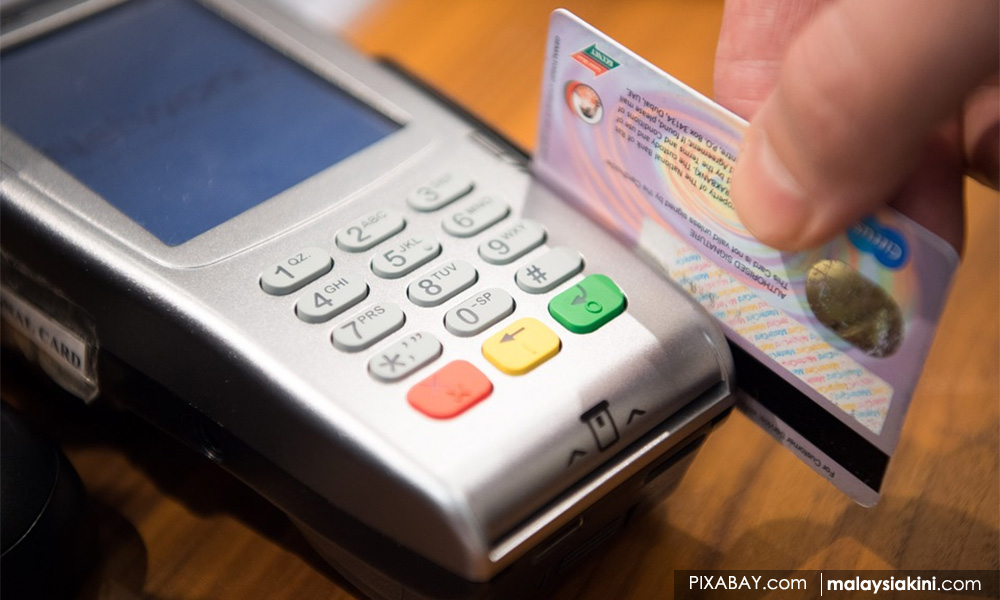
As revealed recently on a study on “Economy SEA 2020” by Google, Temasek and Bain & Company which is about the significant impact of digital payments during the Covid-19 period on Southeast Asian countries, consumer cash transactions declined to 37 percent from 48 percent pre-Covid-19.
Not just that, contactless and digital payments have also gained traction because of the effect of Covid-19 stimulus fund transfers on people, such as Covid-19 relief measures in Singapore.
Malaysia is also no exception in this as previous stimulus packages such as Prihatin and Penjana have successfully generated an enormous effect on cashless transactions, not to mention the latest Permai stimulus package that will inevitably add to the effect.
Following the recent reimplementation of movement control order (MCO), Darshiniy Selvaratnam, senior market analyst for IDC Financial Insight, stated that this year’s MCO was the game-changer, as many transactions that would typically have taken place in person and be conducted in cash terms moved online.
However, one thing has to be considered: the widespread use of cashless payments via credit cards or mobile apps could substantially increase unhealthy food consumption, based on the new research published in the Journal of the Association for Consumer Research.
In particular, it demonstrates that when the participants considered making cashless payments, the absence of the negative arousal reduced their attention to the health risks, increasing their purchase likelihood and willingness to pay.
It is relatable because the Covid-19, which comes with numerous measures to curb the virus’ spread, particularly lockdown, has undoubtedly increased the possibility of an unhealthy lifestyle.
It can generally be deduced that people will tend to spend their money on unhealthy food due to pandemic fatigue, resulting from feeling unmotivated and overwhelmed by the endless amounts of standard operating procedures and countless recommended behaviours to protect themselves and others from the virus.
Health experts also agreed that there would also be negative emotions like worry, sadness and frustration, abnormal routine, lack of focus, disturbance in eating or sleeping patterns as indicators of pandemic fatigue.
This would also illustrate that pandemic fatigue will have many unhealthy effects on individuals, forcing them to spend more on unnecessary things to alleviate the pandemic’s harmful effects.
Therefore, this is likely to be the major role of policymakers to overcome the problem by educating consumers adequately about the unintended negative impacts of cashless payments. Public awareness is genuinely essential to cushion the people’s financial blow caused by the pandemic’s detrimental effects.
It has to be emphasised this is not a suggestion to go against cashless payment as it is still a preferred payment method in this era. It is only a matter of public awareness that people should acquire to avoid the risk of over-spending and unnecessary spending due to the pandemic.
After all, during the country’s rapid transition into a cashless society, people should be mindful because their financial status is still the top priority, which will determine whether they’ll have financial anxiety to contend with.
Although cashless payment is a convenient method, remember that we could cross a line at some point where convenience can cause us more harm than good.
Source : Malaysiakini
Covid dilemma – the economy or our health?
‘If we let all businesses to operate, eventually everyone will suffer.’
Lift MCO or businesses will die, pleads trade group
BigOrangeTunaFish: It’s too little too late for Malaysia. Since the advent of Covid-19, it has been obvious that we will be forced to choose between the economy of the country and the health of the rakyat.
Covid-19 might kill you if you get it. However, loss of income can also kill you if the situation is allowed to remain for too long.
Right from the start, the way to deal with the situation was to impose strict lockdown to save lives and resume economic activity thereafter.
It is naïve to “allow economic activity” while having the movement control order (MCO). Just because you allow businesses to operate (in accordance to a labyrinth of vague standard operating procedures [SOP]) does not mean that business owners will do fine.
Revenue has decreased so much that the businesses may as well be operating at a loss every day. Our policymakers must be very detached from reality to believe that they can alleviate the rakyat’s problems by allowing businesses to operate while MCO is imposed to restrict movement.
Now we have around 5,000 cases daily and 48,000 active cases, the virus is not going anywhere. Sorry to say but we have failed to combat Covid-19.
Every few weeks we have an extension to the MCO as well as SOP changes that are hard to keep up with. Businesses are allowed to operate but people are told to stay at home. This is a ‘neither here nor there’ approach.
Law enforcement is anxious to scare us into obeying MCO with a show of force, and they do it by arresting village folk out to get essential supplies. Teachers have been forced to adopt e-learning methods without any training. Soon, university students will be allowed to return to campus on March 1 so that Covid-19 can spread even easier.
South Korea and Japan have declared national emergencies at a fraction of the Covid-19 cases we are facing. In China, a district and all its surrounding districts were put in military-enforced lockdown because one (yes, just one) person tested positive for Covid-19. It is far too late for Malaysia to follow this example.
As harsh as it may sound, I cannot see any other solution besides waiting for everyone to get vaccinated to develop herd immunity. Many will die in the meanwhile, and that is just too bad. You can thank the government for it.
Gaji Buta: Instead of simply asking to lift the MCO, business groups should present what they have done to make their premises safer for customers.
If you go into any small business, it still looks the same as before Covid-19. Aisles are narrow, only one cashier till and usually crowded, no sanitisation of baskets, counters and fridges, restaurants do not have partitions, barbers do not wear full personal protective equipment (PPE), etc.
The virus will be around for years, so fundamental changes to retail stores and eateries are needed to ensure safety of customers.
Kwimkwim: There are restaurants which practise strict SOPs. But even before the latest round of MCO, there were restaurants and many stalls which blatantly did not, where people continued to crowd and merrily eat cheek to jowl, like the whole SOP business was a joke.
Of course, if businesses can’t operate or operate to some necessary extent, there is hardship all round. People need to provide for their families, pay mounting bills, etc. Relaxing the lockdown is a tough call, but it is inevitable.
It’s time to mobilise the rakyat to help with enforcement. Immediately, the government must have a strong concerted campaign to rally the rakyat to report these offenders. Provide phone numbers and email addresses for reports to be made.
Senior Minister Ismail Sabri Yaakob can do his part in his daily announcements. And those ubiquitous SMSes we get from the government can finally do something sensible.
Plaster TV and radio with repeated rally calls to report offenders. And plaster lamp posts everywhere with the same, providing the contact numbers, etc.
Better still, give monetary rewards when the flouters reported are confirmed by site visits by the authorities.
Anonymous3467: If the number of cases is not controlled and let to rise, would you think people would want to come out to patronise pasar malam traders? If community transmission is not controlled, wouldn’t these pasar malam traders also fall victim to the disease too?
It is undeniable that this pandemic will cause the collapse of many businesses. But it is equally undeniable that this pandemic creates opportunities for new businesses too.
Isn’t it that all Covid-19 patients need food? The government could help these small traders by getting them into groups to cater meals for patients. You could have different groups to cater for different meals. This could be a source of income for them.
Some groups can also pack titbits for the patients. There could also be groups to cater for the frontliners as well. There are so many opportunities for the small traders only if opportunities are not monopolised by the super-rich and well-connected.
Many are whining about their business being badly hit by this pandemic because dine-ins are not allowed, but I have a friend whose home-based food business (which does not involve dine-in) is flourishing despite the pandemic.
BluePanther4725: If the MCO is lifted, more people will die. Without vaccination, a lockdown is the best way to curb the spread of the virus. The higher the number of cases, the higher the death rate, especially when there are not enough hospital beds and ventilators.
Don’t gamble with death for the sake of money. Loss of jobs and money can be replaced, but loss of lives cannot be replaced.
The businesses should adapt and innovate to survive, and not at the expense of people’s lives. We should spare a thought for all the healthcare workers working non-stop and risking their lives to treat the Covid-19 patients. They can’t stop to rest.
People are more resilient than you think, they can survive the MCO but not the virus.
ManOnTheStreet: @BluePanther4725, you are obviously detached from reality just like the political elites.
While I share with you the respect we have of the struggles of the health frontliners (God bless them), your careless confidence that “people can survive the MCO” just shows how far you are from the reality of the man on the street.
Forget the big corporations for now (although their collapse will also have an impact on all their employees). Just walk on the streets with the burger seller, the food truck operator, the mamak shop owner, the rojak and chendol man… they will tell you the realities of their struggle and watching their children going hungry.
Velarooks: There’s no win-win situation. Some will suffer and the government should look at aiding this group as best they can, and we the people must also help them in whatever way we can.
If we let all businesses to operate, eventually everyone will suffer.
Things like gyms, entertainment centres, cinemas, small indoor eateries (dine-ins), domestic tourism (in some areas), spas, etc, all of these businesses, in my opinion, can’t operate at any capacity. It’s just not feasible.
Of course, there are other businesses, with the right SOPs, which can be allowed to operate and this is where further thought needs to be done, but again, it’s not for everyone.
Our mortality rates are still good compared to other countries but we can’t push our luck with this. It is slowly climbing up already. A mutation could happen any minute, especially as cases are still high and things could spiral further out of control.
Moonwalker: The Perikatan Nasional government has no clue how to manage this pandemic. Many other countries have businesses open to public with stringent SOP and from time to time, review and revise the conditions like shorter operations hours.
Restaurants and even bars are open but have to close early. All establishments are up and running under normal operation. Yes, fine and punishment can be set in place if rules and regulations are not adhered to properly. Their businesses are still affected. But ours is in perpetual lockdown.
It has been repeated that lives and livelihoods are equally important. Even with MCO 2.0, the number of infections is still up. This means it does not work.
It is terribly sad to see small and big businesses suffering, especially the hawkers, burger stalls and most one-man food businesses just waiting for customers when most office workers have to work from home. How are they going to survive?
Just Want To Be Fair: Make it clear. As the Health Ministry mentioned, it will take a minimum six to eight weeks to bring down the infection rate. Just go for six to eight weeks of MCO. Not two weeks first and then add on another two, followed by two more and so on. This way businesses can plan and minimise the impact.
Businesses do take risk. But it’s a calculated risk. They need to know what’s the worst damage they can absorb.
Source : Malaysiakini
UPDATED 6.47PM | List of locations affected by Covid-19 (Feb 5)
GOVERNMENT BUILDINGS
– Segamat district police headquarters (IPD), Johor
It was reported that two detainees at the Segamat IPD have tested positive for Covid-19.
Since then, 36 detainees and police officers who were identified as close contacts have been isolated.
– Matu and Daro local council offices, Sarawak
The Matu and Daro local council offices will be closed from Jan 25 until further notice after one of its staff tested positive for Covid-19, according to a notice on Facebook.
This location is believed to be linked to the Jalan Pengiran cluster as the local council headquarters are on Jalan Pengiran.
The Health Ministry had also described the cluster as being located at a public administration office while the Sarawak government had identified it as a district administration office.
BUSINESSES
– Various Public Bank locations
Public Bank announced that there have been Covid-19 cases detected among its staff based at Menara Public Bank (Level 8 and 20), Setapak HP Centre, Overseas Union Garden branch in Kuala Lumpur, Tampoi branch in Johor and the Kuala Dungun branch in Terengganu.
Deep sanitisation has been carried out at all affected branches. Close contacts have been placed under home quarantine.
The Kuala Dungun branch will also be closed temporarily from Jan 4.
– Pontian fish wholesale market, Johor
It was reported that Covid-19 cases have been detected at the Pontian fish wholesale market.
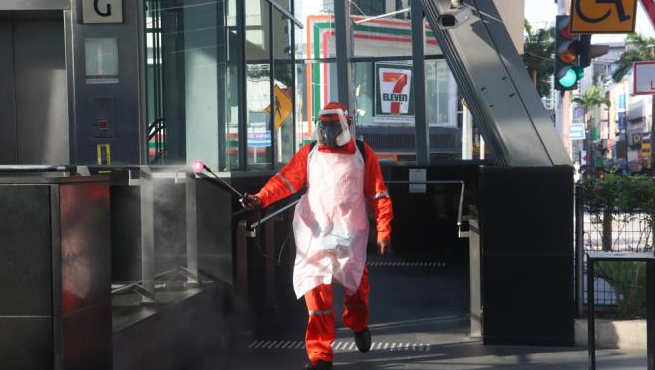
As such, the Health Ministry has ordered the market to be closed until Feb 14.
The market has since been disinfected.
– Toppen Shopping Centre, Johor Bahru, Johor
The management said on Facebook on Feb 4 that employees of their outsourced security company were confirmed positive for Covid-19 during a routine RTK-Antigen test.
The persons under investigation are waiting to be officially tested with the RT-PCR test.
Close contacts are being identified and common areas in the mall will be sanitised and disinfected.
OFFICES
– PichaEats, Jalan Ipoh, Kuala Lumpur
The management announced that a staff member based in the office had tested positive for Covid-19 on Feb 4.
The office has since been sanitised. Employees who have been in close contact with the patient all tested negative for Covid-19.
The management also reassured that all meals are produced and delivered directly from their chefs’ kitchens following strict guidelines, and remain unaffected by the case.
Only the Ready-to-Heat meals, which are packed in the office, will be affected, PichaEats said in a posting on Instagram.
Source : Malaysiakini
 English
 简体中文
简体中文 Bahasa Indonesia
 Bahasa Melayu