
Covid-19 (Aug 3): 17,105 new cases, record high in Penang and K’tan
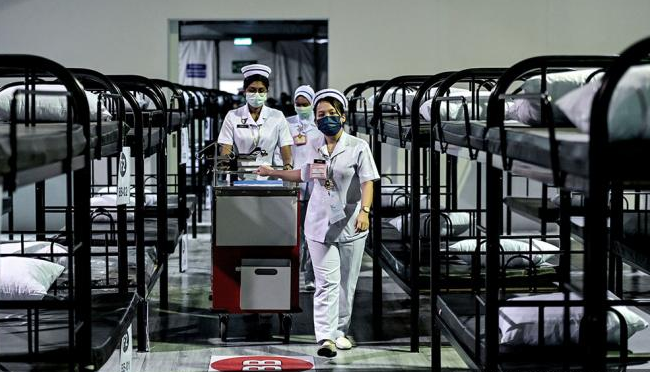
COVID-19 | The Health Ministry today reported 17,105 new Covid-19 cases, bringing active cases to exceed 200,000 for the first time.
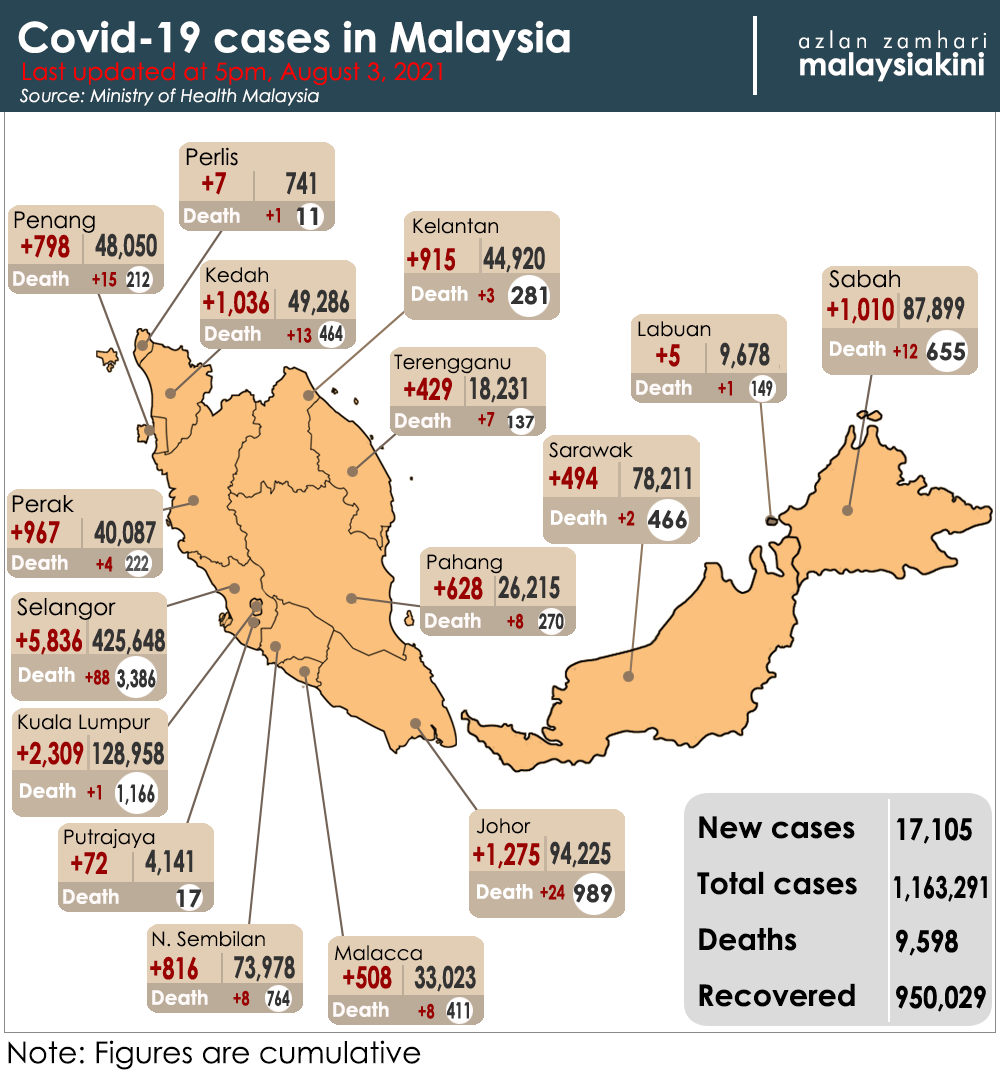
Five territories reported new cases in the four digits, while Penang (798) and Kelantan (915) reported record-high numbers today.
- Active cases: 203,664
- Patients in ICUs: 1,066
- Intubated: 537
Most of the cases are detected either through contact tracing (9,332 cases; 54.6 percent) or other forms of screening (6,109 cases; 35.7 percent), while clusters account for 1,627 cases (9.5 percent). The remaining 37 cases (0.2 percent) are imported cases.
There are 12,297 people who have recovered from Covid-19 and have been discharged today, but this is outpaced by the growth in new cases.
Deaths
There were 195 fatalities today, bringing the death toll to 9,598. Of these, 45 of the new deaths have no history of chronic illness.
These deaths are reported in all states and territories except Putrajaya: Selangor (88), Johor (24), Penang (15), Kedah (13), Sabah (12), Negeri Sembilan (8), Malacca (8), Pahang (8), Terengganu (7), Perak (4), Kelantan (3), Sarawak (2), Kuala Lumpur (1), Labuan (1), and Perlis (1).
Thirty-four of the deceased had passed away before being brought to a hospital.
Cases by state
Selangor (5,836)
Kuala Lumpur (2,309)
Johor (1,275)
Kedah (1,036)
Sabah (1,010)
Perak (967)
Kelantan (915)
Negeri Sembilan (816)
Penang (798)
Pahang (628)
Malacca (508)
Sarawak (494)
Terengganu (429)
Putrajaya (72)
Perlis (7)
Labuan (5)
Clusters
A total of 1,143 out of 3,761 clusters are still active. This includes the 30 new clusters reported today.
Of these, 14 clusters are community clusters, and an equal number are workplace clusters. Another two clusters involve high-risk groups.
Details of the new clusters are as follow:
Kampung Banir Belikong
Category: Community
State(s): Kelantan
District(s): Pasir Puteh
Total infected: 19 out of 25 screened
Kampung Jelor
Category: Community
State(s): Kelantan
District(s): Pasir Puteh and Kota Bharu
Total infected: 19 out of 30 screened
Kampung Padang Bongor
Category: Community
State(s): Kelantan
District(s): Kota Bharu
Total infected: 12 out of 25 screened
Taman Kifayah
Category: Community
State(s): Kelantan
District(s): Jeli
Total infected: 11 out of 31 screened
Kampung Cherang Hangus Machang
Category: Community
State(s): Kelantan
District(s): Machang
Total infected: 11 out of 17 screened
Kampung Padang Tok La
Category: Community
State(s): Kelantan
District(s): Pasir Mas
Total infected: 8 out of 10 screened
Dah Kampung Nonang
Category: Community
State(s): Kedah
District(s): Kota Setar
Total infected: 45 out of 68 screened
Dah Kampung Tiang
Category: Community
State(s): Kedah
District(s): Pendang
Total infected: 30 out of 69 screened
Kerteh Lima
Category: Community
State(s): Terengganu
District(s): Dungun
Total infected: 78 out of 169 screened
Kampung Telaga Air
Category: Community
State(s): Sarawak
District(s): Kuching
Total infected: 61 out of 528 screened
Kampung Sangkabok
Category: Community
State(s): Sabah
District(s): Kuala Penyu
Total infected: 33 out of 38 screened
Kampung Sungai Isap
Category: Community
State(s): Pahang
District(s): Kuantan
Total infected: 25 out of 76 screened
Kampung Tun Razak
Category: Community
State(s): Selangor
District(s): Hulu Selangor
Total infected: 23 out of 36 screened
Taman Parit Jaya
Category: Community
State(s): Perak
District(s): Perak Tengah and Kuala Kangsar
Total infected: 19 out of 55 screened
Tapak Bina Bestari Satu
Category: Workplace
State(s): Selangor
District(s): Klang
Total infected: 161 out of 208 screened
Industri Bangi Lama Batu Satu Setengah
Category: Workplace
State(s): Selangor
District(s): Hulu Langat
Total infected: 124 out of 144 screened
Industri Canang Emas Lapan
Category: Workplace
State(s): Selangor
District(s): Klang
Total infected: 109 out of 145 screened
Tapak Bina Damar 2
Category: Workplace
State(s): Selangor
District(s): Sepang and Petaling
Total infected: 68 out of 270 screened
Tapak Bina Kenanga Salak Perdana
Category: Workplace
State(s): Selangor
District(s): Sepang
Total infected: 48 out of 183 screened
Merbau 10 Kulai
Category: Workplace
State(s): Johor
District(s): Kulai and Johor Bahru
Total infected: 9 out of 19 screened
Perindustrian Jamil Dua
Category: Workplace
State(s): Johor
District(s): Muar
Total infected: 41 out of 68 screened
Jalan Industri Bioteknologi Dua
Category: Workplace
State(s): Johor
District(s): Johor Bahru
Total infected: 9 out of 230 screened
Industri Jalan Mutiara Nilai
Category: Workplace
State(s): Negeri Sembilan
District(s): Seremban
Total infected: 44 out of 112 screened
Industri Gedok
Category: Workplace
State(s): Negeri Sembilan
District(s): Tampin
Total infected: 30 out of 79 screened
Mega Suai
Category: Workplace
State(s): Sarawak
District(s): Subis
Total infected: 24 out of 351 screened
Jalan Industry Estate 38
Category: Workplace
State(s): Sarawak
District(s): Bintulu
Total infected: 17 out of 85 screened
Rimba Mentakab
Category: Workplace
State(s): Pahang
District(s): Temerloh
Total infected: 24 out of 55 screened
Jong Langkap
Category: Workplace
State(s): Perak
District(s): Hilir Perak
Total infected: 11 out of 20 screened
Jalan Seri Impian Tiga
Category: High-risk group
State(s): Johor
District(s): Kluang
Total infected: 37 out of 99 screened
Jalan Pahang Bidor
Category: High-risk group
State(s): Kuala Lumpur
District(s): Titiwangsa
Total infected: 16 out of 26 screened
Source:Malaysiakini
US dismisses Myanmar election plan, urges ASEAN pressure
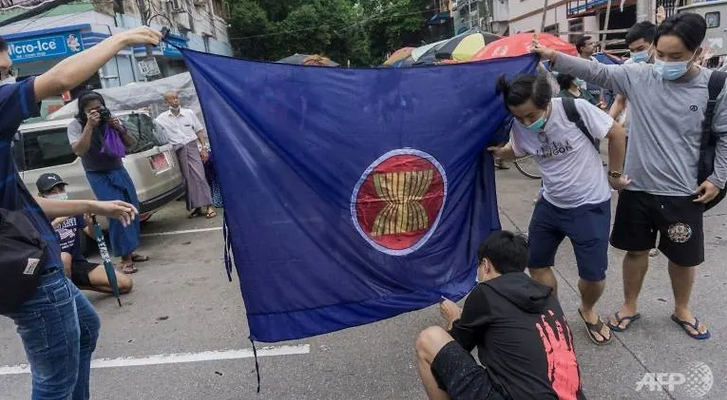
WASHINGTON: The United States said on Monday (Aug 2) that Myanmar’s junta was playing for time with a two-year election timeframe as Secretary of State Antony Blinken prepared to encourage ASEAN to appoint an envoy.
Blinken is participating virtually in a week of talks involving foreign ministers of the Association of Southeast Asian Nations, the latest bid by President Joe Biden’s administration to engage a region at the frontlines of US competition with China.
Ahead of the ASEAN talks, Myanmar’s junta chief promised to hold elections and lift a state of emergency by August 2023, extending an initial timeline given when the military deposed elected leader Aung San Suu Kyi on Feb 1.
The announcement is “a call for ASEAN to have to step up its effort because it’s clear that the Burmese junta is just stalling for time and wants to keep prolonging the calendar to its own advantage”, said a senior US official, using Myanmar’s former name of Burma.
“All the more reason why ASEAN has to engage on this and live up and uphold the terms of the five-point consensus that Myanmar also signed up to.”
READ: Myanmar military ruler pledges elections, cooperation with ASEAN
READ: What’s happening in Myanmar, six months after the coup?
UN spokesman Stephane Dujarric said the military’s announcement is “not taking us in the right direction”.
“It’s moving us further away from what we have been calling for, member states have been calling for, which is a return to democratic rule, a release of all … political prisoners, a halt on the violence and the crackdown,” he said.
He called the situation six months after the takeover “precarious” and worsening as a result of the COVID-19 outbreak, with wider implications “threatening regional stability”.
“The protracted crisis has impacted humanitarian access to people in need, as well as education, health, and the fight against COVID-19,” Dujarric said. “It has also, of course, affected the basic rights of the people of Myanmar to express themselves and have a government that represents them.”
“For us, a unified international response remains paramount.”
Junta chief Min Aung Hlaing attended a meeting with ASEAN members on the crisis in April that led to the so-called consensus statement that called for an immediate end to violence and a regional special envoy.
But the junta leader later distanced himself from the statement, no envoy has been appointed and more than 900 people have been reported killed in the six-month crackdown on dissent.
ASEAN is not known for its collective diplomatic clout and its meetings have frequently pitted the United States and China against each other as they seek influence.
READ: Myanmar junta cancels results of 2020 polls won by Aung San Suu Kyi’s party
READ: Myanmar should return to democratically elected government, says UK
The US official said Blinken would address Beijing’s “coercion” against ASEAN nations in the dispute-rife South China Sea and also highlight human rights concerns within China.
US Defense Secretary Lloyd Austin visited Southeast Asia last week, where he hammered in on the South China Sea, saying Beijing’s claims had no basis in international law.
Vice President Kamala Harris plans this month to visit historic US partner Singapore as well as Vietnam, which has moved increasingly close to Washington despite war memories.
Indonesian Foreign Minister Retno Marsudi is expected to meet Blinken in person in Washington this week, while Deputy Secretary of State Wendy Sherman earlier visited Indonesia and Thailand as well as Cambodia – often seen as the most pro-Beijing ASEAN nation.
Source: Agencies/ga
Commentary: Struggling with the Delta variant, Vietnam has to force a change in vaccine policy
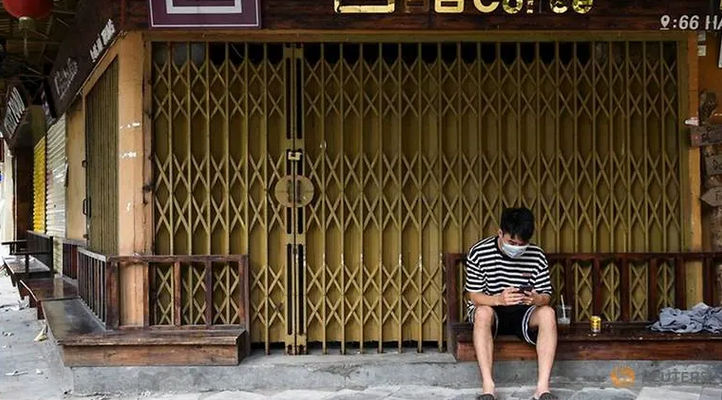
HO CHI MINH CITY: Until recently, Vietnam’s handling of the COVID-19 pandemic had been a remarkable success story.
In January 2020, once the scale of the COVID-19 outbreak in Wuhan became clear, large outbreaks were expected to follow in neighbouring Asian states. When Vietnam became one of the first countries to report human-to-human transmission, it was assumed that a widespread outbreak was inevitable.
But through comprehensive testing, tracing and quarantining in centralised facilities, and strict border control and proactive public health policies, Vietnam defied all expectations and eliminated community transmission.
While many countries were enduring protracted lockdowns and reporting thousands of deaths per day, Vietnam was open for business, internally at least. It was the only economy in Southeast Asia to experience positive economic growth in 2020.
By April 2021 Vietnam had reported just 35 COVID-19-related deaths.
Vietnam’s success can be attributed to good public health, focusing on prevention rather than costly medical cures. But with low rates of infection, there was little urgency to procure expensive new vaccines from abroad.
READ: Commentary: Vietnam’s attitude towards Chinese vaccines is very telling
READ: Vietnam taps private hospitals as Delta-driven COVID-19 infections rise
VIETNAM’S BET ON DOMESTIC VACCINES
The government baulked at the cost and the length of the queue and went on record to say it would be better to produce vaccines domestically. Seeing an opportunity to establish a valuable foothold in the biotech sector, Vietnam invested in four indigenous vaccines.
Tran Van Phuc, a medical commentator for one government newspaper, wrote in December 2020 that “it might come out much more slowly than its international peers, but if we can do it, waiting for a homemade vaccine is not a bad option”.
In December 2020, while other countries in the region fought to secure vaccine imports, Vietnam commenced a phase 1 trial on its most promising product to date, the subunit vaccine Nanocovax.
Progress was slow, but few were worried. The country had already successfully suppressed two outbreaks and in February and March 2021, it would suppress a third, all the while developing superior testing and healthcare infrastructure.
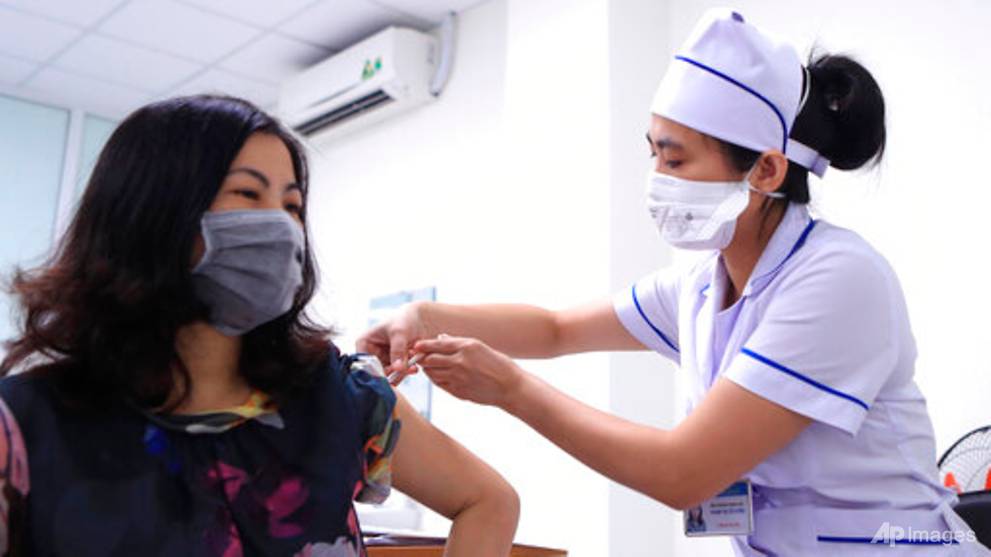
Throughout this period the Vietnam government formally committed to just one foreign vaccine, Oxford-AstraZeneca. It initially secured 30 million doses to be delivered in batches throughout 2021 – enough to vaccinate just 15.5 per cent of the population.
The first batch of 117,600 doses arrived late February and was distributed to priority groups reflective of Vietnam’s “zero COVID-19” standing. Healthcare workers, customs officers, diplomats, military personnel, police, tourist workers and teachers were given higher priority than people over 65 or those with chronic health problems at the highest risk of dying from the virus.
READ: Commentary: What happens if people stay unvaccinated? The US shows the answer
DELTA VARIANT CHANGED EVERYTHING
The emergence of the Delta variant in Vietnam at the end of April 2021 changed everything. The World Health Organization estimates that Delta is 55 per cent more transmissible than Alpha, which was itself around 50 per cent more transmissible than the original virus.
Interventions that previously curbed community spread became inadequate to control outbreaks. Initially, Vietnam managed to suppress localised outbreaks of Delta in Hanoi and Bac Giang province.
READ: Commentary: Southeast Asia is buckling under a second year of COVID-19
Yet, despite escalating restrictions, cases continued to increase across the country. Between late April and late July 2021, Vietnam recorded over 120,000 cases in 61 of its 63 localities and over 800 deaths, Ho Chi Minh City being the worst affected.
This outbreak, and a shortfall in AstraZeneca supply, forced a rapid change in vaccine policy. Within weeks, Sputnik V, Pfizer-BioNTech, Moderna, Sinopharm and Johnson & Johnson were approved for emergency use.
Through swiftly negotiated contracts, foreign aid and the global vaccine access mechanism COVAX, Vietnam has now successfully ordered 125 million doses as it strives to vaccinate 70 per cent of its population by May 2022.
Earlier reluctance to enter the global vaccine market has meant Vietnam is further back in the queue than its neighbours, and most promised doses won’t arrive until at least the last quarter of this year.
GLACIAL VACCINE ROLLOUT
While cases mount, vaccine rollout proceeds at a glacial pace. Vietnam lags behind all other ASEAN member states. By late July 2021, just 0.5 per cent of the population are fully vaccinated and 4.7 per cent have received one dose, in contrast to Cambodia with a single-dose rate of 42 per cent, and both Thailand and Indonesia at over 16 per cent.

Until recently the issue was strictly supply, but a succession of donations in July – while the health service scrambled to deal with its first major outbreak – has seen doses pile up. Vietnam has used only 5.3 million of 14.8 million doses received so far.
Once distributed, uptake appears to be good. The government earned trust from its earlier successful handling of the pandemic, and there is little of the anti-AstraZeneca sentiment which has hampered vaccine rollout in Australia.
As the health crisis escalates, vaccine priority is changing. Doses originally earmarked for tourist workers on Vietnam’s islands are being directed to older, vulnerable populations in the worst-affected locations, prioritising saving lives over rebooting the tourist sector.
In coming months, Vietnam will commence manufacturing Sputnik V and, thanks to a progressive technology transfer from the United States, construction has started on a factory that aims to produce a further 200 million vaccine doses in the first half of 2022.
Vietnam’s Nanocovax has also entered phase 3 trials, raising hope for domestic self-sufficiency in years to come.
But with the Delta variant now firmly established, the economy strangled by lockdowns, and the health system approaching capacity, Vietnam needs to prioritise import and distribution of existing vaccines above all else. Millions of lives and livelihoods depend on it.
READ: Commentary: As bad debt climbs, rough collection tactics spell trouble in Vietnam
Barnaby Flower is a Clinical Research Fellow at the Oxford University Clinical Research Unit, Ho Chi Minh City. This commentary first appeared on East Asia Forum.
Source: CNA/el
 English
 简体中文
简体中文 Bahasa Indonesia
 Bahasa Melayu