
Indonesia considers COVID-19 vaccine booster shots for wider use
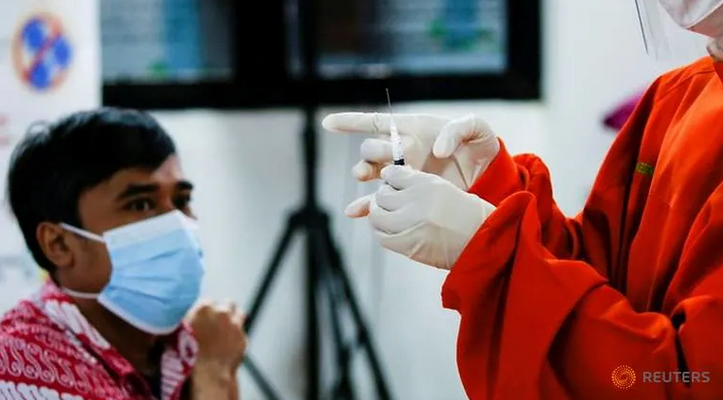
JAKARTA: Indonesia, which uses the Sinovac vaccine as its main COVID-19 inoculation, is considering providing a booster shot, as a study showed antibodies provided by the two-dose shot fade over time, a senior health ministry official said on Tuesday (Jul 27).
Indonesia, which has become Asia’s COVID-19 epicentre with record infections and deaths this month, relies heavily on the Sinovac vaccine that accounts for more than four-fifths of 173 million doses of vaccine supplies it has received so far.
Concerns about the vaccine’s effectiveness have mounted in recent weeks as hundreds of medical workers, most of whom were fully vaccinated with the Sinovac shot, have died of COVID-19 since June.
A study published this week showed that antibodies triggered by the Sinovac vaccine declined below a key threshold from around six months after a second dose for most recipients, although a third shot had a strong booster effect.
READ: COVID-19 surge starting to ease in Indonesia capital, data shows
While researchers said it was unclear how the decrease in antibodies would affect the shot’s effectiveness, Siti Nadia Tarmizi, a senior health ministry official, told Reuters that the reduced antibody level is still enough to provide protection, based on clinical data from Indonesia.
“Right now, the immunisation advisory board recommends a booster vaccination 12 months after the second dose,” she said, adding that the government is still considering whether the booster shots should be one or two-dose schedule.
She did not say which vaccines would be used as a booster shot, but Kusnandi Rusmil, who heads the clinical trials of the Sinovac vaccine in Indonesia at Padjadjaran University, said any approved COVID-19 vaccine can be used as a booster.
READ: Commentary: Overwhelmed Indonesian hospitals with COVID-19 cases behind high doctor fatalities
He said the clinical trial is set to conclude next month and its data so far has also shown a drop in antibody levels over time, leading him to recommend to the government that medical workers should get a third booster shot.
“Lots of medical workers have died, so they need to be given further immunity,” Kusnandi said.
Indonesia has started giving booster shots produced by Moderna to medical workers this month, as 1,569 healthcare workers have died of COVID-19, including nearly 400 between June and July, according to data from the independent data group Lapor COVID-19.
The World Health Organization said earlier this month that it was not clear whether boosters would be needed to maintain protection, until further data is collected.
But several countries have already begun making plans for a booster campaign, while Pfizer and its partner BioNTech prepare to ask US and European regulators to approve a booster dose.
Source: Reuters/ta
Malaysia records second day of 207 COVID-19 deaths, ICU numbers hit new high
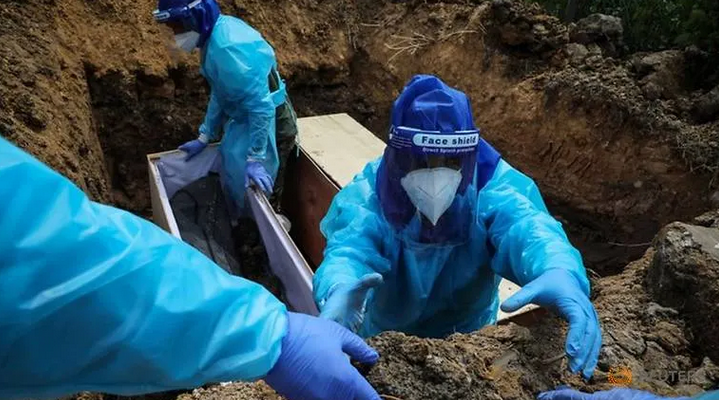
KUALA LUMPUR: Malaysia reported 207 deaths from COVID-19 for the second consecutive day on Tuesday (Jul 27), with the number of critically ill patients also reaching another high.
Thirty-one of the victims were classified as “brought in dead” to hospital, said health director-general Noor Hisham Abdullah.
The country’s current record for COVID-19 deaths logged in a single day is 207. Its previous record was just last week.
The number of cases in the intensive care unit also hit another new record with 1,023 patients warded. Of these, 524 require respiratory support.
A total of 16,117 new COVID-19 cases were also identified, Malaysia’s second highest daily tally after more than 17,000 infections were reported two days ago.
The Klang Valley comprised more than half of the new cases with 6,616 in Selangor and 2,457 in Kuala Lumpur.
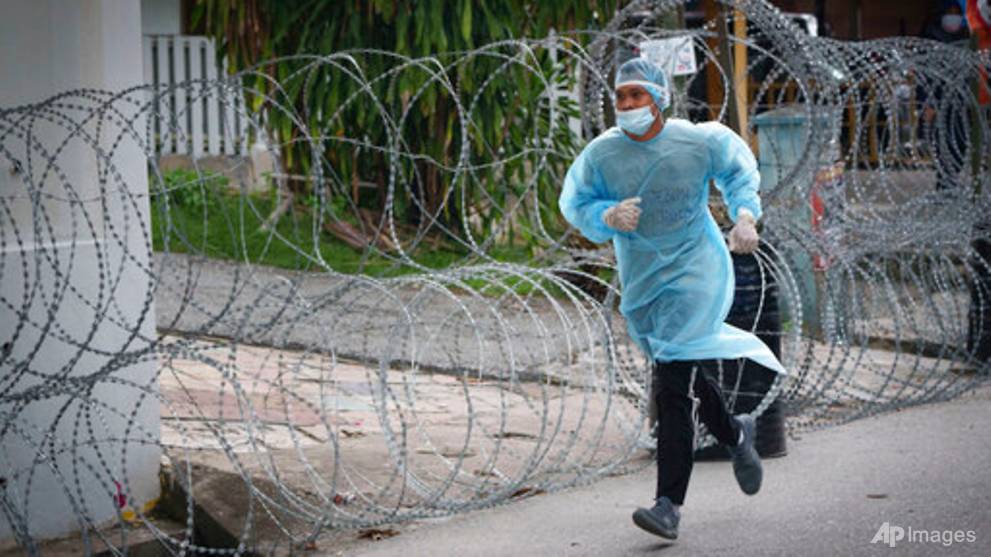
A further 1,000 cases were found in Kedah as well as 907 and 618 in Johor and Penang respectively.
Only 26 of the new cases reported on Tuesday were imported infections.
Dr Noor Hisham said 56.3 per cent of the new cases reported on Tuesday were asymptomatic while 41.6 per cent had mild symptoms.
The remaining cases had lung infections, required oxygen support or were in critical condition.
The majority of the new cases had no vaccination history, he added.
MORE THAN 1,000 ACTIVE CLUSTERS
Dr Noor Hisham also said 42 new COVID-19 clusters have been identified, taking the total number of active clusters in the country to 1,028.
Of the record number of new clusters, 25 involve workplaces while 12 are in the community. The remaining clusters involve two high risk communities, two detention centres and an education establishment.

Despite the imposition of another nationwide lockdown on Jul 1, Malaysia’s COVID-19 situation has worsened in recent weeks with a surge in cases and deaths.
In addition to political skirmishes and citizens being hard-hit by the economic and movement curbs, some contract doctors also staged a walkout on Monday at various hospitals across the country.
These contract government medical officers had earlier issued an ultimatum to the government to address their concerns regarding the contract system, including lack of job security and limited length of service.
As of Tuesday, Malaysia has reported a total of 1,044,071 COVID-19 cases, of which 170,224 are currently active or infectious. The death toll stands at 8,408.
Source: CNA/zl(ta)
Thailand sends COVID-19 patients to hometowns by train
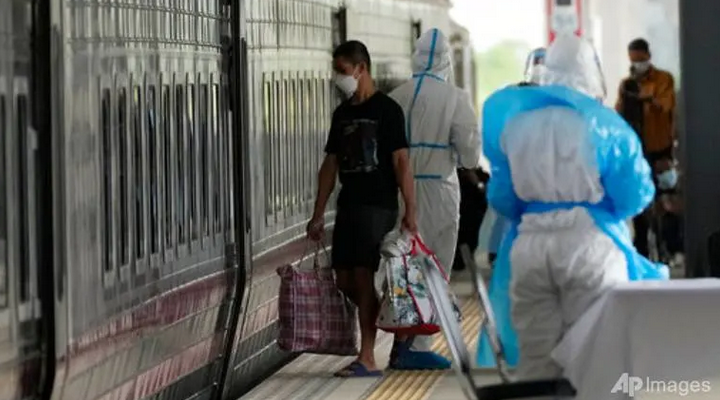
BANGKOK: Authorities in Thailand began transporting some people who tested positive for the coronavirus from Bangkok to their hometowns on Tuesday (Jul 27) for isolation and treatment to alleviate the burden on the capital’s overwhelmed medical system.
A train carrying more than 100 patients and medical workers in full protective gear left the city for the northeast.
It will drop patients off in seven provinces, where they will be met by health officers and taken to hospitals.
Medical authorities in Bangkok said Monday that all intensive care unit (ICU) beds for COVID-19 patients at public hospitals were full and that some of the sick were being treated in emergency rooms. Officials said they have asked army medics to help out at civilian hospitals.
“We will continue this service until no COVID-19 patients who cannot get beds in Bangkok are left,” said Deputy Prime Minister and Public Health Minister Anutin Charnvirakul.
READ: Thailand’s COVID-19 national vaccination programme hit by supply shortage, uncertain delivery schedule


He said buses, vans and even aircraft might be deployed to send people back to less badly affected provinces.
Thailand initially kept coronavirus cases in check but outbreaks have flared in recent months.
Prime Minister Prayut Chan-o-cha’s government is facing harsh criticism over its handling of a delta variant-fueled surge and slow vaccination program, amid reports of people dying in the streets or in their homes while waiting for treatment.
Of Thailand’s total of nearly 500,000 confirmed cases and more than 4,000 fatalities, 137,263 cases and 2,176 deaths have been recorded in Bangkok.
Most of the 4,451 beds for COVID-19 patients in the city of about 15 million are occupied by people with mild or no symptoms. Hospitals are beginning to urge such patients to isolate at home or in community isolation centers.
READ: Leaked letters show AstraZeneca vaccine commitment not as Thailand claimed


Bangkok governor Aswin Kwanmuang said the city government will coordinate with the State Railway to install 240 beds in 15 railway carriages in a maintenance shed in the city’s huge Bang Sue station as a “pre-admission centre” for coronavirus patients without symptoms.
He visited the station on Tuesday to inspect the carriages. He said they should be ready for use by Friday.
The government said supplies of medical oxygen are sufficient and manufacturers have been asked to ensure enough is available. But people ill with coronavirus who are unable to find places for treatment are not always able to get supplemental oxygen.
Meanwhile, some temples in the devoutly Buddhist country have begun to offer free cremations as the number of deaths rises, the government said.
Source: AP/zl
 English
 简体中文
简体中文 Bahasa Indonesia
 Bahasa Melayu