
Vietnam sees record COVID-19 cases as curbs tighten
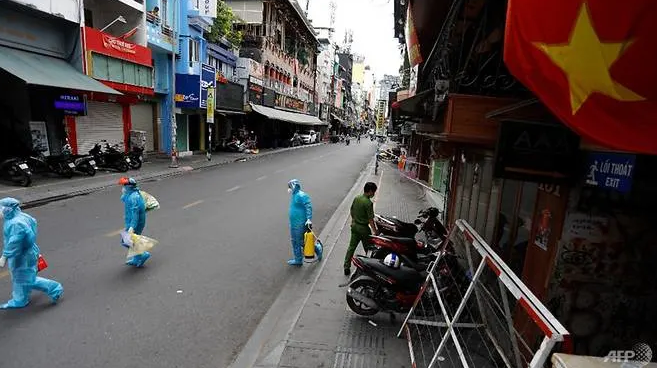
HANOI: Vietnam brought in tighter COVID-19 measures on Friday (Jul 9) in more areas including the commercial hub of Ho Chi Minh City, as authorities reported another daily record in new infections.
After successfully containing the virus for much of the pandemic, Vietnam has since late April faced a more stubborn outbreak that has prompted calls for the government to accelerate inoculations.
The health ministry reported 1,625 new infections on Friday, the fifth straight day of more than 1,000 cases. Vietnam has recorded 26,010 infections overall and 110 deaths.
READ: COVID-19: Southeast Asia sees spike in new cases, deaths as region struggles to contain Delta variant
Three-quarters of those were in the epicentre Ho Chi Minh City, which on Friday began 15 days of broad movement restrictions.
This week, panic buying broke out in the city and the neighbouring province of Dong Nai as people stocked up ahead of the curbs. Television footage on Friday showed empty streets and police stopping vehicles at checkpoints.
Authorities on Friday set a target to vaccinate 50 per cent of people aged 18 or older by the end of the year and 70 per cent by the end of March.
“Vaccination against COVID-19 is a necessary and important measure to contain the disease and ensure socio-economic development,” the health ministry said in a statement.
The government had previously said it aimed to vaccinate 70 per cent to 75 per cent of the country’s 98 million population by the end of this year or early next year.
READ: SEA Games in Vietnam postponed amid rising COVID-19 cases
The ministry said it has clinched deals and commitments for 105 million vaccine doses, lower than the 150 million stated previously.
Online newspaper VnExpress reported the ministry had licensed a local company to import 5 million doses of China’s Sinopharm vaccine.
Vietnam has so far received around 6 million vaccine doses, mostly under the international COVAX sharing facility. About 250,000 people have been fully vaccinated.
Source: Reuters/zl
Covid-19 (July 9): Record-high 9,180 cases, over half in Klang Valley
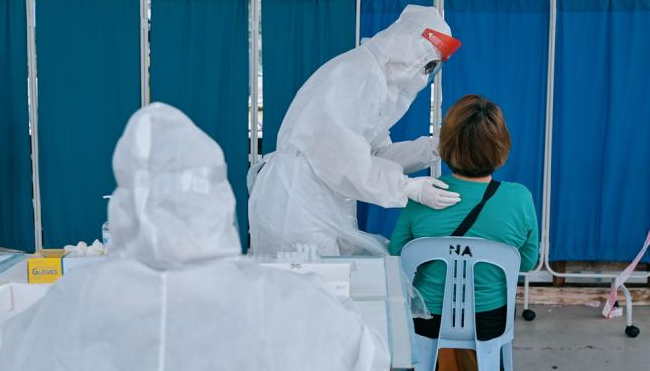
COVID-19 | The Health Ministry has recorded 9,180 new Covid-19 cases up to noon today, setting another record-high in Malaysia’s worsening Covid-19 situation.
The previous record was 9,020 cases recorded on May 29.
The situation is no better in Selangor, where large portions of the state are under the enhanced movement control order (MCO) since July 3.
The state has 4,400 cases today, surpassing its record yesterday of 4,152 cases.
Overall, cases in the Klang Valley account for 61.9 percent (5,687 cases) of the national tally.
In a statement today, Health Ministry director-general Dr Noor Hisham Abdullah said the rise in cases in Kuala Lumpur and Selangor was due to increased targeted screening at areas under enhanced MCO and in factories, as before.
“It is also found that many individuals in the Klang Valley have come forward themselves to private clinics to undergo Covid-19 testing.
“They are among those at high risk, such as having symptoms or are close contacts (of known Covid-19 patients).
“The Health Ministry will continue contact tracing activities and isolation of Covid-19 patients to prevent the disease’s spread in the community,” he said.
Meanwhile, the number of patients who required intensive care or intubation also increased, with new records set for both figures.
- Active cases: 80,665
- Patients in ICUs: 959
- Intubated: 465
Deaths
There were 77 fatalities today, bringing the death toll to 5,980.
The new deaths were recorded in Selangor (28), Kuala Lumpur (17), Malacca (9), Johor (5), Negeri Sembilan (5), Pahang (4), Sarawak (3), Perak (2), Terengganu (2), Labuan (1) and Kedah (1).
Those who died were aged between 33 and 87. Seven of the deceased had died before being brought to a hospital.
For a detailed breakdown of the reported deaths, please refer to our Covid-19 tracker site.
New cases by states
- Selangor (4,400)
- Kuala Lumpur (1,271)
- Negeri Sembilan (899)
- Kedah (417)
- Sarawak (406)
- Sabah (323)
- Johor (315)
- Perak (241)
- Malacca (222)
- Pahang (214)
- Kelantan (151)
- Penang (142)
- Terengganu (82)
- Labuan (80)
- Putrajaya (16)
- Perlis (1)
Vaccination
As of July 8, a total of 30.85 percent out of an estimated adult population of 23,409,600 in the country received at least the first dose of the Covid-19 vaccine.
Around 13.63 percent received their second dose. There is no Covid-19 vaccination programme for those aged under 18 for now.
For the five most populous states and territories, the proportion of the population that received at least the first dose are as follows: Kuala Lumpur (96.58 percent), Selangor (27.7 percent), Sarawak (26.93 percent), Johor (18.73 percent) and Perak (23.37 percent).
The three states seeing the slowest vaccination pace are Sabah (14.3 percent), Johor (18.73 percent) and Kedah (18.88 percent).
The fastest are Kuala Lumpur (96.58), Putrajaya (74.52) and Sarawak (64.21).
The national registration rate for the Covid-19 vaccine stood at 74.55 percent.
The data was from the Special Committee for Ensuring Access to Covid-19 Vaccine Supply (JKJAV).
Clusters
A total of 865 out of 3,029 clusters were still active. This included the 30 new clusters reported today.
Details of the new clusters are as follows:
Batu Lapan Bakri
Category: Workplace
State(s): Johor
District(s): Muar
Total infected: 33 out of 84 screened
Jalan Bukit Bakri
Category: Workplace
State(s): Johor
District(s): Muar
Total infected: 11 out of 30 screened
Jalan Haji Jaib
Category: Workplace
State(s): Johor
District(s): Muar
Total infected: 12 out of 79 screened
Jalan Duku Kiri
Category: Workplace
State(s): Johor
District(s): Johor Bahru
Total infected: 7 out of 58 screened
Jalan Sri Plentong Tiga
Category: Workplace
State(s): Johor
District(s): Johor Bahru
Total infected: 9 out of 52 screened
Persiaran Agas
Category: Workplace
State(s): Johor
District(s): Tangkak, Muar, and Segamat
Total infected: 18 out of 206 screened
Industri Jalan Kusta
Category: Workplace
State(s): Selangor
District(s): Gombak and Petaling
Total infected: 18 out of 45 screened
Zone T Selatan
Category: Workplace
State(s): Selangor
District(s): Sepang and Kuala Langat
Total infected: 55 out of 254 screened
Industri Jalan Telok Gong
Category: Workplace
State(s): Selangor
District(s): Klang
Total infected: 46 out of 101 screened
Industri Nakhoda
Category: Workplace
State(s): Selangor
District(s): Sabak Bernam
Total infected: 8 out of 50 screened
Industri Jalan Satu Selesa Jaya
Category: Workplace
State(s): Selangor
District(s): Hulu Langat
Total infected: 14 out of 17 screened
Industri Jalan Gombak Batu 11
Category: Workplace
State(s): Selangor
District(s): Gombak
Total infected: 31 out of 47 screened
Jalan Ipoh Kecil
Category: Workplace
State(s): Kuala Lumpur
District(s): Lembah Pantai
Total infected: 13 out of 90 screened
Jalan Matang
Category: Workplace
State(s): Kuala Lumpur
District(s): Kepong
Total infected: 22 out of 27 screened
Tapak Bina Jalan Khoo Teik Ee
Category: Workplace
State(s): Kuala Lumpur
District(s): Lembah Pantai and Cheras
Total infected: 119 out of 226 screened
Taman Merdeka Permai
Category: Workplace
State(s): Malacca
District(s): Melaka Tengah
Total infected: 21 out of 47 screened
Taman Cempaka
Category: Workplace
State(s): Malacca
District(s): Melaka Tengah
Total infected: 23 out of 166 screened
Jalan Saw Ah Choy
Category: Workplace
State(s): Perak
District(s): Larut, Matang, and Selama
Total infected: 23 out of 31 screened
Jalan Seramik Chepor 11/1
Category: Workplace
State(s): Perak
District(s): Kuala Kangsar and Kinta
Total infected: 20 out of 259 screened
Tapak Bina Bidara
Category: Workplace
State(s): Negeri Sembilan
District(s): Seremban
Total infected: 75 out of 269 screened
Jalan Pasar Basah Mukah
Category: Workplace
State(s): Sarawak
District(s): Mukah and Dalat
Total infected: 32 out of 229 screened
Taman Bismi Rahmat
Category: Community
State(s): Kelantan
District(s): Tanah Merah
Total infected: 13 out of 28 screened
Kampung Bunut Satut
Category: Community
State(s): Kelantan
District(s): Kota Bharu
Total infected: 9 out of 15 screened
Kampung Gelugor
Category: Community
State(s): Kelantan
District(s): Tanah Merah
Total infected: 15 out of 17 screened
Sawit Segama
Category: Community
State(s): Sabah
District(s): Lahad Datu
Total infected: 15 out of 64 screened
Benteng Sri Aman
Category: Detention centre
State(s): Sarawak
District(s): Sri Aman
Total infected: 38 out of 56 screened
Tembok Miri
Category: Detention centre
State(s): Sarawak
District(s): Miri
Total infected: 59 out of 631 screened
Pagar Taman IKS
Category: Detention centre
State(s): Selangor
District(s): Kuala Selangor
Total infected: 51 out of 101 screened
Sungai Jelai Kuala Lipis
Category: High-risk group
State(s): Pahang
District(s): Lipis
Total infected: 16 out of 153 screened
Jalan Desa Putera
Category: Non-Education Ministry institution
State(s): Selangor
District(s): Klang
Total infected: 14 out of 34 screene
Bangkok and 9 provinces in lockdown from Jul 12 as COVID-19 cases surge, curfew imposed from 9pm onwards
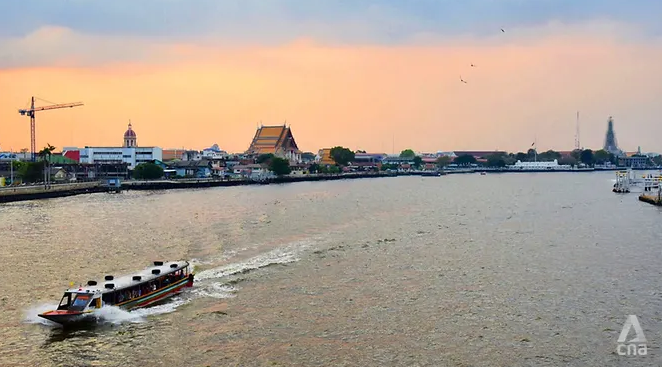
BANGKOK: Bangkok and nine provinces will go into lockdown from Monday (Jul 12) as COVID-19 cases continue to surge in Thailand, the Centre for COVID-19 Situation Administration (CCSA) announced on Friday.
Residents in Bangkok and its nearby provinces of Nakhon Pathom, Nonthaburi, Pathum Thani, Samut Prakan and Samut Sakhon, as well as those in Narathiwas, Pattani, Songkhla and Yala in the far south have been advised to stay at home from Monday and only go outside when it is necessary.
According to CCSA assistant spokesperson Apisamai Srirangsan, a curfew will be imposed between 9pm and 4am in these ten provinces as the government tightened restrictions in high-risk areas. However, residents will still be able to leave their homes in case of emergency, work or medical visits.
Educational institutes in these provinces are required to conduct online classes only, Ms Apisamai said, adding that checkpoints and patrols will be set up by security units to ensure public movement is minimal.
For Bangkok and its nearby provinces, convenience stores and markets will need to close from 8pm to 4am. The government also ordered temporary closure of department stores and community malls in these six provinces, except the supermarket and pharmaceutical sections, restaurants and cafes, banks, as well as areas designated for the national vaccination programme, which will be able to operate until 8pm.
“Eateries can stay open until 8pm but it needs to be stressed that these venues won’t be allowed to offer dining-in services or alcohol. Only takeaway services will be permitted,” said Ms Apisamai.
“Venues reportedly prone to infection will need to close. These include massage and spa businesses and beauty centres,” she added.
From Monday, both public and private sectors in Bangkok and nearby provinces are required to implement maximum work-from-home rules while public transport will see restricted services. Social gatherings will also be limited to five people in these areas.
READ: Phuket reports first overseas visitor with COVID-19 after reopening without quarantine requirements
NEW VACCINATION PLAN FOR AT-RISK GROUPS
Thailand is facing the worst wave of COVID-19 infections, which has put an enormous strain on its healthcare system and medical personnel. The daily case numbers have been in the thousands for several weeks amid reports of the highly contagious Delta variant of the coronavirus.
The country has recorded 288,643 cases and 2,440 casualties since a third wave of infections began in April, when a cluster was found at high-end nightclubs in Bangkok.
On Friday, CCSA reported 9,276 new cases and 72 new deaths. Bangkok and nearby provinces alone accounted for 4,754 cases or 51 per cent of the new infections, excluding those in prisons.
The national tally is now at 317,506, with 2,534 deaths.
According to Ms Apisamai, the Public Health Ministry will adjust its vaccine distribution plan to better cover at-risk groups in Bangkok and surrounding areas, such as individuals above 60 years old and those with chronic diseases.
“One million doses are expected to be administered within two weeks,” she said.
More locations will also be set up to carry out COVID-19 tests and speed up disease detection in communities, she added.
On Friday, CCSA reported 74,895 patients are receiving medical treatments for COVID-19 in medical facilities nationwide and 2,685 of them are in critical condition.
DELTA VARIANT ON THE RISE IN THAILAND
Thailand is monitoring three coronavirus variants of concern, including Alpha, Beta and Delta. They were first documented in the United Kingdom, South Africa and India respectively.
Based on data from the Public Health Ministry, the Delta variant is fast spreading in the country, especially in Bangkok, where it made up 52 per cent of new infections between Jun 28 and Jul 2.
Although most domestic cases in the latest wave carry the Alpha variant, Thai health officials at the Medical Sciences Department found its transmission is in decline while that of the Delta strand increases every week.
In a press briefing on Thursday, public health permanent secretary Kiattiphum Wongrajit said the infections are increasingly spreading from Bangkok and its vicinity to other parts of Thailand. Growing demand for COVID-19 tests as well as medical treatments in hospitals have also resulted in exhaustion among healthcare professionals, he added.
“The Public Health Ministry is trying to come up with measures that would best control the disease,” Kiattiphum told reporters.
Besides the partial lockdown, the ministry also proposed rapid antigen testing and home isolation.
According to Mr Kiattiphum, COVID-19 tests in Thailand are usually carried out with the RT-PCR method, which requires longer evaluation time. Moreover, he added, potentially infected patients could spread the disease to others while waiting for the test result.
“We’ve reached an agreement that we’ll use rapid antigen tests to support the disease examination. Initially, we’ve approved its use at registered medical facilities,” said Mr Kiattiphum, adding they would also be available for home use too.
As the new wave of COVID-19 spreads across Thailand, a shortage of hospital beds has posed a great challenge for its public health system.
Many infected patients have not been able to access medical treatments at hospitals and some of them lost their lives while waiting for hospital beds.
The COVID-19 pandemic situation in Thailand has raised questions about the government’s plan to reopen the country to international travellers in October.
The target was set by Prime Minister Prayut Chan-o-cha, who said at least 50 million people in Thailand should already have received their first dose of a vaccine by early October.
So far, about 8.8 million people have received their first dose of the COVID-19 vaccine and 3.18 million have been fully vaccinated, according to the Disease Control Department.
Source: CNA/pp
Singapore sends medical supplies, equipment to Indonesia as daily COVID-19 cases hit record
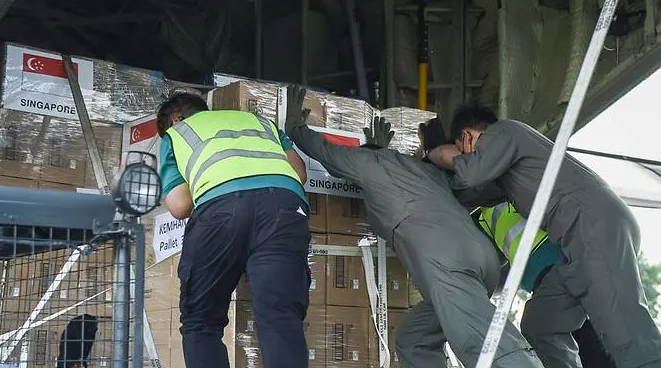
SINGAPORE: Singapore sent medical supplies and equipment to Indonesia on Friday (Jul 9) amid a surge in COVID-19 cases, the Singapore Ministry of Foreign Affairs (MFA) said.
Indonesia on Thursday reported a new daily record of 38,391 COVID-19 infections and 852 more fatalities from the disease, its second-highest daily death toll, official data showed.
More than 2.4 million COVID-19 cases have been recorded in the country since the start of the pandemic, with 63,760 deaths.
READ: Indonesia’s surge in COVID-19 cases spreads to coal mining areas
“Singapore stands in solidarity with Indonesia against the surge of COVID-19,” said MFA in a press statement.
“In response to Indonesia’s request, the Singapore Government has provided an initial tranche of medical supplies and equipment including oxygen cylinders, oxygen concentrators, ventilators and personal protective equipment such as surgical and N95 masks, gloves, and gowns to support Indonesia’s efforts to combat the COVID-19 pandemic,” said the ministry.
Two Republic of Singapore Air Force C-130 aircraft left Paya Lebar Air Base for Jakarta on Friday morning.
Multiple government agencies in both Singapore and Indonesia worked in close cooperation to arrange the dispatch of the medical supplies at short notice, MFA added.

Minister for Foreign Affairs Vivian Balakrishnan handed over the medical supplies and equipment to the Indonesian Ambassador to Singapore Suryo Pratomo at Paya Lebar Air Base.
“For the last one and a half years, we have all been coping with the unprecedented challenge that COVID-19 has caused us,” said Dr Balakrishnan in his remarks at the ceremony for the handover.
With the spread of the Delta variant across the world in the last few months, the challenge has “intensified”, the minister said.
“The situation in Indonesia right now is also due to the spread of the Delta variant, and as close neighbours and partners, we stand in solidarity with all the people of Indonesia,” he added.

Last year, Singapore sent COVID-19 test kits along with other equipment to Indonesia.
“In return – I think many people may not be aware – when we had to establish community care facilities very quickly, the Republic of Indonesia was very helpful to us in supplying essential equipment and furniture which we needed to outfit this,” said Dr Balakrishnan.
READ: Singapore sends additional medical supplies to support Indonesia’s fight against COVID-19
“So now, at their point in need, we stand in solidarity with them in support. It is this kind of mutual support that represents the strength of our relationship – not just at the government-to-government level, but at the people-to-people level.”

“This is a physical manifestation of the strength of our relationship and our solidarity with the people of Indonesia,” added the minister.
The Singapore Armed Forces and Indonesian National Defence Forces (TNI) are working closely together, said Dr Balakrishnan, adding that the operation would not be possible without the direct participation of both forces.
An “additional tranche of assistance” will be delivered through the Singapore Navy.
Source: CNA/ad
COVID-19: Southeast Asia sees spike in new cases, deaths as region struggles to contain Delta variant
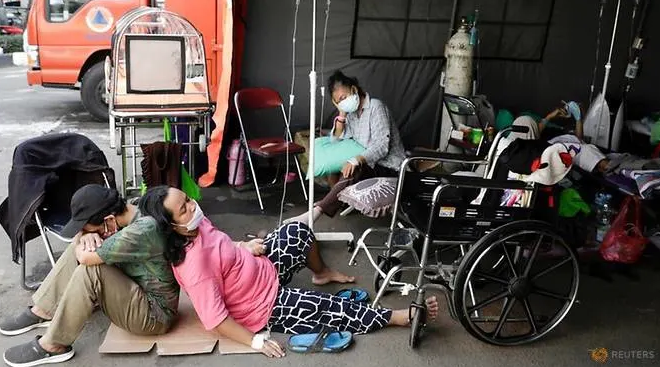
Having escaped the worst when the COVID-19 pandemic erupted last year, Southeast Asia is now suffering record rises in deaths and cases, while vaccination shortfalls and highly contagious variants have derailed containment efforts.
As countries like Britain, Germany and France prepare to remove most remaining restrictions after devastating outbreaks, governments in Southeast Asia have been tightening measures, hoping targeted lockdowns will act as circuit breakers in arresting dramatic spikes after cases started rising in May.
READ: Malls shut, dining-in banned as Indonesia unveils broad emergency COVID-19 curbs in Java and Bali
Indonesia, the region’s hardest hit and most populous country, recorded 38,391 cases on Thursday (Jul 8), six times the number a month earlier, in a week when its daily death toll as much as doubled from the start of July.
Hospitals on the most populous island Java are being pushed to the limit, oxygen supplies are low, and four of five designated COVID-19 burial grounds in the capital Jakarta are close to full.
READ: Desperate Malaysians fly white flags as a call for help to survive COVID-19 lockdown
Record deaths were reported on Thursday in Malaysia, and in Thailand, where authorities proposed internal travel curbs as the Delta variant wreaking havoc in Indonesia spread quickly in and around Bangkok.
A new terminal at the Thai capital’s airport is being turned into a 5,000-bed field hospital.
READ: Phuket reports first overseas visitor with COVID-19 after reopening without quarantine requirements
Neighbouring Myanmar saw more than 4,000 new cases for the first time on Thursday and one of its deadliest days, while Cambodia has seen its highest number of cases and deaths in the past nine days.
Health experts say a low level of testing in the region’s most populous countries Indonesia and the Philippines is also likely disguising the full extent of outbreaks, while Myanmar has seen a collapse in testing since February’s military coup.

PANIC-BUYING
Vietnam’s reputation as a COVID-19 success story is under threat, with more cases in the past three days than during the first 13 months of the pandemic, although the record 1,314 cases on Thursday were a fraction of those in Indonesia.
READ: SEA Games in Vietnam postponed amid rising COVID-19 cases
Fears of a lockdown prompted supermarket panic-buying this week in the epicentre Ho Chi Minh City, and a 4 per cent plunge in its main stock index on Tuesday.
The city of 9 million had previously been subjected to travel restrictions for a month but infection rates were steadily rising – with more than 9,400 cases registered.
The capital Hanoi halted public transport from places with infection clusters to insulate itself from the outbreak in the southern commercial hub, where some of the country’s tightest restrictions were in force from Friday.
Ho Chi Minh City residents are now barred from gathering in groups larger than pairs in public, and people are only allowed to leave home to buy food, medicine and in case of emergencies.
Dicky Budiman, an epidemiologist at Griffith University, said the region was struggling to cope with the Delta variant and were paying for inconsistencies in strategy and messaging, and enforcement of protocols.
READ: Delta COVID-19 variant threatens new pandemic challenge
He also cited the need to broaden the range of vaccines to better protect populations, noting the dominance of the Sinovac vaccine, owing to China’s vaccine diplomacy when Western brands were unavailable.
“There’s definitely benefits to the vaccine, but there’s also the weak sides of it. Why? In handling the pandemic at a bigger scale … vaccines can’t stand alone,” he said. “Vaccines need to be diversified. Resources need to be diversified.”

Vaccination rates remain low, with 5.4 per cent of Indonesia’s 270 million population fully inoculated, about 2.7 per cent of people in the Philippines and 4.7 per cent of the population in Thailand.
Malaysia has vaccinated 9.3 per cent of its 32 million people and has introduced an enhanced lockdown in its capital and industrial belt.
READ: ‘No evidence’ inactivated virus vaccines more efficacious against COVID-19 variants than mRNA ones – Singapore expert committee
Indonesia and Thailand are considering booster shots with mRNA vaccines, like those of Moderna and Pfizer-BioNTech/Cominarty, for medical workers who have mostly received the Chinese-made inactivated virus vaccines of Sinovac, amid concerns about their resistance to variants.
Singapore is among the few bright spots, with authorities expected to further ease restrictions and complete the immunisation of half of the population later this month.
It also plans to allow fully vaccinated residents to attend larger gatherings such as conferences, congregational worship and wedding solemnisations.
Source: Agencies/dv
 English
 简体中文
简体中文 Bahasa Indonesia
 Bahasa Melayu