
Covid-19 (May 19) – New record with 6,075 cases, death toll passes 2k
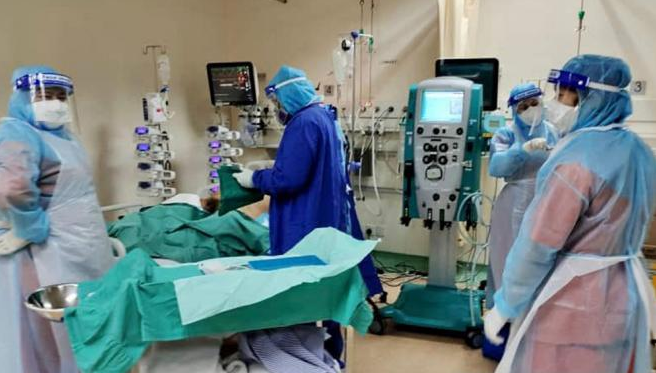
COVID-19 | The country’s daily Covid-19 case numbers hit a new record today with 6,075 cases confirmed.
Nearly half of them (48 percent) were recorded in the Klang Valley, though most other states and territories also reported triple-digit case numbers.
The previous all-time high was 5,728 cases recorded on Jan 30.
The spike appears to be primarily driven by a surge of cases in Sabah, Johor, Kedah and Terengganu compared to the average seen in these states over the past two weeks.
Cases in Kedah and Terengganu are also at a record high with 445 and 203 cases respectively.
- Active cases: 47,340
- Patients in ICUs: 559*
- Intubated: 303
*This figure does not include “probable” or “suspected’ Covid-19 cases. See here.
The number of people in ICUs or who require intubation were also at record highs with the latter exceeding 300 for the first time.
The increase in cases was accompanied by increased testing with 101,822 people being sampled in a day.
This is the first time the figure reached six digits, yielding a test positivity rate of 5.97 percent.
“It is hoped that all parties take cognisance of the situation in the country and give close cooperation to overcome this difficult moment and fight Covid-19 as a united nation,” urged Health Ministry director-general Dr Noor Hisham Abdullah today.
Deaths
There were 46 Covid-19 deaths recorded, bringing the total national death toll to 2,040.
Today’s number is just one death less than the record high of 47 recorded yesterday.
The new fatalities were recorded in Selangor (19), Sarawak (7), Johor (6), Kelantan (4), Penang (2), Kuala Lumpur (2), Kedah (2), Sabah (2), Negeri Sembilan (1) and Malacca (1).
The youngest victim was a 17-year-old male with leukaemia. The remaining deaths were those aged between 25 and 91. Five of the deceased were already dead when brought to the hospital.
For a detailed breakdown on the reported deaths, please refer to our Covid-19 tracker site.
New cases by state
- Selangor (2,251)
- Johor (699)
- Kuala Lumpur (660)
- Kedah (445)
- Kelantan (441)
- Sarawak (323)
- Perak (220)
- Terengganu (203)
- Negeri Sembilan (189)
- Penang (183)
- Sabah (160)
- Pahang (150)
- Malacca (122)
- Labuan (14)
- Putrajaya (9)
- Perlis (6)
Clusters
A total of 516 out of 1,942 clusters are still active. This includes 22 new clusters registered.
Eight of the new clusters were workplace clusters, seven were community clusters, six linked to religious activities and one involved an educational institution operated by the Education Ministry.
Details of the new clusters are as follows:
Industri Bukit Raja
Category: Workplace
State(s): Selangor
District(s): Klang
Total infected: 21 out of 194 screened
Jalan 223 PJ
Category: Workplace
State(s): Selangor
District(s): Petaling
Total infected: 16 out of 71 screened
Jalan Endap Sawit
Category: Workplace
State(s): Sarawak
District(s): Samarahan, Serian and Kuching
Total infected: 29 out of 48 screened
Jalan Tanjung Kupang
Category: Workplace
State(s): Johor
District(s): Johor Bahru
Total infected: 199 out of 953 screened
Jalan Tuan Hitam
Category: Workplace
State(s): Terengganu
District(s): Besut
Total infected: 38 out of 323 screened
Paya Rumput Utama
Category: Workplace
State(s): Malacca
District(s): Melaka Tengah
Total infected: 11 out of 49 screened
Victoria Merdeka
Category: Workplace
State(s): Labuan
District(s): Labuan
Total infected: 16 out of 151 screened
Jalan Kampung Bakau
Category: Workplace
State(s): Perlis
District(s): Kangar
Total infected: 7 out of 8 screened
Stunggang
Category: Community
State(s): Sarawak
District(s): Lundu
Total infected: 9 out of 135 screened
Kampung Tanjong Jejulok
Category: Community
State(s): Kelantan
District(s): Pasir Mas
Total infected: 15 out of 26 screened
Kampung Limau
Category: Community
State(s): Kuala Lumpur
District(s): Lembah Pantai
Total infected: 27 out of 56 screened
Pagar Sungai Imam
Category: Community
State(s): Sabah
District(s): Tawau
Total infected: 27 out of 70 screened
Muhibbah Dua
Category: Community
State(s): Sabah
District(s): Lahad Datu
Total infected: 14 out of 22 screened
Kolopis
Category: Community
State(s): Sabah
District(s): Penampang
Total infected: 13 out of 113 screened
Jalan Inang
Category: Community
State(s): Malacca
District(s): Melaka Tengah
Total infected: 10 out of 34 screened
Jalan Kenanga Pertama
Category: Religious event
State(s): Selangor
District(s): Sabak Bernam
Total infected: 29 out of 200 screened
Jalan Pusara
Category: Religious event
State(s): Selangor
District(s): Sepang
Total infected: 13 out of 28 screened
Jalan Timah Empat
Category: Religious event
State(s): Johor
District(s): Johor Bahru
Total infected: 25 out of 94 screened
Taman Sri Rampai
Category: Religious event
State(s): Kuala Lumpur
District(s): Titiwangsa
Total infected: 7 out of 11 screened
Kampung Keranji
Category: Religious event
State(s): Kelantan
District(s): Pasir Mas
Total infected: 14 out of 37 screened
Kampung Batu Tiga
Category: Religious event
State(s): Perak
District(s): Batang Paandg and Kuala Kangsar
Total infected: 10 out of 66 screened
Jalan Senduduk Satu
Category: Education Ministry institution
State(s): Johor
District(s): Johor Bahru
Total infected: 16 out of 202 screened
Source:Malaysiakini
Fears for supplies in Myanmar’s Chin State as exodus grows from fighting
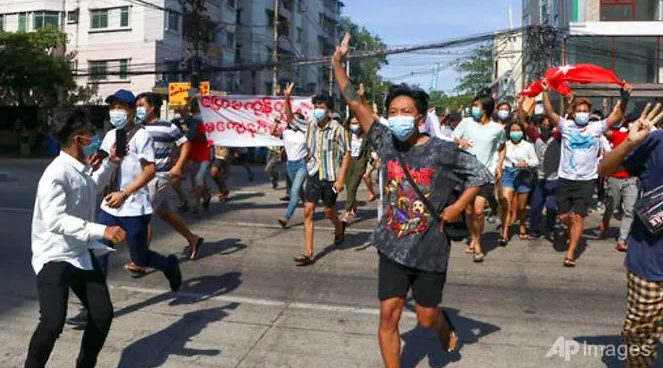
YANGON: People displaced by an upsurge of fighting in Myanmar’s Chin State voiced concerns over shelter and supplies as more flee the conflict that has sprung up between the army and insurgents opposed to the junta that seized power in February.
The exodus also threatens to push more people over the nearby border with India, where an Indian government official said more than 15,000 had sought refuge since the Feb 1 coup that has plunged the country into chaos.
“When it rains, we don’t have strong shelters,” said Mai, who fled on foot from the town of Mindat at the weekend and is now at a village 15km away.
“We have enough rice and dry peas, but we have to go and find vegetables. There is a shortage of oils and fuel for motorcycles. There are no medical supplies. Even if we have money, we cannot buy groceries,” she told Reuters by messaging app.
Those fleeing say thousands of people left Mindat after the army attacked to uproot fighters of the Chinland Defence Force, who are aligned with a National Unity Government formed by the junta’s opponents.
READ: Myanmar junta declares martial law in town after attacks on bank, police
“There are also reports of civilians killed and injured and civilian property damaged or destroyed,” the United Nations Office for the Coordination of Humanitarian Affairs (OCHA) said on Tuesday (May 18).
“Access by humanitarian partners to the people fleeing violence or those still in their homes is challenging due to insecurity.”
Since overthrowing and detaining elected leader Aung San Suu Kyi, the junta has struggled to impose its authority in the face of daily protests, paralysing strikes and an upsurge of fighting against old and new groups of ethnic minority fighters.
A junta spokesman did not answer calls seeking comment.

MORE ATTACKS
The state-run Global New Light of Myanmar said insurgents had attacked two other locations in Chin State, which borders India, on Monday. It said no members of the security forces were hurt in the attacks.
READ: Local uprisings emerge to challenge Myanmar’s army
Residents said the fighting had prompted many people to flee the town of Kanpetlet, about 20km from Mindat as the crow flies, but much further by road in the hilly state, a largely Christian part of predominantly Buddhist Myanmar.
“It is very sad we had to flee from our own houses,” said 24-year-old Salai, now taking refuge at a nearby village.
An official in India’s Mizoram state said on Tuesday that more refugees were expected there too.
At least 10 people were killed in Chin State in the past week, according to figures from the Assistance Association for Political Prisoners activist group. It puts the death toll since the coup at 805, a figure disputed by the army.
READ: Myanmar activists say more than 800 killed by security forces since coup
Reuters was unable to contact the Chinland Defence Force, a new militia formed since the coup. Insurgents from various ethnic minority communities have been fighting for autonomy for decades in the diverse country of 53 million.
The United Nations said close to 10,000 people have been displaced in Kachin State in the north by renewed fighting since mid-March. Thousands have also been displaced by clashes in the east and northeast.
The army took power after the election commission rejected its accusations of fraud in a ballot swept by Aung San Suu Kyi’s party last November.
Images shared widely on social media showed protests in multiple regions of Myanmar on Wednesday, with flag-waving demonstrators marching, singing and clapping, some braving downpours.
Many carried banners in support of the unity government and Aung San Suu Kyi’s National League for Democracy, and others were pictured with their arms in the air making the three-finger salute that has become a gesture of defiance against the junta.
Source: Reuters/dv
Source:Malaysiakini
China says US threatening peace as warship transits Taiwan Strait
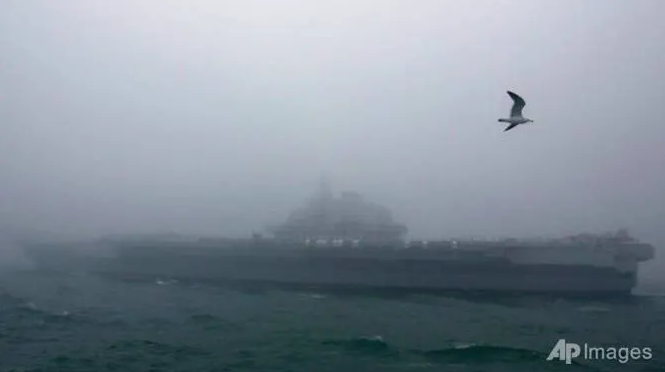
BEIJING: China accused the United States on Wednesday (May 19) of threatening the peace and stability of the Taiwan Strait after a US warship again sailed through the sensitive waterway that separates Taiwan from its giant neighbour.
The US Navy’s Seventh Fleet said the Arleigh Burke-class guided missile destroyer USS Curtis Wilbur conducted a “routine Taiwan Strait transit” on Tuesday in accordance with international law.
“The ship’s transit through the Taiwan Strait demonstrates the US commitment to a free and open Indo-Pacific. The United States military will continue to fly, sail, and operate anywhere international law allows,” it said.
A spokesman for China’s Eastern Theatre Command expressed strong opposition and condemned the move, which comes amid heightened tensions between the two powers.
“The US actions send the wrong signals to Taiwan independence forces, deliberately disrupting the regional situation and endangering peace and stability across the Taiwan Strait,” he said.
Chinese forces tracked and monitored the ship throughout its voyage, he added.
China believes Taiwan’s democratically elected government is bent on a formal declaration of independence for the island, a red line for Beijing.
READ: China’s massed drills near Taiwan take aim at Washington audience
Taiwan President Tsai Ing-wen says they are already an independent state called the Republic of China, its formal name.
Taiwan’s Defence Ministry said the US ship had sailed in a southerly direction through the strait and the “situation was as normal”.
The US Navy has been conducting such operations every month or so.
The United States, like most countries, has no formal diplomatic ties with Taiwan but is its most important international backer and a major seller of arms.
Military tension between Taiwan and Beijing have spiked over the past year, with Taipei complaining of China repeatedly sending its air force into Taiwan’s air defence zone.
Some of those activities can involve multiple fighters and bombers.
China has said its activities around Taiwan are aimed at protecting China’s sovereignty. Taiwan’s government has denounced it as attempts at intimidation.
Source: Reuters/dv
COVID-19 vaccine tourism emerges in Thailand as demand grows

BANGKOK: Thais who do not want to wait for the COVID-19 vaccine distribution from their government have opted for a new option to get it overseas.
The growing demand for vaccination amid a new wave of outbreaks in the country has given rise to tour packages which let customers join the vaccination queue abroad and choose from a greater variety of vaccines to build their immunity against the coronavirus.
“People who opt for this don’t want to wait in Thailand any longer. If they have a choice and can afford the vaccination, they choose to pay instead of waiting because they don’t know for how long they’d have to do that,” said Mr Rachphol Yamsaeng, managing director of Unithai Trip.
His company recently began to advertise organised trips from Thailand to the United States, offering overseas holidays with a twist.
Starting from about US$2,300 per person, the packaged tour includes a 10-day journey where customers not only get to travel around Los Angeles, San Francisco and Las Vegas but also receive the Johnson & Johnson single-dose COVID-19 vaccine.
“So many people have called – hundreds of them – but 80 per cent of them don’t have a US visa. This is despite me having said they need it to join as they won’t be able to travel otherwise,” Mr Rachphol told CNA.
Still, people keep calling. This actually shows they really want to go.
Unithai Trip is one of a few travel companies in Thailand that offer COVID-19 vaccination in their tour packages. According to Mr Rachphol, several customers were finalising their travel plans with his firm and a few others have already departed for the US since last week.
Most of his clients are families who paid for private tours. Prices range from US$2,300 per person for a group of eight travellers to US$3,700 per person for a group of two. These include hotel accommodation in the US, private transport, entry fees for tourist attractions and a service charge for liaising with the Thai embassy to obtain certificates of entry, which are required for their return to Thailand.
As for the vaccination, the appointment will be confirmed prior to the clients’ departure from Thailand.
“We’ll take care of everything from start to finish,” said Mr Rachphol, who also flew to get a COVID-19 vaccine jab in the US earlier this week.
READ: Thailand faces ‘tight situation’ for hospital beds, those with many COVID-19 symptoms to get priority
COVID-19 VACCINE TOURISM
COVID-19 vaccine tourism recently took off in Thailand, where vaccination against the coronavirus is prioritised according to age and health conditions. Currently, tens of millions of local residents rely on the government for vaccine allocation as it is the sole importer of COVID-19 vaccines.
To create herd immunity, the government has set a target to inoculate at least 50 million people within this year or about 70 per cent of the population. Still, there are concerns among residents that the plan may not be rolled out within the set timeframe.
Since February, about 2.3 million people in Thailand have been vaccinated against the coronavirus. This means the government still needs to inoculate some 47.7 million residents within 226 days to reach its target. However, data from the health ministry showed the daily rates of vaccination are far below what is required.

Moreover, the country is battling its biggest wave of COVID-19 outbreak so far. On May 17, its COVID-19 centre reported 9,635 new patients in one day. More than 70 per cent of the new infections were detected in jails and prisons.
READ: Almost 3,000 inmates, officials in Thai prisons test positive for COVID-19
Since the new wave hit Thailand in early April, 84,692 people have been infected by the coronavirus and more than 500 have died. The recent spikes in cases and fear of possible mutations have pushed Prime Minister Prayut Chan-ocha to procure more COVID-19 vaccines.
The government has so far secured 63 million doses of the Sinovac and AstraZeneca vaccines. The latter – 61 million doses – will be produced in Thailand and is expected to be ready from June.
“I’d like to stress that the government can certainly procure vaccines for all the Thai population and will not stop the procurement or the reservation to ensure safety for all Thais. Given our old target of procuring 100 million doses for 50 million people within this year, I have made an order to increase it to at least 150 million doses. We are confident we’ll be able to procure them all,” Mr Prayut said in a Facebook post on May 11.
“I’d like to confirm every type of vaccine imported by the government is efficient and approved by the Ministry of Public Health and that they’ve been widely used across the world. Tens of millions of people have received them, including world leaders.”
According to Mr Prayut, the Public Health Ministry proposed more vaccine procurement plans, including 5 million to 20 million doses of the Pfizer-BioNTech vaccine and 5 million to 10 million doses from each of the Sputnik V, Sinovac and Johnson & Johnson vaccines.
Four vaccines have been approved by the Thai Food and Drug Administration (FDA), namely AstraZeneca, Sinovac, Johnson & Johnson and Moderna. However, only the first two have been imported and used in the vaccination programme for the general public.
The Government Pharmaceutical Organization (GPO) is the sole importer of COVID-19 vaccines in Thailand. According to its managing director Witoon Danwiboon, the organisation is in the process of procuring the Moderna vaccine for private hospitals. However, the vaccine will be administered with a cost once it becomes available in Thailand.
READ: Phuket seeks ‘special channel’ to procure its own COVID-19 vaccines for planned July reopening
COVID-19 VACCINE TOURS: A SOLUTION AWAY FROM HOME
Thailand’s vaccination programme is divided into three phases, with each recipient given two doses of the vaccine free of charge.
The first phase started in February, targeting risk groups and areas with high levels of infection. Recipients include medical personnel, health officials and volunteers, people aged 60 and over, and those with chronic diseases.
The second phase will start in June and include people aged 60 and over as well as those with chronic diseases nationwide. Registration began earlier this month at hospitals and on the health ministry’s online platform.
The final phase is for people aged between 18 and 59. This group’s registration has been brought forward to start on May 31.
According to the Center for COVID-19 Situation Administration (CCSA), the government has adjusted the national vaccination plan to speed up the inoculation by allowing every province to ration its vaccines to include walk-ins from June.
“The preliminary approach will be 30:50:20, which can be adjusted as necessary by the provincial communicable disease committee. For example, if there are 1,000 doses, 30 per cent of them can be allocated to appointments made through mobile application Mor Prom, 50 per cent to those made at hospitals, and 20 per cent to walk-ins,” CCSA said on May 14.
But for some residents who do not want to wait, the emergence of COVID-19 vaccine tours offers a solution away from home. The US is a popular destination among Thai vaccine-seekers as several states give them to non-residents.
Earlier this month, the New York City government announced it will administer the Johnson & Johnson vaccine to tourists at iconic sites across the city and “make sure they have a built-in souvenir to bring home with them”.

Besides the US, some tour operators in Thailand also organise trips to Serbia, which uses the Sputnik V vaccine as well as shots from Sinopharm, Pfizer-BioNTech and AstraZeneca.
“For me, this is a signal telling us that people will get to travel to the US soon. If Thailand relaxes its quarantine requirement – for example, by reducing the quarantine period for those who have been vaccinated to four or seven days – more people would want to join the tours,” said Mr Chanok Kalyanamitra from tour company My Journey Travel.
His company also organises vaccine trips to the US, where travellers will be inoculated with the Johnson & Johnson vaccine. A number of people have shown interest, he added, but many of them were put off by the 14-day quarantine requirement upon their return to Thailand.
“Nevertheless, optimistically speaking, it seems like oversea tours are beginning to move,” Chanok said. “Tour operators are coming back to work.”
Source: CNA/pp
 English
 简体中文
简体中文 Bahasa Indonesia
 Bahasa Melayu