
Covid-19 (April 29): 3,332 new cases, S’gor surpasses 1k mark again
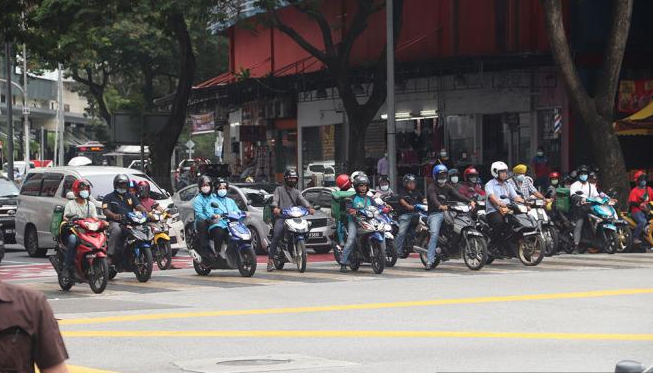
COVID-19 | The Health Ministry reported 3,332 new cases of Covid-19 today, the second day in a row that infections have exceeded the 3,000 mark.
Selangor also reported 1,083 cases, the second day it has reported four-digit infections. This is the highest number of cases in the state since Feb 18 (1,013).
On the flip side, 1,943 Covid-19 patients recovered today but they were outpaced by new infections, contributing to a rise in active cases and increasing the strain on Covid-19 hospitals.
Active cases are now at their highest since Feb 25 (28,337).
- Active cases: 28,093
- Patients in ICUs: 309
- Intubated: 147
New cases by states
Selangor recorded the highest number of new infections today with 1,083 cases, most of which (705) were identified through contact tracing.
This was followed by Sarawak at 522 cases, Kelantan at 401 cases and Kuala Lumpur at 359 cases.
Overall, the Klang Valley accounted for 43.55 percent (1,451 cases) of new infections while East Malaysia made up 19.6 percent (653 cases) of the fresh infections.
Deaths
There were 15 fatalities today, bringing the death toll to 1,492.
The new deaths were recorded in Kuala Lumpur (4), Selangor (3), Sarawak (2), Sabah (1), Kelantan (4) and Johor (1).
The youngest victim was a 26-year-old woman who died at Tawau Hospital with no history of chronic illness. The remaining deaths were aged between 46 and 91.
For a detailed breakdown of the reported deaths today, please refer to our Covid-19 tracker site.
Clusters
A total of 378 out of 1,638 clusters are still active. From the active clusters, 83 of them contributed to the new cases today.
This includes the 12 clusters reported today as well as another four that were declared resolved.
Three of the new clusters involve schools operated by the Education Ministry, while six are community clusters or involve religious services.
Meanwhile, the resolved clusters are: Tapak Bina Jalan Usahawan, Jalan Azlan, Banggol Chicha and Jalan Sebelas].
Details of the new clusters are as follows:
Bukit Rotan cluster
District(s): Kuala Selangor, Sabak Bernam, Petaling and Klang in Selangor; Port Dickson in Negeri Sembilan
Locality/Source: A funeral held at Bukit Rotan, Kuala Selangor on April 16
Cluster category: Community
First case: April 24, index case with symptoms
Total infected: 16 out of 45 screened
Sileng Dayak cluster
District(s): Lundu and Kuching in Sarawak
Locality/Source: Kampung Sileng Dayak, Lundu
Cluster category: Community
First case: April 22, index case symptoms
Total infected: 72 out of 1,740 screened
Kampung Pemanok cluster
District(s): Machang in Kelantan
Locality/Source: Kampung Pemanok, Machang
Cluster category: Community
First case: April 22, index case with symptoms
Total infected: 27 out of 53 screened
Raub Jaya cluster
District(s): Raub, Lipis and Bentong in Pahang
Locality/Source: Index case’s residence at Taman Raub Jaya, Raub
Cluster category: Community
First case: April 23, index case with symptoms
Total infected: 54 out of 270 screened
Tabuan Jaya cluster
District(s): Kuching, Serian and Samarahan in Sarawak
Locality/Source: School at Tabuan Jaya, Kuching
Cluster category: MOE educational institution
First case: April 17, index case with symptoms
Total infected: 22 out of 252 screened
Batu Lada cluster
District(s): Kuala Krai and Machang in Kelantan
Locality/Source: School at Jalan Batu Lada, Kuala Krai
Cluster category: MOE educational institution
First case: April 22, index case with symptoms
Total infected: 21 out of 191 screened
Jalan Abdul Rahman Andak cluster
District(s): Johor Bahru in Johor
Locality/Source: School at Jalan Abdul Rahman Andak, Johor Bahru
Cluster category: MOE educational institution
First case: April 26, index case with symptoms
Total infected: 12 out of 279 screened
Jalan RP Tiga cluster
District(s): Gombak and Hulu Selangor in Selangor
Locality/Source: Factory at Jalan RP 3, Kawasan Industri Rawang Perdana, Gombak
Cluster category: Workplace
First case: April 27, targeted screening
Total infected: 46 out of 128 screened
Jalan Tiga Belas – Tiga cluster
District(s): Petaling in Selangor
Locality/Source: A factory at Jalan 13/3, Seksyen 13, Petaling Jaya
Cluster category: Workplace
First case: April 23, targeted screening
Total infected: 14 out of 164 screened
Jalan Adika Raja cluster
District(s): Hulu Perak in Perak and Baling in Kedah
Locality/Source: Training centre at Jalan Adika Raja, Pengkalan Hulu, Hulu Perak
Cluster category: Workplace
First case: April 27, index case with symptoms
Total infected: 34 out of 88 screened
Kampung Parit Bunga cluster
District(s): Tangkak in Johor
Locality/Source: Kampung Parit Bunga Raya Hujung, Bukit Gambir, Tangkak
Cluster category: Religious event
First case: April 27, index case with symptoms
Total infected: 8 out of 18 screened
Jalan Pokok Assam cluster
District(s): Larut, Matang and Selama in Perak
Locality/Source: Kampung Pokok Assam, Taiping
Cluster category: Religious event
First case: April 19, index case with symptoms
Total infected: 14 out of 38 screened
Source:Malaysiakini
India’s daily COVID-19 cases spike to new global record, as total infections cross 18 million mark
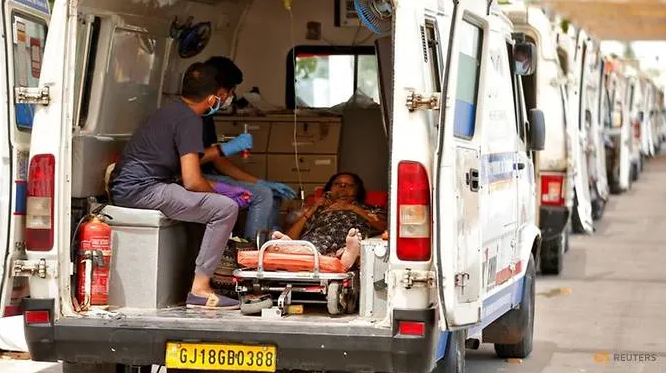
BENGALURU: India’s COVID-19 infections crossed the 18 million mark on Thursday (Apr 29) with almost 380,000 new cases, breaking another world record.
The explosion in infections, blamed in part on a new virus variant as well as mass political and religious events, has overwhelmed hospitals with dire shortages of beds, drugs and oxygen.
According to health ministry data, India reported 379,257 new cases and a record 3,645 new deaths, taking its total caseload to 18.38 million and fatalities to 204,832.
This month alone, India has added more than 6 million new cases.
Experts said the country’s best hope to curb its second deadly wave of COVID-19 was to vaccinate its vast population. On Wednesday it opened registrations for everyone above the age of 18 to be given jabs from Saturday.
But India, which is one of the world’s biggest producers of vaccines, does not have the stocks for the estimated 600 million people becoming eligible.
READ: India’s COVID-19 oxygen crisis: Why is there a deadly crunch?
Many people who tried to sign up said they failed, complaining on social media that they could not get a slot or they simply could not get online to register as the website repeatedly crashed.
“Statistics indicate that far from crashing or performing slowly, the system is performing without any glitches,” the government said in a statement late on Wednesday.
The government said more than 8 million people had registered for the vaccinations, but it was not immediately clear how many had got slots.
About 9 per cent of India’s population have received one dose since the vaccination campaign began in January with health workers and then the elderly.
The government’s chief scientific advisor K Vijay Raghavan said in an interview with the Indian Express newspaper that the government could have done more to prepare for the second wave.
“There were major efforts by central and state governments in ramping up hospital and healthcare infrastructure during the first wave … But as that wave declined, so perhaps did the sense of urgency,” he said.
But “it is just not possible to amplify the capacities of a public health system within a year to a level that would be sufficient to cope with what we are seeing now”, he added.
MAKESHIFT CREMATORIUMS
The crisis is particularly severe in New Delhi, with people dying outside packed hospitals where three people are often forced to share beds.
Delhi is reporting one death from COVID-19 every four minutes and ambulances have been taking the bodies of COVID-19 victims to makeshift crematorium facilities in parks and parking lots, where bodies burned on rows and rows of funeral pyres.
Ambulances have been taking the bodies of COVID-19 victims to makeshift crematorium facilities in parks and parking lots, where bodies burned on rows and rows of funeral pyres.
The World Health Organization said in its weekly epidemiological update that India accounted for 38 per cent of the 5.7 million cases reported worldwide to it last week.
READ: Indian COVID-19 variant found in at least 17 countries: WHO
Many nations have rushed to help, sending desperately needed oxygen and aid.
“India’s COVID outbreak is a humanitarian crisis,” US Democratic Senator Elizabeth Warren said on Twitter.
“I’m leading a letter to @moderna_tx, @pfizer, and @jnjnews to find out what steps they’re taking to expand global access to their vaccines to save lives and prevent variants from spreading around the world.”
GLOBAL AID
Two planes from Russia, carrying 20 oxygen concentrators, 75 ventilators, 150 bedside monitors, and medicines totalling 22 metric tonnes, arrived in the capital Delhi on Thursday.
As part of the global effort, Singapore said Wednesday it had sent two planeloads of oxygen supplies, and Germany will deliver 120 ventilators and plans to set up oxygen production.
Britain also announced Wednesday it was sending three oxygen “factories” the size of containers to India following a first consignment of aid this week.
Commentary: How did India go from exporting vaccines to reeling from COVID-19?
The United States is sending supplies worth more than US$100 million to India, including 1,000 oxygen cylinders, 15 million N95 masks and 1 million rapid diagnostic tests, the White House announced on Wednesday. It said the supplies will begin arriving on Thursday.
The United States also has redirected its own order of AstraZeneca manufacturing supplies to India, which will allow it to make over 20 million doses of COVID-19 vaccine, according to the White House.
Taiwan on Thursday said it had bought 150 oxygen concentrators and aimed to send them to India this weekend.
US WARNING
India will receive a first batch of Russia’s Sputnik V vaccine against COVID-19 on May 1. Russia’s RDIF sovereign wealth fund, which is marketing Sputnik V globally, has already signed agreements with five leading Indian manufacturers for over 850 million doses of the vaccine a year.
The US State Department issued a travel advisory warning on Wednesday against travel to India because of the pandemic and approved the voluntary departure of family members of US government employees in India.
Prime Minister Narendra Modi has been criticised for allowing massive political rallies and religious festivals which have been super spreader events in recent weeks.
READ: Destination Dubai: Jets in demand to escape India COVID-19 surge
More than 8.4 million eligible voters are set to vote on Thursday in the last phase of an eight-part election in the eastern Indian state of West Bengal, even as the state witnesses a record rise in coronavirus cases.
“The people of this country are entitled to a full and honest account of what led more than a billion people into a catastrophe,” Vikram Patel, The Pershing Square Professor of Global Health in the Department of Global Health and Social Medicine at Harvard Medical School said in The Hindu newspaper.
The South Asia head of the International Federation of Red Cross and Red Crescent Societies, Udaya Regmi, said the world was entering a critical phase of the pandemic and needed to have vaccinations available for all adults as soon as possible.
Early modelling showed that the B1617 variant of the virus detected in India had a higher growth rate than other variants in the country, suggesting increased transmissibility, it said.
Source: Agencies/lk
2 Myanmar air bases come under attack: Reports

Unidentified attackers launched assaults on two Myanmar air bases on Thursday (Apr 29), with blasts reported at one base and rocket fire seen at another, media and a witness said.
The attacks come after three months of turmoil in Myanmar triggered by a Feb 1 military coup. There was no claim of responsibility or any confirmation of any casualties in the attacks.
A military spokesman did not answer calls seeking comment.
In the first attack on Thursday, three blasts went off at an air base near the central town of Magway in the early hours, the Delta News Agency reported in a post on Facebook.
Security checks were stepped up on roads outside the base after the blasts, the news portal said.
Later, five rockets were fired at one of the country’s main air bases, at Meiktila, to the northeast of Magway, reporter Than Win Hlaing, who was near the base at the time, said in a post.
READ: Myanmar junta launches fresh air raids in rebel territory
He also posted a video clip that included the sound of what appeared to be a rocket flying overhead followed by a blast. Reuters could not verify the clip.
Since the ouster of an elected government led by Nobel laureate Aung San Suu Kyi, protests have rocked cities and towns, and the military has cracked down with lethal force, killing 756 people, according to an activist group. Reuters is unable to confirm the casualty toll.
Fighting between the military and ethnic minority insurgents has also flared since the coup with the military launching numerous air strikes in borderlands in the north and east.
While the armed forces have been battling insurgents in frontier regions for decades, attacks on such high-profile military facilities in central areas have been rare.
HOPE FADES
The growing insecurity comes as hope fades for a bid by Myanmar’s Southeast Asian neighbours to find a path out of the crisis.
The 10-member Association of Southeast Asian Nations (ASEAN) held a meeting on Saturday in the Indonesian capital with the junta leader, Senior General Min Aung Hlaing, and later said they had reached a “five-point consensus” on steps to end violence and promote dialogue between the generals and their civilian rivals.
READ: Myanmar unity government tells ASEAN no talks until prisoners freed
But the junta has declined to accept the proposals, saying it would consider them “when the situation returns to stability” and provided the recommendations facilitated the military’s own roadmap.
Myanmar’s pro-democracy unity government, formed to oppose the junta, ruled out talks on the crisis until all political prisoners are released.
In an indication of the military’s determination to crush dissent, state television announced late on Wednesday that authorities were seeking to charge one of the main leaders of the pro-democracy protests with murder and treason.
Wai Moe Naing, 25, was arrested on Apr 15 when security men rammed him with a car as he led a motorbike protest rally in the central town of Monywa.
READ: Myanmar protesters train to fight junta
The state-run Global New Light of Myanmar newspaper reported that Wai Moe Naing’s group was linked to several explosions of “homemade grenades” in Monywa.
“In addition, they also tortured and brutally killed two police officers … on Mar 26,” the newspaper said.
It is unclear if Wai Moe Naing has a lawyer.
Source: Reuters/lk
US sounds alarm over Hong Kong ‘exit ban’ fears
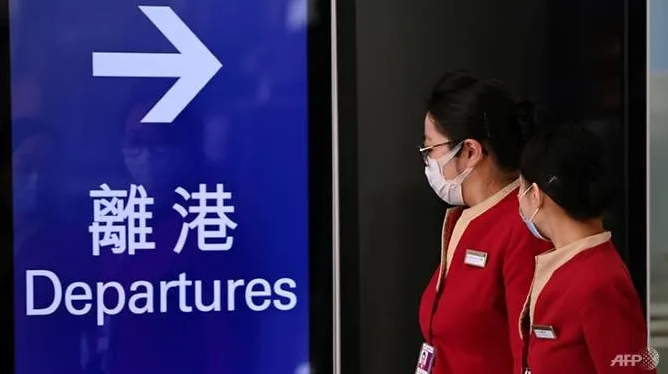
HONG KONG: The United States said on Thursday (Apr 29) it was “deeply concerned” by a new Hong Kong immigration law which includes powers to stop people leaving the city, raising fears Chinese mainland-style exit bans could be deployed there.
The law was passed on Wednesday by a city legislature now devoid of opposition, as Beijing seeks to quash dissent and make the semi-autonomous city more like the authoritarian mainland following huge and often violent democracy protests.
It grants the immigration chief powers to bar people from boarding planes to and from the city.
READ: Hong Kong passes immigration Bill with ‘exit ban’ powers
“We are aware of this legislation and share widespread concerns in Hong Kong about its content, potential uses, and lack of oversight or accountability,” a State Department spokesperson said in a statement on Thursday.
“We have long standing concerns about the PRC’s arbitrary use of exit bans without due process of law, including against American citizens. We are deeply concerned by the prospect of Hong Kong authorities adopting similar arbitrary measures,” the spokesperson added.
Hong Kong’s government says the law will not be applied to people leaving the city and is aimed at stopping illegal immigrants travelling to the business hub.
But the wording of the bill does not limit the power to arriving flights or immigrants and legal experts say it could also be deployed against anyone leaving Hong Kong.
In a potential recognition of those concerns, Hong Kong’s government late on Wednesday said it would draft subsidiary legislation specifying that the law would only be applied to inbound flights.
The US statement urged the Hong Kong government to honour this “public commitment” to not use the law “as a pretext to deny boarding for outbound passengers”.
Britain’s Foreign Office also issued a brief statement.
“The right of people to leave Hong Kong is guaranteed under the Basic Law and should be upheld,” a spokesperson said, referring to the city’s post-handover mini-constitution.
So-called “exit bans” are often used by mainland China against activists who challenge authorities. They have also ensnared business figures involved in commercial disputes.
READ: Carrie Lam says Hong Kong government could intervene in Bar Association if necessary
Local activists and lawyers from Hong Kong’s influential Bar Association warn the bill gives “apparently unfettered power” to the immigration director to do the same, should they wish to.
Beijing imposed a sweeping new national security on Hong Kong last year. Authorities said it would not impact people’s freedoms and only affect “a tiny minority”.
But its broad wording and application has since criminalised much dissent and radically transformed the once politically pluralistic city.
Many of Hong Kong’s prominent pro-democracy figures have since been arrested, detained or fled overseas.
Source: AFP/ac
 English
 简体中文
简体中文 Bahasa Indonesia
 Bahasa Melayu