
Covid-19 (Feb 3): 4,284 new cases, death toll crosses 800 mark
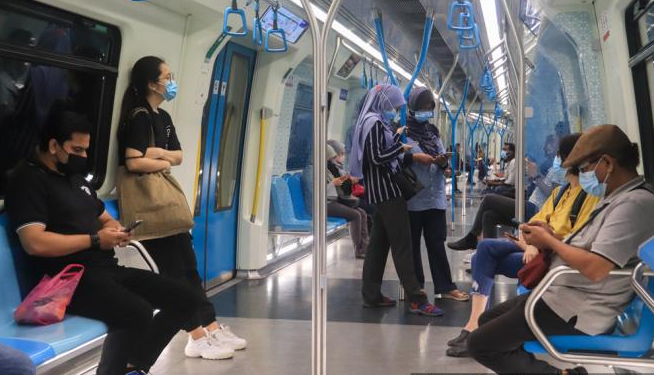
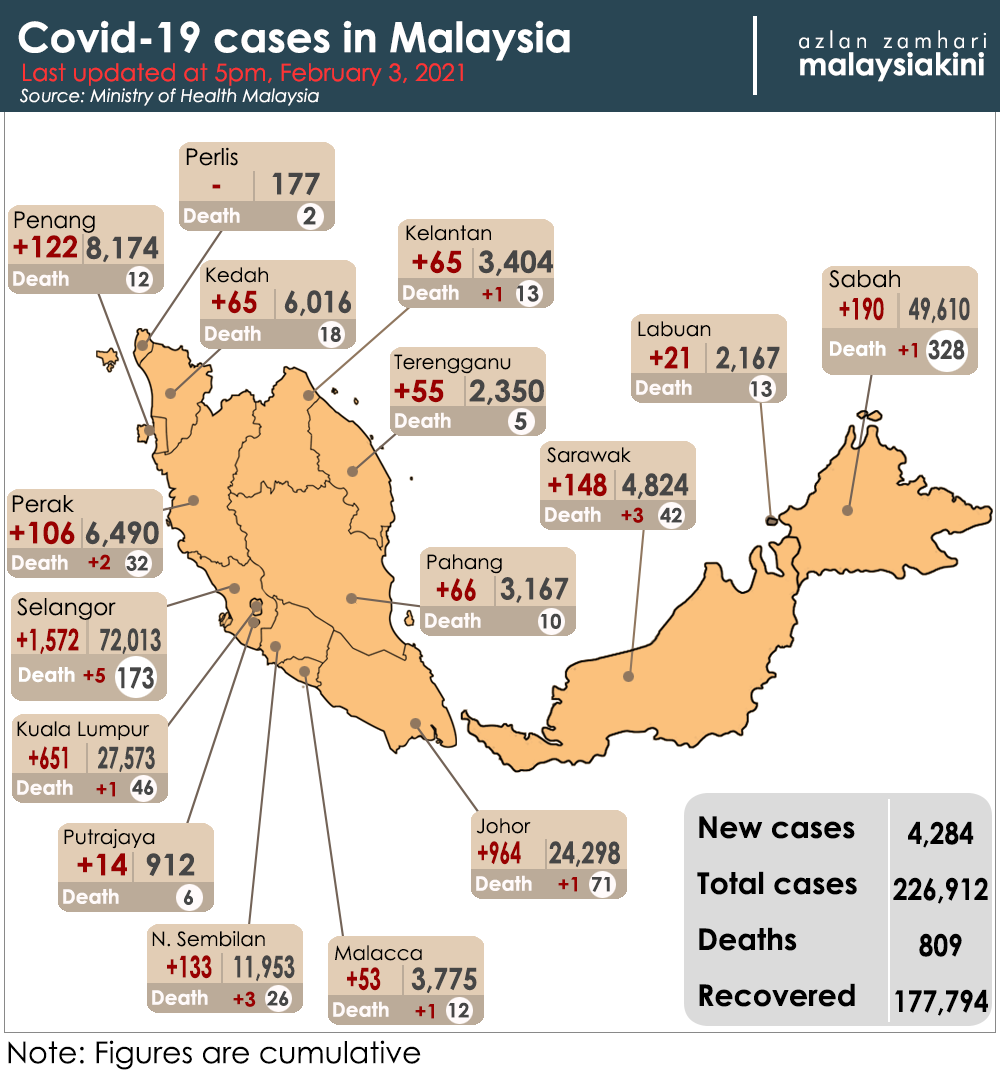
The Health Ministry today reported 4,284 new Covid-19 cases and 18 deaths, bringing the cumulative death toll to 809.
New cases in Sabah – the epicenter of Covid-19 cases late last year – have not been this low (190) since late December and numbers have been trending downwards since Jan 23.
- Active cases: 48,309
- Patients in ICU: 307
- Intubated: 141
- RT-PCR tests*: N/A (Jan 21 – 48,728 tests processed, 76,255 capacity)
- Number of samples taken**: 67,264
In Selangor, the majority of new cases are from existing clusters, new clusters and close contacts. The situation is reverse in Johor, where 563 out of 964 new cases are detected through “other screenings”.
Johor is among seven state/territory health departments that does not report a breakdown of what constituted “other screenings”.
New cases by states in brief:
Selangor (1,572)
Existing clusters: 787
New cluster(s): 65 (Jalan City dan Jalan Aman)
Close contacts: 457
Other screenings: 263
Johor (964)
Existing clusters: 161
New cluster(s): 54 (Jalan Pulai 55 dan Batu Tiga Setengah)
Close contacts: 206
Other screenings: 543
Kuala Lumpur (651)
Existing clusters: 317
New cluster(s): 18 (Taman Koperasi dan Kandi Sungai Besi)
Close contacts: 145
Imported: 5
Other screenings: 166
Sabah (190)
Existing clusters: 16
New cluster(s): 24 (Ladang Tangkarason, Bandar Lama, dan Jalan Satu KKIP)
Close contacts: 93
Imported: 1
Other screenings: 56
Sarawak (148)
Existing clusters: 58
Close contacts: 20
Other screenings: 70
Negeri Sembilan (133)
Existing clusters: 14
Close contacts: 51
Other screenings: 68
Kedah (124)
Existing clusters: 11
Close contacts: 28
Other screenings: 85
Penang (122)
Existing clusters: 14
New cluster(s): 12 (Mayang Pasir)
Close contacts: 35
Other screenings: 61
Perak (106)
Existing clusters: 31
Close contacts: 37
Other screenings: 38
Pahang (66)
Existing clusters: 60
New clusters: 1 (Lebuh Karak)
Close contacts: 2
Other screenings: 3
Kelantan (65)
Existing clusters: 1
New cluster(s): 41 (Tembok Pengkalan Chepa)
Close contacts: 12
Other screenings: 11
Terengganu (55)
Existing clusters: 20
Close contacts: 27
Other screenings: 8
Malacca (53)
Existing clusters: 9
Close contacts: 14
Other screenings: 30
Putrajaya (14)
Existing clusters: 1
New clusters: 9 (Tapak Bina Presint 7)
Close contacts: 3
Other screenings: 1
Labuan (21)
Existing clusters: 9
Close contacts: 7
Other screenings: 5
Deaths
The Klang Valley region accounted for six out of 18 deaths reported. The youngest victim was 30. This victim was among four who was brought in dead at the hospital. Details of the victims are on Malaysiakini Covid-19 tracker page.
This region accounts for 27.81 percent of Covid-19 deaths and the figure is climbing (see chart below).
It should be noted that the reported deaths may not have necessarily occurred over the 24-hour period ending noon today. https://e.infogram.com/c8a28e8e-d511-48c1-bc1b-3eec0f7c699a?parent_url=https%3A%2F%2Fwww.malaysiakini.com%2Fnews%2F561555&src=embed#async_embed
ClustersThe Health Ministry today classified 13 new clusters, none of which were linked to community clusters (e.g. social events).
Five of the clusters involved targeted screening of workplaces. Others indicate that the origins of the cases were unknown. Three clusters involved training institutes – Kandi Sungai Besi, Taman Koperasi and Lebuh Karak.
One cluster – Jalan Pulai 55 – examplified the challenges in the Health Ministry’s efforts to confirm clusters. On Jan 30, 38 individuals in this cluster knew they were Covid-19 positive, but the official Health Ministry records state that the the first case was detected on Feb 1 and the cluster announced two days later.
Ladang Tangkarason cluster
District(s): Beluran, Sabah
Locality/Source: Palm oil estate in Tangkarason
Cluster category: Workplace
First case: Feb 3, targeted screening
Total infected: All 16 screened
Bandar Lama cluster
District(s): Tawau, Sabah
Locality/Source: Government office, Jalan Dunlop
Cluster category: Workplace
First case: Jan 21, index case reported symptoms
Total infected: 24 out of 56 screened
Jalan Satu KKIP cluster
District(s): Tuaran, Sabah
Locality/Source: Warehouse in Jalan Satu KKIP Selatan
Cluster category: Workplace
First case: Jan 7, index case involved in pre-employment screening
Total infected: 30 out of 194 screened
Jalan City cluster
District(s): Sepang, Selangor
Locality/Source: Shopping centre in Sepang
Cluster category: Workplace
First case: Feb 2, targeted screening
Total infected: 48 out of 112 screened
Jalan Aman cluster
District(s): Hulu Selangor, Selangor
Locality/Source: Factory in Jalan Aman Suria, Bestari Jaya
Cluster category: Workplace
First case: Feb 3, targeted screening
Total infected: 38 out of 255 screened
Jalan Pulai 55 cluster
District(s): Johor Bahru, Johor
Locality/Source: Welfare home in Jalan Pulai 55, Taman Pulai Utama
Cluster category: Workplace
First case: Feb 1, index case was screened before being warded
Total infected: 42 out of 58 screened
Batu Tiga Setengah cluster
District(s): Batu Pahat, Johor
Locality/Source: Factory in Batu 3 ½, Jalan Kluang
Cluster category: Workplace
First case: Jan 17, index case reported symptoms
Total infected: 19 out of 119 screened
Taman Koperasi cluster
District(s): Kepong, Kuala Lumpur
Locality/Source: Training institute in Taman Koperasi
Cluster category: Workplace
First case: Feb 3, targeted screening
Total infected: 15 out of 23 screened
Kandi Sungai Besi cluster
District(s): Cheras, Kuala Lumpur
Locality/Source: Public education institution and hostel in Sungai Besi
Cluster category: Workplace
First case: Jan 28, index case reported symptoms
Total infected: 10 out of 267 screened
Lebuh Karak cluster
District(s): Bentong, Pahang
Locality/Source: Training institute along the KL-Karak Highway
Cluster category: Workplace
First case: Feb 2, index case with symptoms
Total infected: 8 out of 170 screened
Tapak Bina Presint Tujuh cluster
District(s): Putrajaya
Locality/Source: Construction site, Presinct 7
Cluster category: Workplace
First case: Feb 3, targeted screening
Total infected: 9 out of 136 screened
Mayang Pasir cluster
District(s): North-East, South-West and Seberang Perai Utara, Seberang Perai Tengah and Seberang Perai Selatan, Pulau Pinang
Locality/Source: Factory in Jalan Mayang Pasir, Bayan Lepas
Cluster category: Workplace
First case: Jan 30, index case with influenza-like illness
Total infected: 47 out of 217 screened
Tembok Pengkalan Chepa cluster
District(s): Kota Bharu, Kelantan
Locality/Source: Pengkalan Chepa Prison
Cluster category: Detention centre
First case: Jan 23, screening of new detainees
Total infected: 76 out of 511 screened
*RT PCR statistics are only announced when health director-general conducts a media briefing in Putrajaya. The last briefing was on Jan 21.
**This figure is derived from subtracting today’s sampling number with the day before’s. The Health Ministry’s testing definition is RT PCR and RTK Antigen.
Source : From Malaysiakini
Covid-19 screening – not as straightforward as one might think
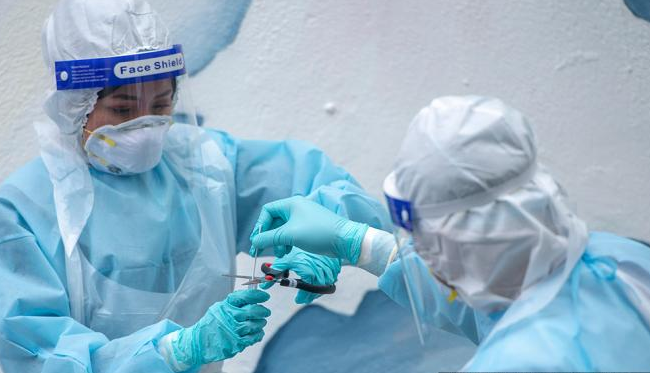
We wish to state firstly, that the cost for Real-Time Reverse Transcription-Polymerese Chain Reaction (RT-PCR) tests are inherently high not due to profit margins but instead because of the various resources required to run them.
A single RT-PCR test requires not only the test kit but also PPE for the doctors and their team, sanitisation and proper clinical waste disposal as well as high-level laboratory costs.
In addition, there is significant time and resources needed in terms of reporting of all tests done, notification of positive cases via E-notification, emails, fax or call within 24 hours in compliance with the Health Ministry’s SOPs and guidelines.
The communication challenges between the private sector and the public sector often demand many man-hours when handling multiple cases.
This does not include the real risk of acquiring Covid-19 infection by the healthcare staff performing the sampling and its untold costs to their physical or mental health and the viability of their practices.
When a private doctor is infected in the course of his or her duties and is either hospitalised or quarantined, he or she may suffer financial difficulties as income immediately drops to none but running cost of their practice are ever-present. There are no grants or donations from any third parties or public, unlike governmental facilities.
Despite these concerns, it is the duty of all private clinics and hospitals to do their utmost best in fighting the pandemic and certainly, the detection of many cases by the private sector leads to greater national efforts of containing Covid-19 spread and its associated clusters.
Unfortunately, by simply lowering the costs without taking all real and hidden costs into consideration may lead to the unsustainability of many private facilities.
As a tool for mass screening, RT-PCR tests have the disadvantage of high costs and the longer time required to run them. Consequently, contact tracing will be prolonged which may defeat the purpose of mass screening and isolation. Typically in an area with high Covid-19 infection prevalence, RT PCR may take three to five days for the turnaround time.
A much more suitable course of action is to employ the Rapid Antigen Test Kit (RTK-Ag). It is not only more suitable because it is fast and accurate but also because the RTK-Ag kits also indicate an individual’s infectivity which will aid in combatting the spread of Covid-19. Private hospitals and clinics are at the forefront of the fight against the Covid-19 pandemic since its start in early 2020.
All private hospitals and clinics act as a triage for Covid-19 patients when they turned up at these facilities, sharing the burden of disseminating public information to patients, Covid-19 screening, shouldering the non-Covid-19 patient load, contributing to fundraising efforts, coordinating with the Ministry of Health and many other acts which go beyond their normal duties.
The Malaysian Medical Council code of ethics explicitly states that every doctor is required to treat patients regardless of race, creed or religion and it goes without saying that is the standard expected of every single registered doctor in this country.
The MMA will never condone any less and hopes that all in society will try to attain a deeper understanding of the issues involved with the trust that all parties are working towards the common goal of making our country Covid-19 free.
Source : From Malaysiakini
Ministers who failed to save jobs should resign
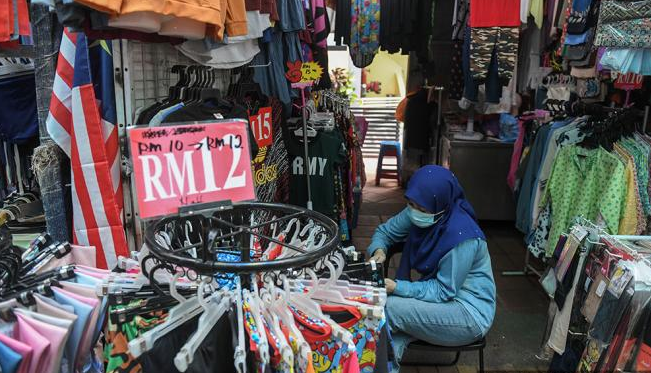
The Perikatan Nasional federal government has dismayed Malaysians by failing to announce any concrete and substantial financial package to rescue the economy following the extension of the movement control order (MCO) from Feb 4 to 18.
While Chinese New Year celebrations will be muted and severely affected, what is of greater significance is the absence of an all-out commitment to save jobs and businesses.
Ministers responsible for health, tourism, welfare, human resources and economy must resign for failing to save jobs and businesses, especially the beleaguered tourism industry, and gross incompetency in managing the Covid-19 public health crisis.
As at Feb 2, Malaysia recorded 222,628 cases, of which 47,847 are active with 791 deaths. The PN government has succeeded in turning Malaysia into the worst Covid-19 Asean nation in per capita terms.
This spike in Covid-19 infection is a damning indictment of the unelected PN government’s failure to manage, control and check this global pandemic. PN’s refusal to fully implement the 3Ts (testing, tracing and treatment) is unforgivable, including all close contacts of Covid-19 positive patients.
Instead of bearing full responsibility for their failure, Prime Minister Muhyiddin Yassin has taken full advantage to secure his political survival following the loss of his parliamentary majority, by suspending Parliament.
Is suspending Parliament the opportunity for Muhyiddin to break his promises, until the health crisis is over, of an automatic extension of bank loan moratorium(except the Top 20), increasing monthly welfare payments to RM1,000 including the unemployed, EPF self-withdrawals, rental relief or subsidies for shopping complexes and direct financial aid to B40s, workers and business establishments?
PN is still comatose and doing nothing to overcome the dire straits of our tourism industry, which lost a shocking RM100 billion in revenue last year. Penang’s Red Rock Hotel manager Jeffrey Lim has been holding a placard and shouting “tiga ringgit, tiga ringgit”, desperately selling his hotel’s nasi lemak by the roadside.
Bernama reported Lim as saying, “We have to depend on the hotel to survive… there is nothing much from the government for the hotel industry.” Is the government not ashamed?
This is not the only evidence of the PN government and the ministers’ indifference and incompetency. Malaysia lost foreign direct investment (FDI) at a worse rate than Asean and globally in 2020, according to the United Nations Conference on Trade and Development (Unctad). Malaysia’s actual FDI last year was down 68 percent, compared to the average contraction of the Asean region of 31 percent and the global average contraction of 42 percent.
At a time when many Malaysians are losing their jobs and businesses through no fault of their own, ministers who failed to do their jobs should be replaced. Just as ordinary Malaysians who are charged in court with breaching the standing operating procedures (SOPs) for MCO, there should be no double standards for ministers and deputy ministers who should not be exempted from being charged in court.
LIM GUAN ENG is Bagan MP, former finance minister, and former Penang chief minister.
Source : From Malaysiakini
How we can celebrate Chinese New Year safely
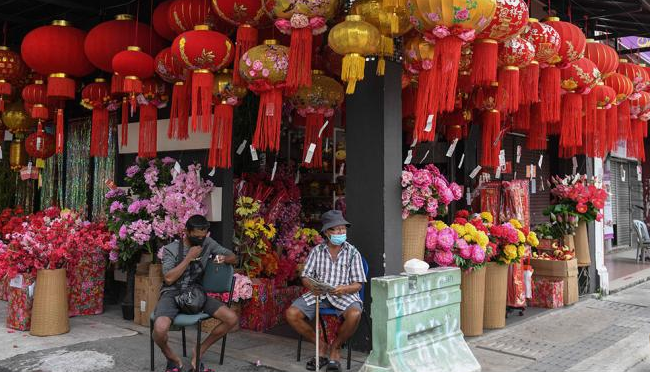
First and foremost, let me extend my greeting: Happy Chinese New Year, Gong Xi Fa Chai, and may this year of the Metal Ox be a prosperous and better one for all!
Now to the more important business: how are we going to celebrate Chinese New Year this year?
Well, it is definitely going to be different and we must accept that! This is for both those who celebrate and those who are looking forward to the long weekend.
Firstly, with the movement control order (MCO) still in place, we must understand that movement between districts and states will be tough. But please remember it is all for a good reason. Remember that as younger people, we are at risk of contracting Covid-19 as asymptomatic carriers.
Visiting our elderly family members during this festive season will only bring the virus to their homes and all it takes is a moment of letting our guard down (taking off your mask, not washing your hands and not practising physical distancing), the virus will pounce.
Unfortunately, this virus pounces on the elderly and hits them hard. We must not allow that. So remember this year – staying away means you care for the elderly relatives by not wanting to infect them. You have to avoid movement, especially inter-districts and inter-states.
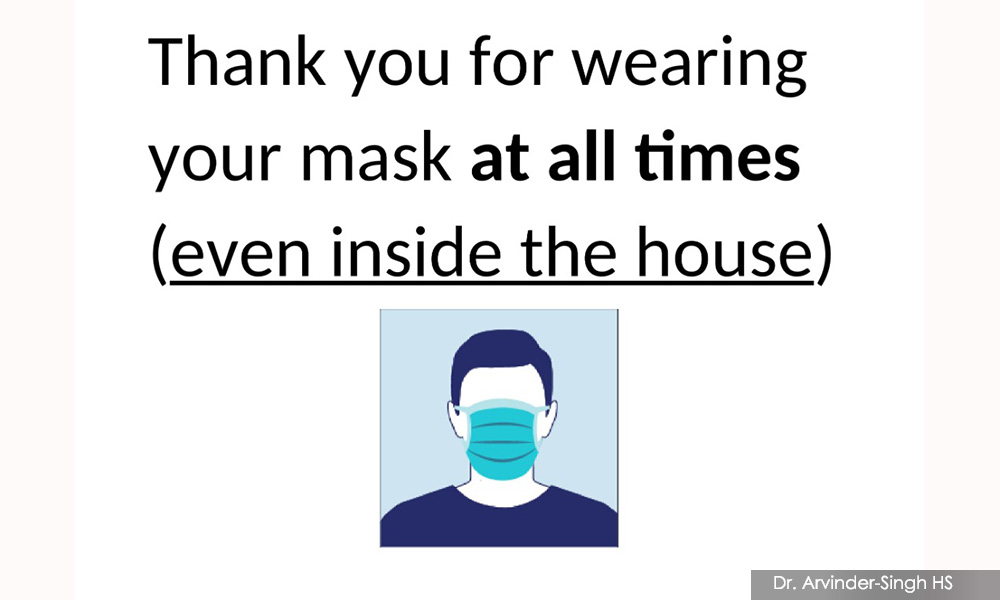
For those living in the same house or within a few doors away, please remember that when you visit, you must wear a mask and it must be also kept on in the house. Yes, you read that right. Remember that keeping a mask on with physical distancing and hand hygiene keeps the virus away.
Also be reminded that having a more than 15-minute conversation (or even very short close conversations) in a confined and congested space, spells trouble.
For those at home, please be vigilant at all times. Chinese New Year is a great time where families sit and eat together. Using the same utensils that we use to eat to scoop food/second helpings must be avoided at all costs.
Do ensure that utensils are made available for each dish so that hygiene can be practised. Also, please do the same for those delicious cookies. Remember that when you use these utensils you must avoid contact with your plate and/or your eating utensils. And, please, do not share food from the same plate.
I know that cure little nephew or niece would like a sip of that tasty beverage, but remember, your kindness in sharing the same drink is actually an opportunity to share the deadly virus with others.
For all homes, please do have ample stock of hand wash or soap ready. Visitors must scrub their hands thoroughly and keep their masks on when they enter a home. Those who are residents at home need not wear masks unless someone is unwell or have symptoms.
It would also be good to have a few extra boxes of face masks that you might want to keep in case someone needs a change of mask and doesn’t have an extra one. If possible, create a QR scan for your homes so that if an unforeseen situation happens, contact tracing becomes easier (SELangkah offers that feature for free if needed).
This Chinese New Year be as strong as the Metal Ox in combating Covid-19.
Source : From Malaysiakini
Govt should loosen purse strings to help poor survive lockdown
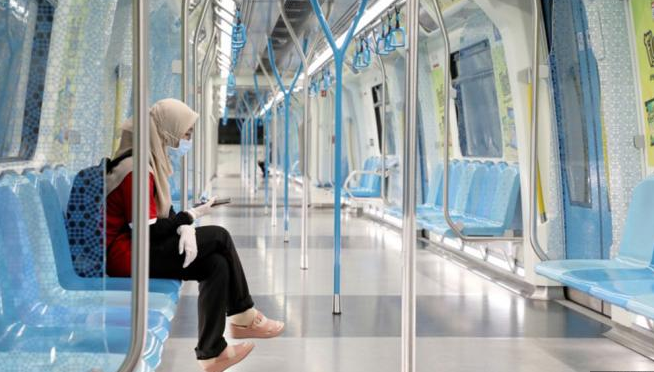
‘Didn’t the US return billions to us? That’s our hard-earned money…’
As Covid-19 surges, Ismail Sabri says poor won’t survive total lockdown
Brahminy Kite: Firstly, the government will not implement a total lockdown as this would sound the death knell for the poor and small businesses? But it looks like the government can allocate tens of millions to build community halls?
Didn’t the United States return billions to us just a few months back? But the government still cannot use that money to help the poor? That’s our hard-earned money – to be used for our welfare!
Prime Minister Muhyiddin Yassin, didn’t you tell the Agong you need this emergency to control the pandemic? A strict lockdown for a month and a half will definitely do less harm to the economy than months and months of half-baked lackadaisical movement control order (MCO) or conditional MCO (CMCO).
Look at how Australia tackled their problem today – a lockdown on two million people with the discovery of only one case. We are not asking for the lockdown of the whole country, just the problematic areas.
Senior Minister (Security) Ismail Sabri Yaakob said the focus of containment would be on construction sites, where large numbers of cases have been recorded. However, outbreaks in those areas are easier to contain. It is the transmission within the local community which is happening now that is difficult to solve without a strict MCO.
The pandemic has already reached the state of community transmission. It is not a surprise if the transmission has crept into non-Covid departments of major government hospitals, infecting healthcare staff including doctors, disrupting services to the public because the staff have to undergo quarantine.
Please check how many patients who are seeking treatment at non-Covid departments are positive. I suggest you work for a few weeks at the nephrology ward or the acute haemodialysis unit of the Kuala Lumpur Hospital to understand the gravity of the problem.
Ismail shared how small businesses were affected after the government barred dining-in. This doesn’t make sense. A restaurant will still get the same profit whether a family dines in or they order takeaway or online for food to be delivered. The price of the dishes remains the same, whether it is dine-in, takeaway, or online delivery.
In fact, restaurants may gain more if customers take away or order online because they will need less staff. Dining-in increases the chances of staff being infected. When this happens, the restaurants lose by having to pay employees while they are in quarantine. Restaurants might even have to shut down for sanitising.
Ismail added that there are no clusters involving markets and roadside stalls. “We act according to facts.” He’s really talking rubbish. Of course, at the point of decision-making, there is no cluster because they haven’t gathered yet. It takes time to form a cluster. How do you know that none of the traders or customers is infected? Clusters only start when traders and customers start to gather. Wouldn’t the exchange of notes and touching of items contribute to transmission?
You can set up a screening desk at the entrance of the pasar malam equipped with thermometer, sanitiser, a record book, and armed personnel to control the crowd but that cannot prevent transmission by people who do not show symptoms. Another thing, if there has not been any history of clusters among roadside stalls, it doesn’t mean that in the future there won’t be any.
I bet my comments would invite a lot of criticism. But please give it some deeper thought. If it is a money problem, the government still has lots of it. That money is our money to be used on us, especially when we are in trouble.
Don’t let our loved ones die just because of money.
WhiteCrab8706: @Brahminy Kite, your comment about restaurants is definitely off the mark. I own a number of restaurants, and revenue is down 90 percent since MCO 2.0.
Dine-in and takeaway are completely different. Delivery helps a bit, but paying 30 to 35 percent fees to Grab, etc, doesn’t make that part of revenue a major factor in surviving.
New Hope: Ismail, you would make the people very happy by getting the police to either arrest or summon all ministers who have broken the standard operating procedures (SOPs).
As far as we are concerned, there should be no excuses. While you are trying your best to do your job, all the other ministers in the Perikatan Nasional (PN) government have come up with fanciful ideas on how to breach the SOPs.
The police can fine a business owner who was just getting out of her car in front of her shop without wearing a mask? On what basis do the police catch ordinary citizens when our so-called “leaders” are getting away scot-free?
Siva1967: One thing is certain, no one can pinpoint where the cases are coming from and why it is spiralling at this unmanageable rate. The stringent implementation of MCO 1.0 did work out somewhat until we let our guard down due to the Sabah state election – no thanks to the Sabah frogs.
However, the same stringent enforcement is not seen being carried out for MCO 2.0. Here’s a suggestion:
1. Call for a strict lockdown for one month – a total shutdown of the economy
2. Provide a moratorium for six months across the board to counter the impact of lost wages and lost business
3. Give financial aid for people’s needs, especially the B40 (bottom 40 percent), by which time, the number in this category would have ballooned
4. Cut all wages and allowances of MPs and state assemblypersons for six months, not that they would starve anyway
5. Cut wages of all C-suite executives in all government-linked companies (GLCs) including the political appointees for six months
6. Ensure food supply is amply available and proper enforcement to ensure no hoarding
We take the hit altogether one time, instead of dragging it out and giving band-aid solutions here and there, prolonging the problem. While the six-month moratorium is in place, efforts to restart the economy must be put in place and rolled out at the end of the sixth month.
What is the economy? In simple terms, it is to ensure every able citizen of this country either has a job to make a living, or a business to earn their keep. With that and a sincere policy in place, we can come out of this victorious.
A generation or two ago, our parents and grandparents lived through the Japanese occupation. This pandemic, however, is a war against an invisible enemy.
ManOnTheStreet: @Siva1967, there is no way a one-month total lockdown, no matter how strict, will bring down the numbers to post-MCO 1.0 levels. Not with the virus in the community as it is now.
There is no such thing as health/lives over economy/livelihood. Only the uninformed repeat this mantra again and again. Both are inextricably linked. We have to find the balance. Prolonged lockdowns will not give us that balance.
GMan: Ismail said they will focus on factories and construction sites as they are the biggest contributors to Covid-19 cases. If that is the case, it doesn’t make sense that we have an emergency declared across the whole country.
This means Parliament is suspended, businesses are suffering, schools are closed for four months (only kindergartens and day-cares can operate), when the biggest contributors are factories and construction sites?
Then why can’t the emergency be limited to just factories and construction sites? Why drag everyone down, affecting the lives of all Malaysians?
Ghostwhowalks: @GMan, the government is just acting like a big bully and blaming it all on the foreigners. They are taking an easy way out and missing the target by a mile!
If it is that simple, the pandemic would have been solved much earlier.
Source : From Malaysiakini
 English
 简体中文
简体中文 Bahasa Indonesia
 Bahasa Melayu