
Covid-19 (March 7): 1,683 new cases, Perlis sees highest spike yet
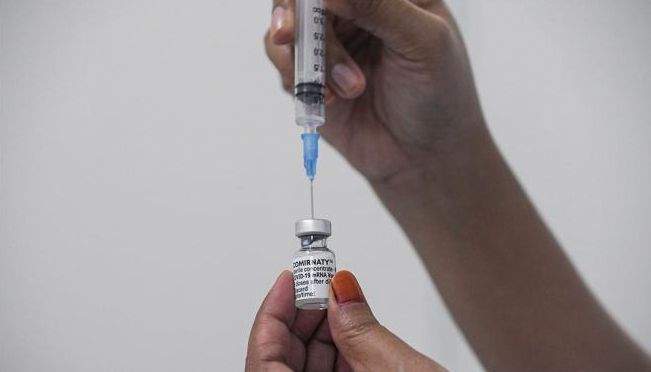
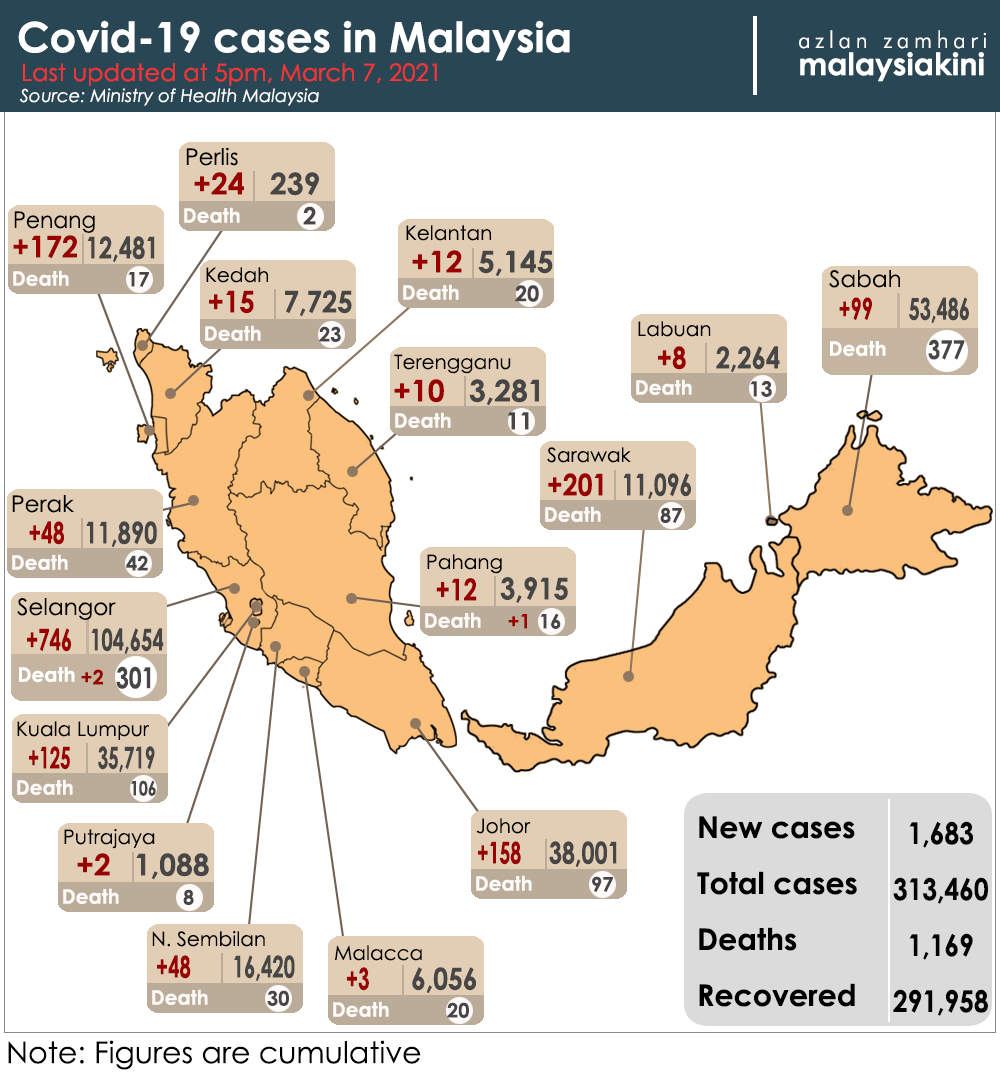
The Health Ministry today reported 1,683 new Covid-19 cases.
Of the new cases, 1,136 were Malaysians while another 547 were non-citizens.
The country managed to keep the number of new daily Covid-19 infections to under 2,000 in five out of the last seven days.
However, Perlis saw the highest number of new infections today since the start of the third wave of the pandemic at 24 cases, the majority of which came from a detention centre.
While the new infections are relatively low compared to other states, Perlis is also the smallest and least populous state. It had only seen a single-digit or no new cases in the previous 44 days.
On the flip side, Selangor, which is the epicentre of the pandemic, has been able to maintain under four-digit new cases for 15 consecutive days.
- Active cases: 20,333
- Patients in ICUs: 174
- Intubated: 81
Active cases declined to the lowest level since Dec 27 last year, as recoveries of 2,506 cases today outpaced new infections.
Deaths
Three new fatalities were reported today, bringing the death toll to 1,169.
Two of the deaths reported today were in Selangor while the third was in Pahang. All of them were Malaysians.
They were aged between 78 and 85 and suffered from various pre-existing conditions.
New cases by states:
Selangor (746)
Existing clusters: 177
New clusters: 45 (Jalan Sungai, Kemuning Enam clusters)
Close contacts: 417
Imported: 1
Other screenings: 106
Sarawak (201)
Existing clusters: 38
New clusters: 44 (Jalan Awang, Kiba clusters)
Close contacts: 102
Other screenings: 17
Penang (172)
Existing clusters: 56
Close contacts: 42
Other screenings: 74
Johor (158)
Existing clusters: 33
New cluster: 19 (Industri Tiga cluster)
Close contacts: 59
Other screenings: 47
Kuala Lumpur (125)
Existing clusters: 28
New cluster: 12 (Jalan Satu construction site cluster)
Close contacts: 32
Imported: 9
Other screenings: 44
Sabah (99)
Existing clusters: 20
New cluster: 11 (Industri Inanam cluster)
Close contacts: 39
Other screenings: 29
Negeri Sembilan (48)
Existing clusters: 41
Close contacts: 3
Other screenings: 4
Perak (48)
Existing clusters: 29
Close contacts: 12
Other screenings: 7
Perlis (24)
New cluster: 13 (DTI Persiaran Wawasan cluster)
Other screenings: 11
Kedah (15)
Existing clusters: 5
Close contacts: 3
Other screenings: 7
Kelantan (12)
Existing clusters: 3
Close contacts: 7
Other screenings: 2
Pahang (12)
Existing clusters: 1
Close contacts: 10
Other screenings: 1
Terengganu (10)
Existing clusters: 1
Close contacts: 7
Other screenings: 2
Labuan (8)
Close contacts: 4
Other screenings: 4
Malacca (3)
Existing clusters: 1
Close contacts: 1
Other screenings: 1
Putrajaya (2)
Close contacts: 2
Clusters
A total of 472 out of 1,199 clusters are still active, of which 68 of them contributed to the new infections today.
This includes the eight new clusters reported today and another 14 which were declared resolved.
The clusters declared over today are: Senai Murni, Bukit Palah, Jelita, Bintang Utama, Jalan Gangsa Dua, Industri Peramu Jaya, Jalan Segama, Kampung Muhibbah, Indah Riang, Jalan Trus, Taman Koperasi, Jalan Pudu, Jalan Banting-Klang and Ampang Campuran.
Details of the new clusters today are as follow:
Kemuning Enam cluster
District(s): Klang, Selangor
Locality/Source: A factory along Jalan Bukit Kemuning, Batu 6, Shah Alam
Cluster category: Workplace
First case: March 7
Total infected: 44 out of 123 screened
Jalan Sungai cluster
District(s): Hulu Langat, Selangor
Locality/Source: A factory along Jalan Sungai Chua, Kajang
Cluster category: Workplace
First case: Feb 28
Total infected: 6 out of 108 screened
Industri Inanam cluster
District(s): Kota Kinabalu, Sabah
Locality/Source: A factory along Jalan Tuaran, Inanam
Cluster category: Workplace
First case: Feb 28
Total infected: 20 out of 139 screened
Jalan Industri Tiga cluster
District(s): Pontian, Johor
Locality/Source: A factory along Jalan Industri 3, Kawan Perindustrian Pekan Nenas
Cluster category: Workplace
First case: March 7
Total infected: 19 out of 198 screened
Jalan Satu construction site cluster
District(s): Lembah Pantai, Kuala Lumpur
Locality/Source: A construction site along Jalan 1/13A, Jalan Klang Lama
Cluster category: Workplace
First case: March 7
Total infected: 12 out of 50 screened
Jalan Awang cluster
District(s): Sibu, Sarawak
Locality/Source: A detention centre along Jalan Awang Ramli Amit
Cluster category: Detention centre
First case: March 7
Total infected: 42 out of 43 screened
DTI Persiaran Wawasan cluster
District(s): Kangar, Perlis
Locality/Source: A detention centre along Persiaran Wawasan
Cluster category: Detention centre
First case: March 5
Total infected: 14 out of 32 screened
Kiba cluster
District(s): Sibu, Sarawak
Locality/Source: Ulu Durian Kiba, Sibu
Cluster category: Community
First case: March 2
Total infected: 33 out of 92 screened
Source : Malaysiakini
Covid-19 (March 6) – 1,680 new cases, 7 deaths
The Health Ministry today reported 1,680 new cases of Covid-19 and 7 deaths.
The Klang Valley continued to report more than 900 cases for a second day, but overall the number of cases nationwide is a continuing downtrend.
There are 875 less active cases today.
- Active cases: 21,159
- Patients in ICUs: 172
- Intubated: 84
Deaths
There were three deaths each in Selangor and Sarawak today and one death in Sabah.
The four deceased were aged between 40 and 60 years old.
Clusters
There were four new clusters today while 14 clusters came to a close.
No cluster reported triple-digit new cases today.
Details of the new clusters are as follows:
Lagoon Selatan cluster
District(s): Petaling, Selangor
Locality/Source: Jalan Lagoon Selatan, Bandar Sunway, Petaling Jaya
Cluster category: Workplace (cleaning company)
First case: Feb 27, targeted screening
Total infected: 12 out of 34 screened
Jalan Firma Dua cluster
District(s): Johor Bahru, Johor
Locality/Source: Jalan Firma 2/1, Kawasan Perindustrian Tebrau 1
Cluster category: Workplace (factory)
First case: March 4, index case with symptoms
Total infected: 28 out of 139 screened
Jalan Haji Malek cluster
District(s): Jasin, Malacca
Locality/Source: Jalan Haji Malek, Taman Kelubi
Cluster category: Workplace (supermarket)
First case: Feb 21, index case with symptoms
Total infected: 11 out of 23 screened
Bukit Tunggal cluster
District(s): Julau, Sarawak
Locality/Source: Bukit Tunggal
Cluster category: Community
First case: Feb 28, index case with symptoms
Total infected: 29 out of 139 screened
News cases by state:
Selangor (826)
Existing clusters: 235
New cluster: 3 (Lagoon Selatan)
Close contacts: 499
Other screenings: 89
Sarawak (221)
Existing clusters: 44
New cluster: 10 (Bukit Tunggal)
Close contacts: 122
Other screenings: 45
Johor (139)
Existing clusters: 48
New cluster: 27 (Jalan Firma Dua)
Close contacts: 38
Other screenings: 26
Negeri Sembilan (89)
Existing clusters: 58
Close contacts: 23
Other screenings: 8
Penang (84)
Existing clusters: 17
Close contacts: 30
Other screenings: 37
Kuala Lumpur (81)
Existing clusters: 16
Close contacts: 36
Imported: 3
Other screenings: 26
Sabah (74)
Existing clusters: 10
Close contacts: 53
Other screenings: 11
Perak (68)
Existing clusters: 58
Close contacts: 1
Other screenings: 9
Kelantan (35)
Existing clusters: 14
Close contacts: 17
Other screenings: 4
Terengganu (22)
Existing cluster: 5
Close contacts: 17
Pahang (17)
Existing clusters: 10
Close contacts: 3
Other screenings: 4
Kedah (11)
Existing clusters: 4
Close contacts: 3
Other screenings: 4
Malacca (10)
Existing clusters: 1
New cluster: 1
Close contacts: 8
Putrajaya (2)
Close contacts: 1
Other screenings: 1
Labuan (1)
Other screenings: 1
Perlis (0)
Source:Malaysiakini
Covid-19 (March 5): 2,154 new cases, Klang Valley figures steady ahead of CMCO
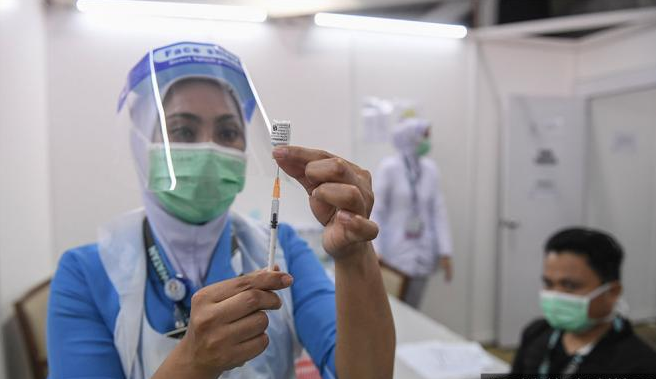
The Health Ministry today reported 2,154 new Covid-19 cases with no improvement in the Klang Valley and Johor, one day ahead of inter-district border restrictions being lifted.
There were 906 new cases in the Klang Valley, up from the average of 834 new cases over the past seven days.
Johor reported 463 new cases, up from the average of 316 over the same one-week period.
Overall, the number of Covid-19 cases nationwide are continuing on a downtrend while the number of ICU cases are the lowest it has been since Jan 10.
- Active cases: 22,034
- Patients in ICUs: 184
- Intubated: 87
National Covid-19 numbers are falling, but where are they rising?
Deaths
Six deaths were reported today, bringing the national Covid-19 death toll to 1,159.
Five were reported in Selangor and one in Kedah. The Klang Valley currently accounts for 35 percent of all Covid-19 deaths in the country.
All victims were Malaysian citizens. Their age range from 52 to 87. Details of the victims can be found on Kini News Lab’s Covid-19 tracker websitehttps://e.infogram.com/c8a28e8e-d511-48c1-bc1b-3eec0f7c699a?parent_url=https%3A%2F%2Fwww.malaysiakini.com%2Fnews%2F565448&src=embed#async_embed
Clusters
The Health Ministry today announced 10 new clusters of which seven involved targeted screening at work places.
Notably, the Jalan Senu cluster involved an outbreak due to a religious talk in Batu Kurau, Perak. This cluster also marked the debut of the “religious activity” cluster category used by the Health Ministry.
Details of the clusters are as follows:
Tapak Bina Jalan Zamrud clusterDistrict(s): Hulu Langat, Selangor
Locality/Source: Construction site in Jalan Zamrud Utama, Kajang
Cluster category: Workplace
First case: March 5, targeted screening
Total infected: 21 out of 629 screened
Jalan Dato Sellathevan cluster
District(s): Klang, Selangor
Locality/Source: Company in Jalan Dato Sellathevan, Kampung Jawa
Cluster category: Workplace
First case: March 4, targeted screening
Total infected: 21 out of 150 screened
Industri Cheras Jaya cluster
District(s): Hulu Langat, Selangor
Locality/Source: Factory in Kawasan Perindustrian Cheras Jaya, Hulu Langat
Cluster category: Workplace
First case: March 5, targeted screening
Total infected: 14 out of 36 screened
Meranti Utama cluster
District(s): Sepang, Selangor
Locality/Source: Jalan Meranti Utama, Sepang
Cluster category: Workplace
First case: March 3, targeted screening
Total infected: 11 out of 157 screened
Kampung Nyatoh cluster
District(s): Gombak, Selangor and Seremban, Negeri Sembilan
Locality/Source: Educational institute in Kampung Nyatoh, Rantau
Cluster category: Workplace
First case: Feb 27, three index cases tested positive after reporting symptoms
Total infected: 74 out of 193 screened
Persiaran Alam cluster
District(s): Cheras, Kuala Lumpur
Locality/Source: Factory in Jalan Persiaran Alam
Cluster category: Workplace
First case: Feb 22, targeted screening
Total infected: 17 out of 43 screened
Jalan Mutiara Barat cluster
District(s): Cheras, Kuala Lumpur and Petaling, Hulu Langat, Selangor
Locality/Source: Supermarket in Jalan Mutiara, Cheras
Cluster category: Workplace
First case: Feb 15, targeted screening
Total infected: 17 out of 86 screened
Perusahaan 10 cluster
District(s): Seberang Perai Utara and Seberang Perai Tengah, Pulau Pinang
Locality/Source: Factory in Lorong Perusahaan 10, Prai Industrial Estate
Cluster category: Workplace
First case: Feb 25, targeted screening
Total infected: 57 out of 372 screened
Kuala Punteh cluster
District(s): Keningau, Sabah
Locality/Source: Kampung Kuala Punteh
Cluster category: Community
First case: Feb 27, pre-hospitalisation screening
Total infected: 25 out of 132 screened
Jalan Senu cluster
District(s): Larut, Matang dan Selama, Perak
Locality/Source: Religious talk in Jalan Senu, Kampung Repoh
Cluster category: Religious activity
First case: Feb 22, pre-hospitalisation screening
Total infected: 10 out of 52 screened
Cases by state
Selangor (794)
Existing clusters: 184
New cluster(s): 59 (Tapak Bina Jalan Zamrud, Jalan Dato Sellathevan, Industri Cheras Jaya, Meranti Utama, dan Kampung Nyatoh)
Close contacts: 423
Imported: 2
Other screenings: 126
Johor (463)
Existing clusters: 354
Close contacts: 63
Other screenings: 46
Sarawak (250)
Existing clusters: 54
Close contacts: 113
Other screenings: 83
Pulau Pinang (119)
Existing clusters: 41
New cluster(s): 20 (Perusahaan 10)
Close contacts: 37
Other screenings: 21
Perak (109)
Existing clusters: 94
New cluster(s): 6 (Jalan Senu)
Close contacts: 2
Other screenings: 7
Kuala Lumpur (108)
Existing clusters: 1
New cluster(s): 12 (Jalan Mutiara Barat dan Persiaran Alam)
Close contacts: 58
Imported: 3
Other screenings: 34
Sabah (97)
Existing clusters: 20
New cluster(s): 7 (Kuala Punteh)
Close contacts: 46
Other screenings: 24
Negeri Sembilan (77)
Existing clusters: 2
New cluster(s): 71 (Kampung Nyatoh)
Close contacts: 2
Other screenings: 2
Kelantan (57)
Existing clusters: 26
Close contacts: 29
Other screenings: 2
Pahang (38)
Existing clusters: 2
Close contacts: 8
Other screenings: 28
Terengganu (16)
Existing clusters: 2
Close contacts: 10
Other screenings: 4
Malacca (10)
Existing clusters: 8
Close contacts: 2
Kedah (9)
Existing clusters: 1
Close contacts: 2
Other screenings: 6
Putrajaya (4)
Existing clusters: 2
Close contacts: 1
Other screenings: 1
Labuan (2)
Other screenings: 2
Perlis (1)
Other screenings: 1
Source: Malaysiakini
Covid-19 (March 3): 1,745 new cases, 7 deaths
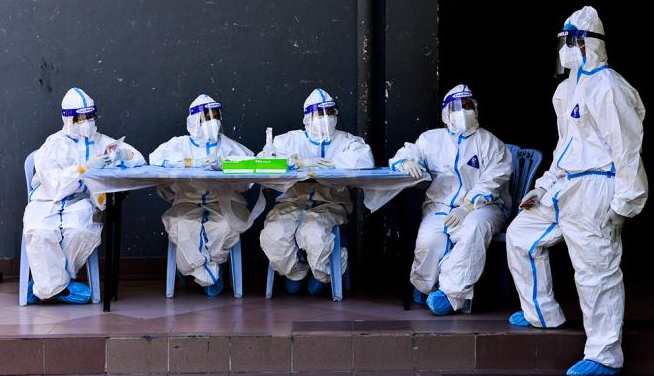
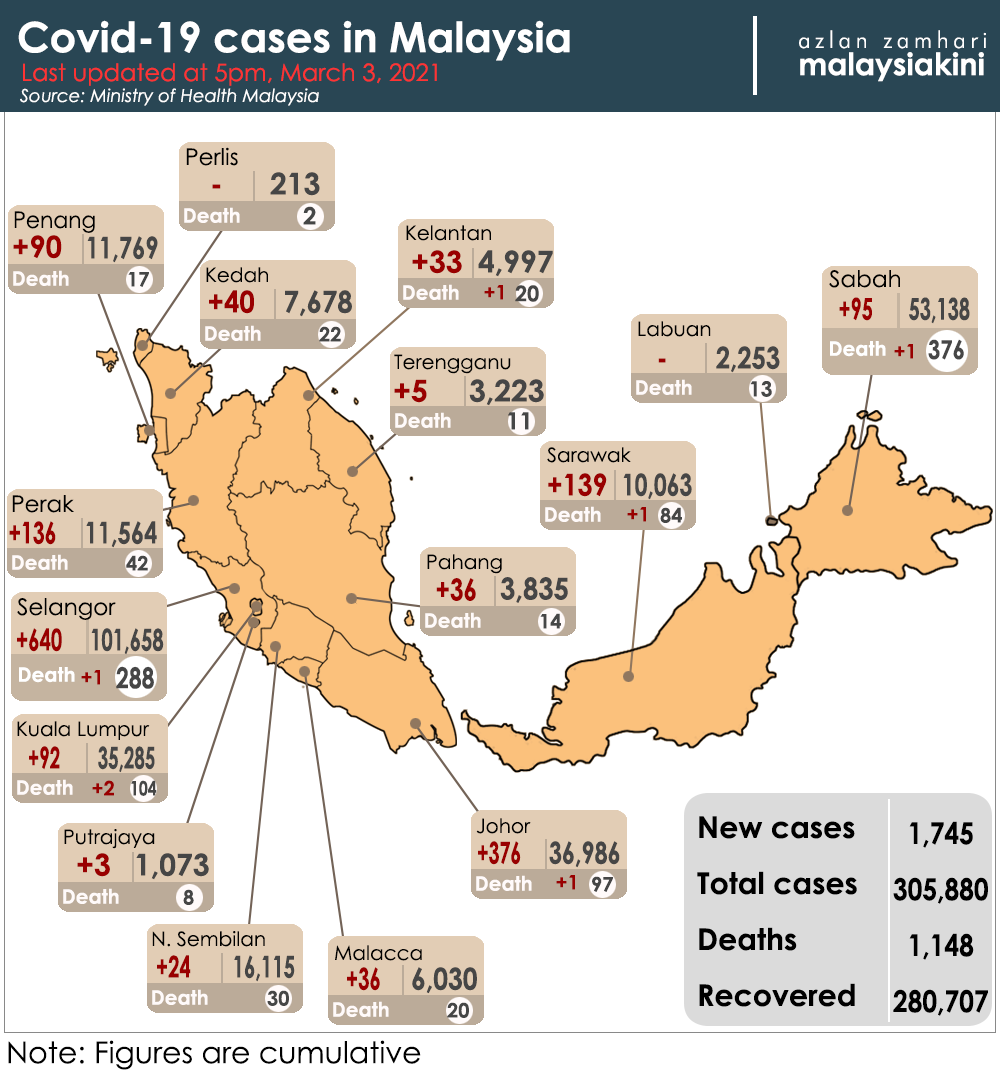
The Health Ministry today reported 1,745 new Covid-19 cases amidst seven more deaths.
Locals continue to comprise the majority of new cases (59.5 percent), with most infections detected in the Klang Valley followed by Johor and Sarawak.
- Active cases: 24,025
- Patients in ICUs: 195
- Intubated: 95
Active cases are still on a downtrend as recoveries continue to outpace new cases. There are no discernable trends in terms of those needing intensive care.
Almost 80 percent of new cases in Selangor were detected through existing clusters or contact tracing amidst the normalisation of contact tracing efforts.
Deaths
Two deaths were reported in Kuala Lumpur. There was one each reported in Selangor, Sarawak, Sabah, Johor and Kelantan.
The national Covid-19 death toll stood at 1,148. The Klang Valley region accounted for 34.6 percent of the figure.
Clusters
Of the 11 new clusters classified today, six were detected through targeted screening. Other types of detections would suggest community spread.
One notable cluster was Kampung Gedang, which involved a funeral in Malacca and 35 cases.
Another community spread cluster was called Anak Gasing, which involved an elderly care centre and was detected when a person was screened prior to a hospital procedure.
Jalan Perubatan cluster
District(s): Hulu Langat, Selangor
Locality/Source: Restaurant Jalan Perubatan 2, Pandan Indah, Hulu Langat
Cluster category: Workplace
First case: Mar 3, targeted screening
Total infected: 13 out of 20 screened
Tapak Bina Jalan MP cluster
District(s): Petaling, Selangor
Locality/Source: Construction site in Jalan MP, Subang Jaya
Cluster category: Workplace
First case: Mar 1, targeted screening
Total infected: 12 out of 163 screened
Anak Gasing cluster
District(s): Petaling, Selangor
Locality/Source: Elderly care centre in Jalan Anak Gasing 6/5, Petaling Jaya
Cluster category: At-risk groups
First case: Feb 27, index case with symptoms
Total infected: 20 out of 32 screened
Jalan Utarid cluster
District(s): Kuala Langat and Petaling, Selangor
Locality/Source: Factory in Jalan Utarid U5/15, Shah Alam
Cluster category: Workplace
First case: Feb 28, targeted screening
Total infected: 16 out of 50 screened
Jalan DPB Lima cluster
District(s): Johor Bahru, Johor
Locality/Source: Factory in Jalan DPB/5, Pelabuhan Tanjung Pelepas, Gelang Patah
Cluster category: Workplace
First case: March 3, targeted screening
Total infected: 32 out of 196 screened
Jalan Bachok cluster
District(s): Bachok and Pasir Puteh, Kelantan
Locality/Source: Government office in Jalan Bachok
Cluster category: Workplace
First case: Feb 25, index case with symptoms
Total infected: 14 out of 105 screened
Jalan PKNK 1/6 cluster
District(s): Kuala Muda, Kedah
Locality/Source: Factory in Jalan PKNK 1/6, Kawasan Perindustrian Sungai Petani
Cluster category: Workplace
First case: Feb 22, targeted screening
Total infected: 29 out of 547 screened
Sri Jelutung cluster
District(s): Pekan, Pahang
Locality/Source: Factory in Ladang Sri Jelutung, Pekan
Cluster category: Workplace
First case: Feb 26, index case with symptoms
Total infected: 30 out of 213 screened
Jalan Sikamat Lama cluster
District(s): Seremban, Negeri Sembilan
Locality/Source:
Cluster category: Workplace
First case: , targeted screening
Total infected: 12 out of 31 screened
Kampung Gedang cluster
District(s): Alor Gajah, Malacca
Locality/Source: Funeral in Kampung Gedang
Cluster category: Community
First case: , index case screened prior to hospital procedure
Total infected: 35 out of 86 screened
Balakong Satu cluster
District(s): Hulu Langat, Selangor
Locality/Source: Factory in Jalan KB 1/9, Kampung Baru Balakong
Cluster category: Workplace
First case: Feb 1, targeted screening
Total infected: 10 out of 60 screened
Cases by state
Selangor (640)
Existing clusters: 104
New cluster(s): 32 (Jalan Utarid, Jalan Anak Gasing, Tapak Bina Jalan MP, Balakong Satu, dan Jalan Perubatan)
Close contacts: 367
Imported: 2
Other screenings: 135
Johor (376)
Existing clusters: 248
New cluster(s): 32 (Jalan DPB Lima)
Close contacts: 49
Other screenings: 47
Sarawak (139)
Existing clusters: 26
Close contacts: 60
Other screenings: 53
Perak (136)
Existing clusters: 133
Other screenings: 3
Sabah (95)
Existing clusters: 22
Close contacts: 59
Other screenings: 14
Kuala Lumpur (92)
Existing clusters: 26
Close contacts: 25
Other screenings: 41
Pulau Pinang (90)
Existing clusters: 9
Close contacts: 54
Other screenings: 27
Kedah (40)
Existing clusters: 9
New cluster(s): 25 (Jalan PKNK 1/6)
Close contacts: 1
Other screenings: 4
Malacca (36)
Existing clusters: 21
New cluster(s): 7 (Kampung Gedang)
Other screenings: 8
Pahang (36)
Existing clusters: 1
New cluster(s): 26 (Sri Jelutung)
Close contacts: 4
Other screenings: 5
Kelantan (33)
Existing clusters: 16
New cluster(s): 4 (Jalan Bachok)
Close contacts: 8
Other screenings: 5
Negeri Sembilan (24)
Existing clusters: 7
New clusters: 7 (Jalan Sikamat Lama)
Other screenings: 10
Terengganu (5)
Existing clusters: 1
Close contacts: 3
Other screenings: 1
Putrajaya (3)
Existing clusters: 1
Close contacts: 2
Source : Malaysiakini
Covid-19 (March 1): 1,828 new cases, 5 deaths
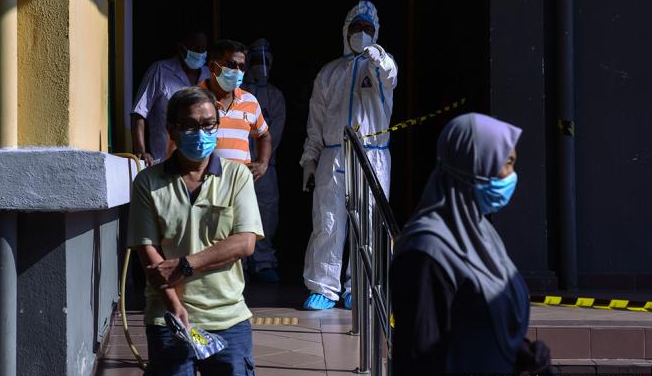
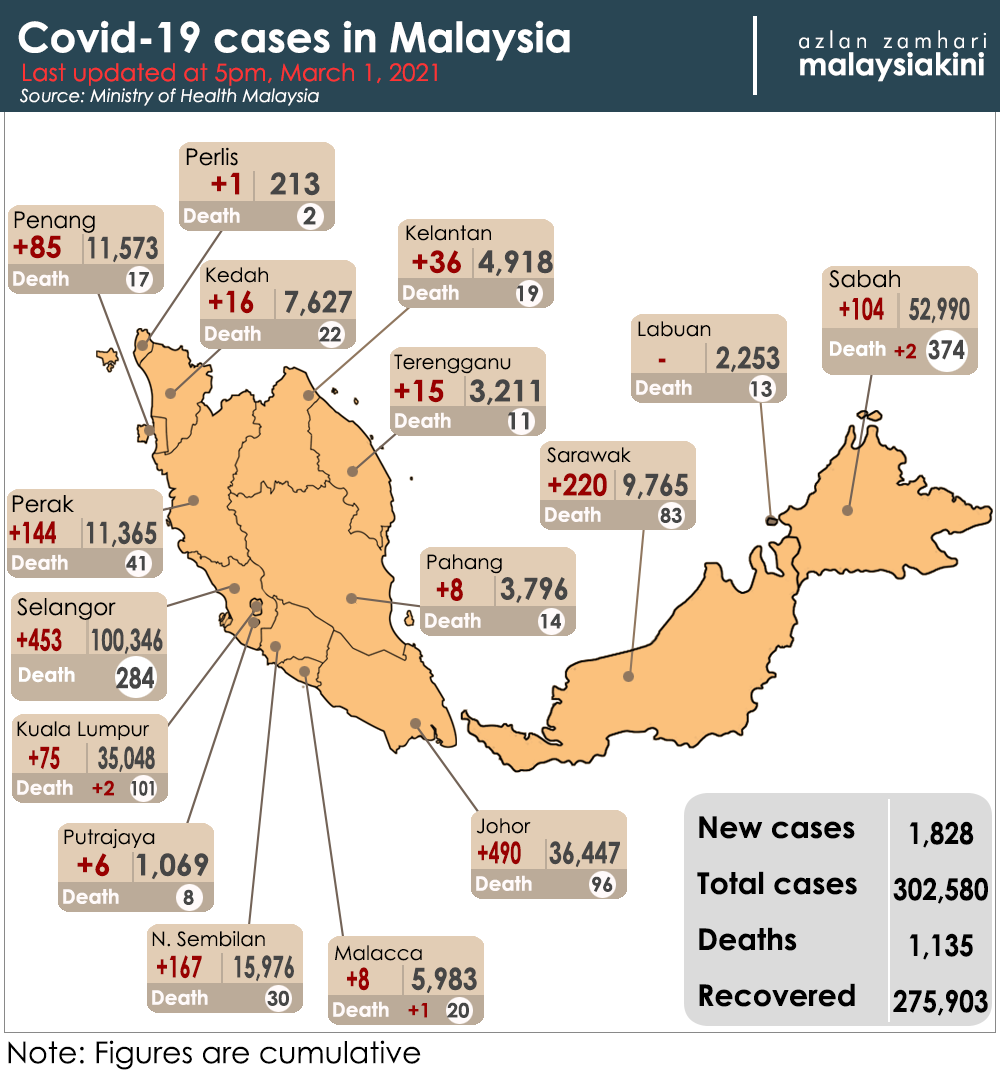
The Health Ministry today reported 1,828 new Covid-19 cases where new cases in the Klang Valley are continuing to fall.
New cases in Selangor (453) have not been this low since Dec 27 last year. Johor reported the highest number of new cases (490), mostly from a single factory cluster.
Four states – Pahang, Malacca, Putrajaya and Perlis – reported new cases in the single digit.
Locals accounted for 58.1 percent of the new cases reported today.
- Active cases: 25,524
- Patients in ICU: 198
- Intubated: 90
There were more patients who recovered from Covid-19 compared to the number of new cases, bringing down the total active cases further.
There are no discernable trends over the past week in the number of Covid-19 patients who require intensive care.https://newslab.malaysiakini.com/covid-19/embed/en/IndividualsTested
Deaths
The Health Ministry reported five new Covid-19 deaths of which two were reported in Kuala Lumpur and Sabah respectively and one in Malacca.
All the deceased were Malaysians. The total Covid-19 death toll stood at 1,135.
The youngest victim was a female, age 32, with heart ailments. The oldest was a male, 81, with diabetes and heart ailments.
Details of the deaths can be found on Kini New Lab’s Covid-19 tracker portal.https://e.infogram.com/c8a28e8e-d511-48c1-bc1b-3eec0f7c699a?parent_url=https%3A%2F%2Fwww.malaysiakini.com%2Fnews%2F564833&src=embed#async_embed
Cases by state
Johor (490)
Existing clusters: 39
New cluster(s): 363 (Jalan Kempas Tiga, Kampung Sungai Burung, dan Jalan Wawasan 12)
Close contacts: 51
Imported: 1
Other screenings: 36
Selangor (453)
Existing clusters: 105
New clusters: 8 (Jalan Melati and Desa Empat)
Close contacts: 234
Imported: 1
Other screenings: 105
Sarawak (220)
Existing clusters: 18
Close contacts: 84
Other screenings: 118
Negeri Sembilan (167)
Existing clusters: 139
Close contacts: 13
Other screenings: 15
Perak (144)
Existing clusters: 132
Close contacts: 5
Other screenings: 7
Sabah (104)
Existing clusters: 31
Close contacts: 49
Other screenings: 24
Pulau Pinang (85)
Existing clusters: 29
Close contacts: 19
Other screenings: 37
Kuala Lumpur (75)
Existing clusters: 6
New cluster: 4 (Jalan Cempedak)
Close contacts: 28
Imported: 5
Other screenings: 32
Kelantan (36)
Existing clusters: 8
New cluster: 9 (Bukit Marak)
Close contacts: 14
Other screenings: 5
Kedah (16)
Existing clusters: 4
Close contacts: 8
Other screenings: 4
Terengganu (15)
Existing clusters: 1
Close contacts: 9
Other screenings: 1
Existing clusters: 8
Pahang (8)
Existing cluster: 1
Close contacts: 6
Other screenings: 1
Putrajaya (6)
Existing clusters: 2
Close contacts: 3
Other screenings: 1
Perlis (1)
Other screenings: 1
Clusters
Of the 488 active clusters, 82 saw new cases being reported today.
One single cluster – Jalan Kempas Tiga – accounted for 88 percent of all the new cases reported in Johor.
Details are as follows:
Kampung Sungai Burung cluster
District(s): Pontian, Johor
Locality/Source: Factory in Kampung Sungai Burung, Pekan Nanas
Cluster category: Workplace
First case: March 1, targeted screening
Total infected: 22 out of 93 screened
Jalan Wawasan 12 cluster
District(s): Batu Pahat, Johor
Locality/Source: Factory in Jalan Wawasan 12, Batu Pahat
Cluster category: Workplace
First case: March 1, targeted screening
Total infected: 7 out of 118 screened
Jalan Kempas Tiga cluster
District(s): Muar, Johor
Locality/Source: Two factories in Kawasan Perindustrian Bakri,
Cluster category: Workplace
First case:
Total infected: 344 out of 592 screened
Jalan Melati cluster
District(s): Gombak, Selangor
Locality/Source: Factory in Jalan Melati, Kuang
Cluster category: Workplace
First case: March 1, targeted screening
Total infected: 7 out of 16 screened
Desa Empat cluster
District(s): Kuala Selangor, Selangor
Locality/Source: Supermarket in Desa Coalfields
Cluster category: Workplace
First case: March 1, targeted screening
Total infected: 18 out of 28 screened
Bukit Marak cluster
District(s): Kota Bharu and Bachok, Kelantan
Locality/Source: Bukit Marak
Cluster category: Community
First case: Feb 18, index case with symptoms
Total infected: 66 out of 310 screened
Jalan Cempedak cluster
District(s): Kuala Lumpur
Locality/Source: Elderly care home in Jalan Cempedak, Sentul
Cluster category: At-risk groups
First case: Feb 21, index case with symptoms
Total infected: 10 out of 30 screened
Source:Malaysiakini
Covid-19 (March 4): 2,063 new cases, sudden increase in S’wak and Penang
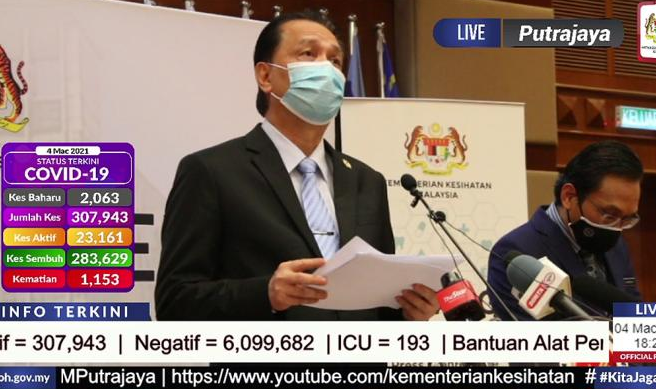
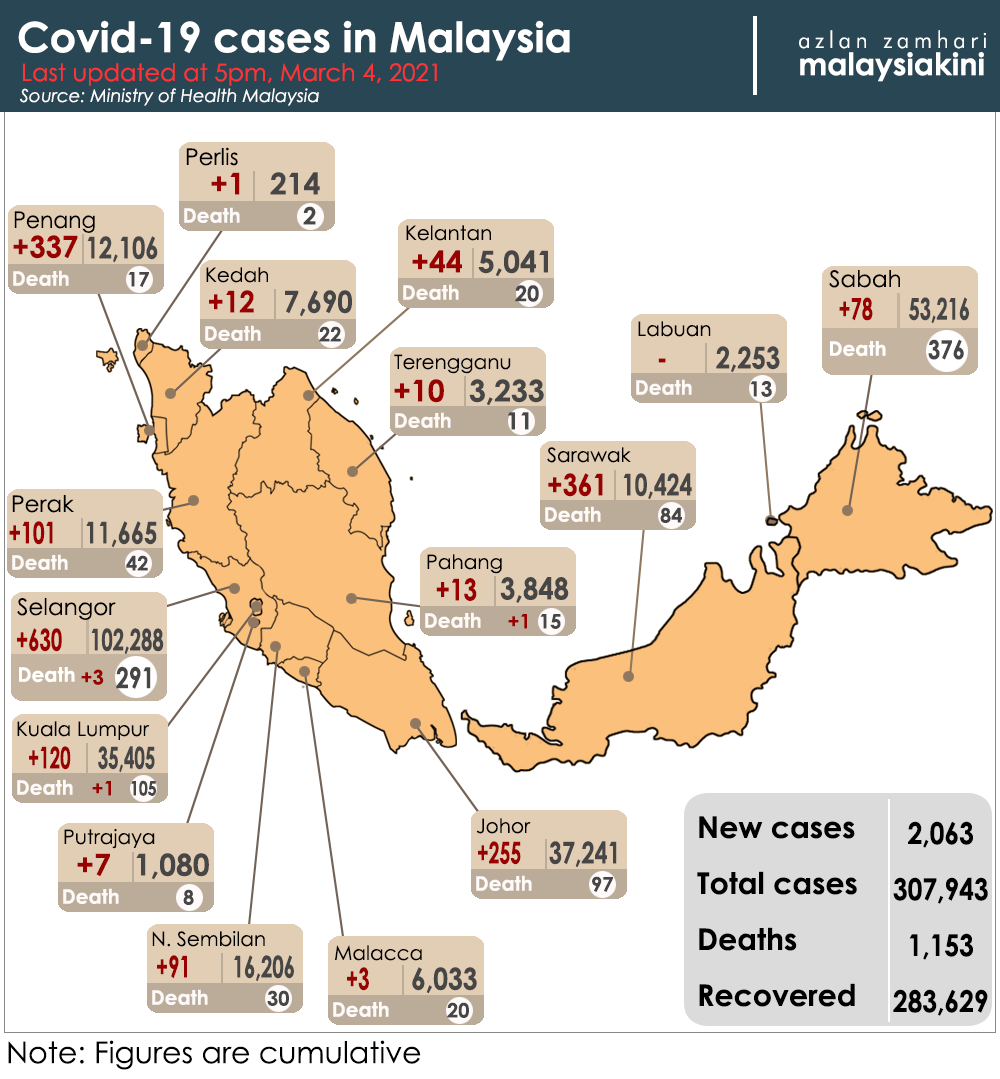
The Health Ministry today reported 2,063 new cases amidst a sudden increase in Penang and Sarawak.
Selangor reported the highest number of cases (630) followed by Sarawak and Penang.
Penang reported 337 new cases after a daily average of 112 for a week. Sarawak reported 361 new cases after averaging 220 a day the week prior.
While the spike in Penang can be attributed to new workplace clusters, including a construction site, the spike in Sarawak was due to a large number (166) of new cases attributed to “other screenings”.
Malaysians comprised 69.1 percent of new cases.
National Covid-19 numbers are falling, but where are they rising?
- Active cases: 23,161
- Patients in ICUs: 193
- Intubated: 99
Deaths
Five new Covid-19 deaths were reported today in Selangor (3), Kuala Lumpur (1) and Pahang (1).
The victims were all Malaysian citizens in their 70s. The national death toll currently stands at 1,153.
Clusters
There are currently 490 active Covid-19 clusters of which 76 had new cases.
The cluster with the most number of new cases was the Lorong Kebun cluster (90) in Penang which was declared on Feb 24.
There were 14 new clusters classified by the Health Ministry today.
Of those, only two were not discovered as a result of targeted screening of workplaces. One cluster was the result of a funeral on Feb 17.
Jalan Bukit Tiga cluster
District(s): Hulu Langat, Selangor
Locality/Source: Factory in Kawasan Perusahaan Bukit Angkat
Cluster category: Workplace
First case: March 2, targeted screening
Total infected: 14 out of 140 screened
Jalan Kebun Nenas cluster
District(s): Seberang Perai Tengah and Seberang Perai Selatan, Penang
Locality/Source: Factory in Jalan Kebun Nenas, Bukit Mertajam
Cluster category: Workplace
First case: Feb 28, targeted screening
Total infected: 94 out of 326 screened
Jalan Damansara cluster
District(s): Petaling, Selangor
Locality/Source: Shopping centre in Jalan Damansara
Cluster category: Workplace
First case: March 4, targeted screening
Total infected: 11 out of 70 screened
Industri Subang cluster
District(s): Petaling, Klang and Kuala Selangor, Selangor
Locality/Source: Factory in Jalan Batu Tiga Lama, Taman Perindustrian Subang Utama
Cluster category: Workplace
First case: Feb 2, targeted screening
Total infected: 47 out of 171 screened
Jasmine Empat cluster
District(s): Hulu Selangor, Selangor
Locality/Source: Factory in Jalan Jasmine 4, Bukit Beruntung
Cluster category: Workplace
First case: March 1, targeted screening
Total infected: 17 out of 351 screened
Lagenda Suria cluster
District(s): Hulu Langat, Selangor
Locality/Source: Supermarket in Jalan Lagenda Suria 3
Cluster category: Workplace
First case: Feb 28, targeted screening
Total infected: 31 out of 63 screened
Jalan Distripark B6 cluster
District(s): Johor Bahru, Johor
Locality/Source: Factory in Jalan DPB/6, Zon Perindustrian Bebas Pelabuhan Tanjung Pelepas
Cluster category: Workplace
First case: March 4, targeted screening
Total infected: 25 out of 63 screened
Jalan Maju Satu cluster
District(s): Johor Bahru, Johor
Locality/Source: Factory in Jalan Maju 1, Taman Perindustrian Desa Cemerlang, Ulu Tiram
Cluster category: Workplace
First case: March 4, targeted screening
Total infected: 10 out of 90 screened
Jalan Kabel Gemilang cluster
District(s): Johor Bahru, Johor
Locality/Source: Factory in Jalan Gemilang 1, Taman Perindustrian Cemerlang, Ulu Tiram
Cluster category: Workplace
First case: March 4, targeted screening
Total infected: 12 out of 22 screened
Batu 21 cluster
District(s): Kulai and Johor Bahru, Johor
Locality/Source: Factory in Batu 21, Jalan Pontian
Cluster category: Workplace
First case: Feb 26, targeted screening
Total infected: 15 out of 91 screened
Tapak Bina Queens Waterfront cluster
District(s): Barat Daya and Timur Laut, Pulau Pinang
Locality/Source: Construction site in Bayan Lepas
Cluster category: Workplace
First case: Feb 26, targeted screening
Total infected: 145 out of 709 screened
Tapak Bina Nilam Sari cluster
District(s): Seremban, Negeri Sembilan
Locality/Source: Construction site in Taman Nilam Sari, Temiang
Cluster category: Workplace
First case: Feb 26, targeted screening
Total infected: 30 out of 84 screened
Jalan Limau Manis cluster
District(s): Kluang and Johor Bahru, Johor
Locality/Source: Funeral in Jalan Limau Manis (Feb 17)
Cluster category: Community
First case: March 4, index case with symptoms
Total infected: 13 out of 49 screened
Persiaran Kempas Baru cluster
District(s): Johor Bahru, Johor
Locality/Source: Medical centre in Persiaran Kempas Baru
Cluster category: At-risk groups
First case: Feb 22, index case with symptoms
Total infected: 27 out of 150 screened
Here are the new cases by states:
Selangor (630)
Existing clusters: 61
New cluster(s): 73 (Jasmine Empat, Lagenda Suria, Jalan Bukit Tiga, Jalan Damansara, dan Industri Subang)
Close contacts: 392
Imported: 2
Other screenings: 102
Sarawak (361)
Existing clusters: 84
Close contacts: 111
Other screenings: 166
Penang (337)
Existing clusters: 97
New cluster(s): 177 (Tapak Bina Queens Waterfront dan Jalan Bukit Nenas)
Close contacts: 32
Other screenings: 31
Johor (255)
Existing clusters: 36
New cluster(s): 75 (Jalan Kabel Gemilang, Jalan Maju Satu, Jalan Limau Manis, Batu 21, Jalan Distripark B6, dan Persiaran Kempas Baru)
Close contacts: 83
Imported: 1
Other screenings: 60
Kuala Lumpur (120)
Existing clusters: 48
Close contacts: 36
Imported: 6
Other screenings: 30
Perak (101)
Existing clusters: 89
Close contacts: 12
Negeri Sembilan (91)
Existing clusters: 41
New cluster(s): 24 (Tapak Bina Nilam Sari)
Close contacts: 21
Other screenings: 5
Sabah (78)
Existing clusters: 24
Close contacts: 40
Other screenings: 14
Kelantan (44)
Existing clusters: 23
Close contacts: 12
Other screenings: 9
Pahang (13)
Existing clusters: 8
Close contacts: 5
Kedah (12)
Close contacts: 8
Other screenings: 4
Terengganu (10)
Existing clusters: 2
Close contacts: 2
Other screenings: 6
Putrajaya (7)
Existing cluster: 1
Close contacts: 6
Malacca (3)
Existing cluster: 1
Close contacts: 1
Other screenings: 1
Perlis (1)
Other screenings: 1
Source:Malaysiakini
Vaccines for private hospitals – helping govt or making money?
‘What if private hospitals can procure the vaccines separately from the govt?’
Private hospitals want approval to procure Covid-19 vaccines from other sources
Anonymous_15897060865429524: Allowing private hospitals to sell an assortment of Covid-19 vaccines that paying customers can choose will create an imbalanced situation where the rich will take up the Pfizer-BioNTech vaccines and will be vaccinated faster. The poor will continue to wait in line and be left with Chinese Sinovac and Russian Sputnik V vaccines.
It will create a situation where Covid-19 becomes a “poor people’s disease” and clusters will be focused in poor areas or “Covid-19 ghettos”.
If you are rich, you get the best medicine and you get it faster than others. If you are poor, you wait for the subpar medicine and in the meantime, hope you don’t get sick. It reminds me of the film Elysium.
When private hospitals were asked to take Covid-19 patients to reduce the burden on public healthcare, they said cannot: “We are small private hospitals, we don’t have the resources, it’s the insurers’ fault. So sorry, we can’t do ‘national service’.”
But when it comes to selling vaccines, it’s “Yes, we want to do ‘national service’. We want to help reduce the burden on public healthcare. We have the resources to do it.”
The upper class will no doubt go buy the Pfizer vaccine from private hospitals. And you can be sure the private hospital will charge a premium. They know the rich will pay for it.
Drug cost aside, they may even charge a few days of ward stay for “monitoring”, follow-up consultations, and of course, the administrative fees.
Hmmmmmmmm: Why not, if the private hospitals can procure the vaccines separately from the government?
This way, the government programme will still go on as planned while separately, new lines are opened for those who can afford to pay and either do not want to wait or they prefer other types of vaccines. The queues at the public hospitals will be reduced and this will speed up immunisation for the rest of the people.
If the private hospitals are not able to procure any vaccines separately, they can still be roped in to provide the injection services, perhaps for a nominal charge payable by the government (or even free of charge if they want to discharge their corporate social responsibility). The public can still be vaccinated for free even if they go to the private hospital in this case.
Also, in this case, since the vaccine is from the government, the private hospitals have to follow strictly the priority set by the government in their programme. There will not be any queue jumping as the vaccines will not be for sale. It’s a win-win for everybody.
For the private sector to want to sell Covid-19 vaccines, what is new here? You can get your appendix removed in the government hospitals for free or you can pay to have it removed at a cost at the private hospital. It’s up to you to choose if you want to spend that money.
For some people who do not want to wait, 10 times the cost may be nothing to them. Alternatively, if the costs are too exorbitant, the people will just continue to wait their turn for their free jabs. Richer people paying for their jabs in private hospitals help reduce the numbers queueing up in public hospitals.
Dr Suresh Kumar: I don’t blame some of the negative commenters here. They see this proposal as a double-edged sword.
Firstly, people must understand that there are many healthcare providers who are not frontliners but continue to provide healthcare. They could be non-Covid-19 treating doctors, dentists, nurses, etc.
The most susceptible amongst them are the dentists. Imagine staring directly into the mouth of a Covid-19 patient at a very close range. But because they are not frontliners, they will not be eligible to be vaccinated in the first phase or even in the second phase if they are young and have no comorbidities.
The risk of these professionals contracting the virus and transmitting it to others is an existential threat. So, if they could be given a choice to be vaccinated privately by paying instead of getting it free from the government, why not?
Secondly, those who can afford it should be given the choice, provided there is no shortage of supply of vaccines in the market, which would not occur as countries like the US and India are capable of producing the vaccines in large numbers in a short time.
This should not be considered as jumping the queue. In fact, this would prevent queue jumping which is already happening now in government hospitals, depriving those who need the vaccines badly.
This would also allow for travelling for business and other professional purposes. And the most important factor is we would be able to achieve herd immunity quicker and the burden on the government will be reduced substantially as Association of Private Hospitals Malaysia (APHM) president Dr Kuljit Singh postulated.
About ethics, especially pricing, this could be easily controlled and regulated by the government so that unscrupulous hospitals do not take advantage of the pandemic situation to rake in profits. This should be viewed as national service by the private hospitals. We need to think pragmatically based on realities so that all of us can be safe and healthy. Stay safe.
GreenViper4010: I suspect that this request from the APHM is prompted by a desire for the private hospitals to “cash in” on a certain demand for vaccines on the part of those who can afford to pay or have their insurance companies pay for them.
The private hospitals are alarmed at the prospect of free vaccinations and simply don’t want to “lose out” on an obvious cash cow. The pious expression of speeding up the immunisation process and “helping out the government” is vacuous and self-serving.
The fact is that the Malaysian healthcare system is one where the private sector is in cahoots with the insurance providers so both can make a profit at the expense of people paying ridiculous insurance premiums on top of their taxes for healthcare.
If you need evidence then consider the fact that one hospital in Petaling Jaya was recently charging RM395 for a Covid-19 test, another RM295, while public hospitals were giving tests for free. How much will the private hospitals charge for a vaccine shot? Did Kuljit mention that in his statement?
Gaji Buta: The government should supply the vaccines to private hospitals and force them to administer for free, using emergency ordinance, to speed up the process.
AZ: At the moment, there is a worldwide shortage of vaccines, so whatever that can be procured should be distributed based on a needs basis and not on the ability to pay. Once you start this, then the poor and vulnerable are definitely going to be left out.
The vaccine should be given to the whole population in a fair manner. I totally disagree with allowing the private sector to sell vaccines, but if and when there is a surplus of vaccine then by all means go ahead.
Yet Another Concerned Citizen: @AZ, there are actually two aspects to your argument.
From the angle of social justice – the worry is that this will disadvantage the poor. However, I am more inclined towards the view that the private sector’s involvement in vaccine distribution will only help increase overall distribution efficiency, although likely disproportionately among the more affluent. If there is a need to make the vaccine more accessible to the poor, price can be regulated.
From the angle of global vaccine supply, as the World Health Organisation (WHO) has voiced out, there is a concern that vaccine hoarding among the rich countries will result in some countries not vaccinated in a timely manner.
The fear is that more dangerous strains of the virus will emerge as a result. This is something to worry about, as even if a country is able to vaccinate itself quickly for the time being, new virus strains may present even greater danger in the future.
However, while hoarding is an absolute evil, there is no data yet on how a slight increase in vaccine supply to one country will affect the overall vaccine supply to other parts of the world – and how this will delay the overall global vaccination programme. I think we should leave these concerns to WHO’s Covax (Covid-19 Vaccines Global Access) for the time being.
Bewise: If the private hospitals can source from elsewhere, then it’s up to them. As long as they are not eating into the public supplies.
We have to think positively. Let those who can afford it pay for the vaccinations, and the rest can get theirs free from the government.
A surcharge was mentioned that for every patient vaccinated in the private sector (out of pocket), the (surcharge) would be contributed towards a fund used by the government for the free public vaccination programme.
It is just like at the immigration office. Instead of queueing up in one line, it would be much faster to open up five lanes. Whatever resources used, we have to get it done as soon as possible to vaccinate the whole population. By 2022, if we don’t die of Covid-19, we will definitely die of hunger!
Source:Malaysiakini
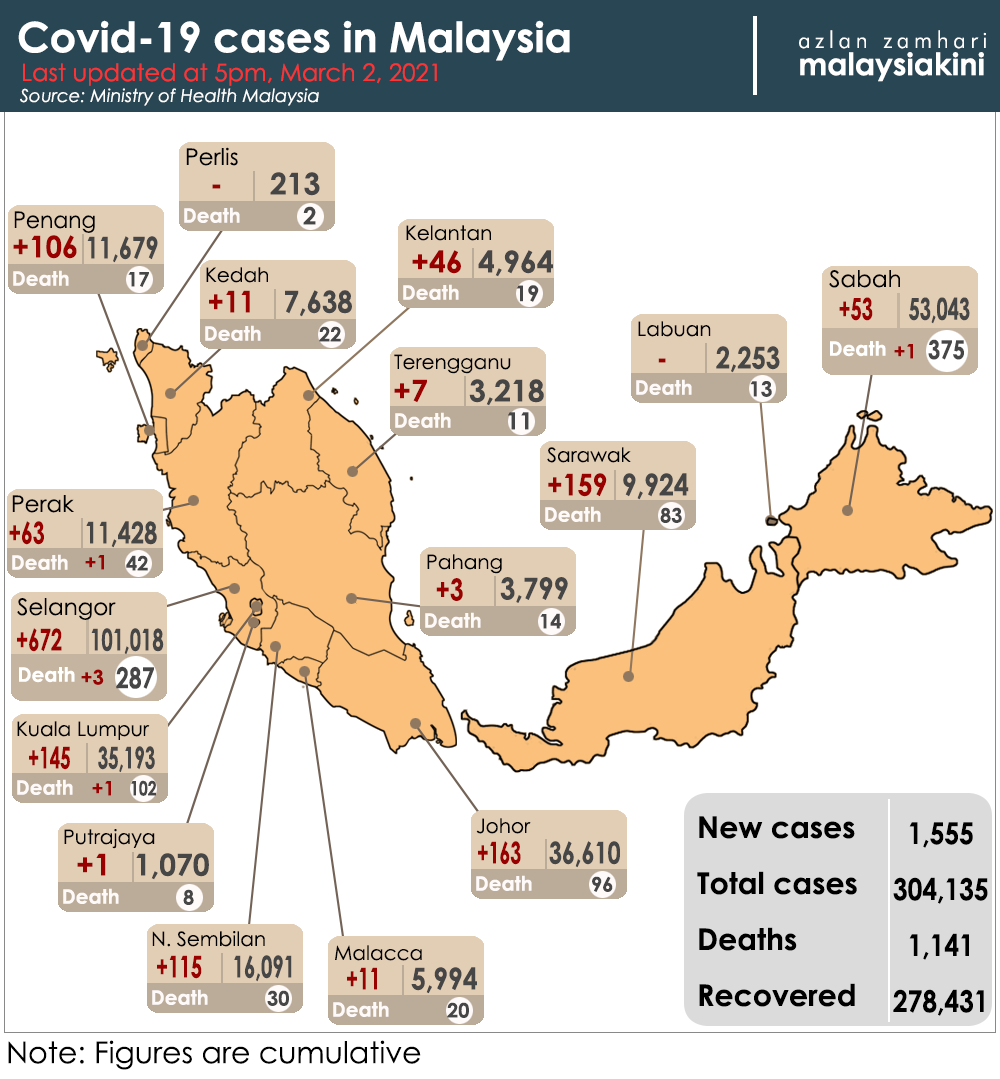
Covid-19 (March 2) – 1,555 new cases, 6 deaths
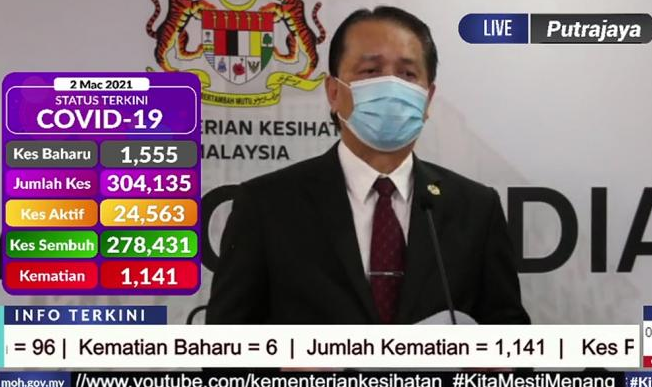
The Health Ministry today reported 1,555 new Covid-19 cases, a drop to a level not seen since late December last year.
Most of the new cases involved Malaysians (71.4 percent) and those living in the Klang Valley (52.6 percent).
However, the number of patients in intensive care and requiring ventilators did not show discernable trends over a seven-day period.
- Active cases: 24,563
- Patients in ICUs: 204
- Intubated: 96
Deaths
There were six new deaths reported today of which four were reported in the Klang Valley.
Currently, the Klang Valley accounts for 35 percent of all Covid-19 related deaths.
The youngest victim today, a foreigner, was aged 44 while the oldest was a Malaysian aged 80.
Clusters
According to the Health Ministry, seven new clusters were classified today.
Most of the new clusters were detected through targeted screening of workplaces.
However, there was one cluster involving an elderly care home where the index case was only detected upon pre-hospital procedure screening.
There was one cluster in Penang involving a supermarket where the index case was detected after reporting symptoms.
Taman Alam cluster
District(s): Petaling, Selangor
Locality/Source: Factory in Taman Alam Megah, Shah Alam,
Cluster category: Workplace
First case: March 1, targeted screening
Total infected: 23 out of 271 screened
Sementa 27 cluster
District(s): Petaling, Klang, Kuala Selangor and Kuala Langat, Selangor
Locality/Source: Factory in Jalan Sementa 27/91, Shah Alam
Cluster category: Workplace
First case: Jan 30, targeted screening
Total infected: 13 out of 86 screened
Jalan Mawar cluster
District(s): Hulu Langat, Selangor
Locality/Source: Cleaning company in Jalan Mawar, Kajang
Cluster category: Workplace
First case: Feb 25, targeted screening
Total infected: 10 out of 72 screened
Jalan DPB Enam cluster
District(s): Johor Bharu, Johor
Locality/Source: Factory in Jalan DPB/6, Pelabuhan Tanjung Pelepas
Cluster category: Workplace
First case: March 2, targeted screening
Total infected: 36 out of 80 screened
Jalan Cyber Satu cluster
District(s): Kulai and Kota Tinggi, Johor
Locality/Source: Factory in Jalan Cyber 1, Kawasan Perindustrian Senai 3, Kulai
Cluster category: Workplace
First case: Feb 27, index case with symptoms
Total infected: 9 out of 63 screened
Persiaran Bayan Indah cluster
District(s): Barat Daya, Timur Laut, Seberang Perai Utara and Seberang Perai Tengah, Pulau Pinang
Locality/Source: Supermarket in Persiaran Bayan Indah
Cluster category: Workplace
First case: Feb 17, index case with symptoms
Total infected: 25 out of 83 screened
Jalan Bukit Blossoms cluster
District(s): Seremban, Negeri Sembilan
Locality/Source: Elderly care home in Jalan Bukit Blossoms 10, Taman Bukit Blossoms
Cluster category: At-risk groups
First case: Feb 28, index case was screened prior to hospital procedure
Total infected: 18 out of 40 screened
Cases by state
Selangor (672)
Existing clusters: 111
New cluster(s): 32 (Taman Alam, Sementa 27, dan Jalan Mawar)
Close contacts: 430
Imported: 1
Other screenings: 98
Johor (163)
Existing clusters: 48
New cluster(s): 41 (Jalan Cyber Satu dan Jalan DPB Enam)
Close contacts: 45
Other screenings: 29
Sarawak (159)
Existing clusters: 54
Close contacts: 37
Imported: 1
Other screenings: 67
Kuala Lumpur (145)
Existing clusters: 32
Close contacts: 71
Imported: 1
Other screenings: 41
Negeri Sembilan (115)
Existing clusters: 72
New cluster(s): 16 (Jalan Bukit Blossoms)
Close contacts: 15
Other screenings: 12
Penang (106)
Existing clusters: 11
New clusters: 3 (Persiaran Bayan Indah)
Close contacts: 17
Other screenings: 75
Perak (63)
Existing clusters: 51
Close contacts: 4
Other screenings: 8
Sabah (53)
Existing clusters: 16
Close contacts: 22
Other screenings: 15
Kelantan (46)
Existing clusters: 19
Close contacts: 19
Other screenings: 8
Kedah (11)
Existing clusters: 1
Close contacts: 1
Other screenings: 9
Malacca (11)
Existing clusters: 3
Other screenings: 8
Terengganu (7)
Existing clusters: 4
Close contacts: 2
Other screenings: 1
Pahang (3)
Close contacts: 2
Other screenings: 1
Close contacts: 1
Source:Malaysiakini
Can people with allergies take Covid-19 vaccine?
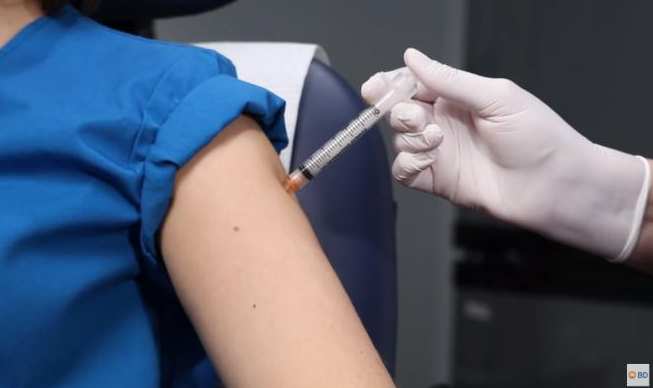
As we implement our national Covid-19 vaccination programme, those of us who are healthcare professionals have numerous friends and acquaintances asking about the safety of the Covid-19 vaccines. In particular, the risk of taking the vaccine if we have a history of allergies.
It is recognised that some individuals get a rare, serious side effect, ie a severe allergic reaction called anaphylaxis. This can occur after taking a drug, a bee sting, eating certain types of food, etc and not just with vaccines – we often never know who is going to react in this way.
This severe reaction may cause swelling of the face or body, breathing difficulties and a drop in blood pressure. It is recognised that a few people have developed this after taking the Covid-19 vaccine. So we need to be informed about this and be able to discuss our risk with our doctor if we suffer from allergies.
As always it is important to look at the data and the evidence instead of relying on opinions or rumour. I have attempted to summarise our understanding of the risk of anaphylaxis from current available data.
How common is anaphylaxis after a Covid-19 vaccine?
I have summarised the data from three different countries in Table 1 – the US Centres for Disease Control and Prevention (CDC) Vaccine Adverse Event reporting system, the UK Department of Health Yellow Card reporting system and the Norwegian ADR Registry of the Norwegian Medicines Agency.
These three countries report their experience of side effects. After more than 27 million doses there were 276 confirmed anaphylaxis events which give a rate of 10.2 per million doses or one per 100,000 persons vaccinated. There are different rates of anaphylaxis in different countries (different genetic background) and possibly different rates with different vaccines (need more data here).
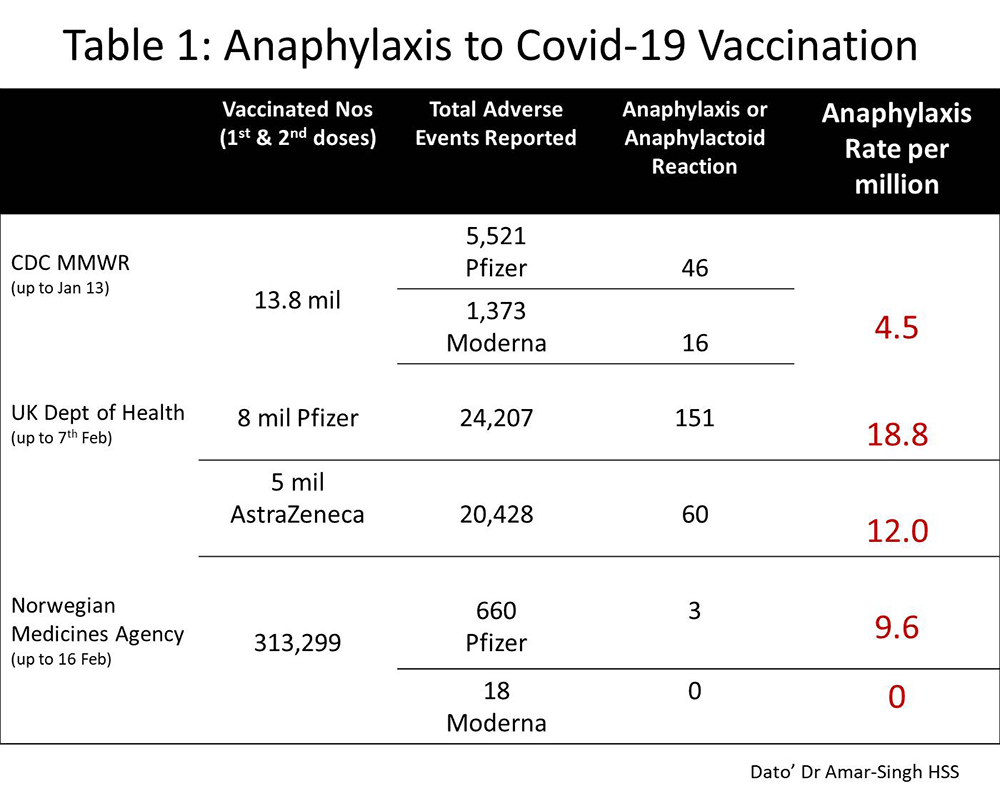
This however means that anaphylaxis after Covid-19 is a very rare event. Note that all the persons who experienced anaphylaxis were treated and discharged well.
What more data do we need?
Ideally we would like to see data that shows the risk of anaphylaxis in people who had prior anaphylaxis, and the risk of anaphylaxis in people with major or serious allergies (by type of vaccine). This means of all people vaccinated with serious allergies, how many actually developed anaphylaxis? The percentage (or rate) must be very small as many persons have allergies.
Some small idea of this comes from a published CDC report that describes 21 persons who developed anaphylaxis after Covid-19 vaccine. Some 17 out of 21 (81 percent) had a documented past history of allergies or allergic reactions to drugs, medical products, foods, insect stings. Seven out of 21 (33 percent) had experienced an episode of anaphylaxis in the past (one after rabies vaccine; one after influenza A H1N1 vaccine).
Hence the risk of anaphylaxis is higher in those who have had a past history of allergies and occurs less often in those with no history of allergies. But remember that a very large number of persons with allergies have had the vaccine safely with no reactions.
What constitutes severe allergy?
Many people may have some allergy, often a mild one. It is estimated that 20-30 percent of the population have some allergy condition. Common mild allergic conditions would include eczema, allergic rhinitis, food allergy, urticaria, contact dermatitis, insect allergies, mild asthma, etc.
Examples of moderate allergic conditions would be drug allergies and severe asthma especially when not controlled. Severe allergies would be previous anaphylaxis, or prior angio-oedema (cutaneous oedema without blood pressure or respiration changes) or previous hypersensitivity reactions to vaccines or vaccine components (especially polyethylene glycol).
What do international organisations recommend?
International organisations or regulatory bodies have made statements on Covid-19 vaccine use and allergies. Table 2 summaries their opinions.
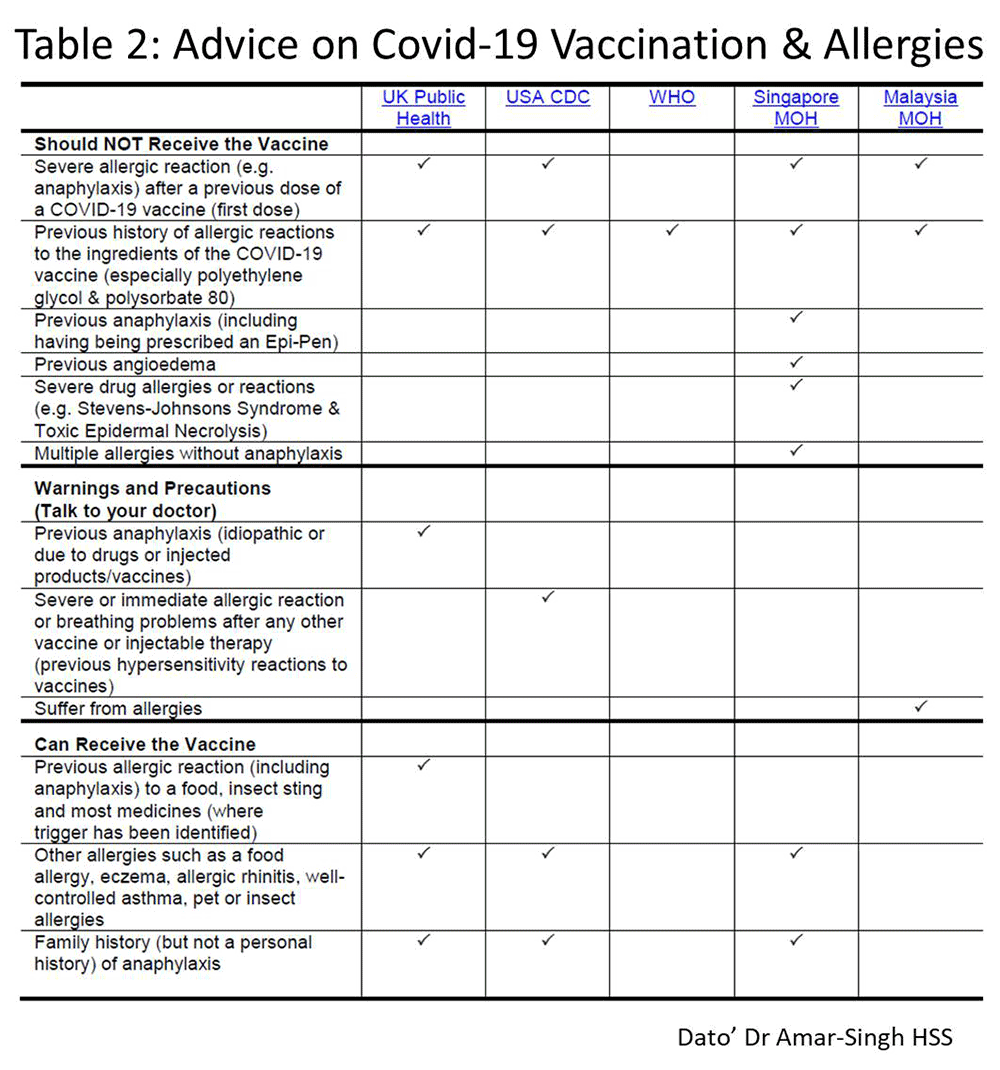
Note that most support vaccination in those with prior allergies and some in even those who have had prior anaphylaxis (with close observation). But all do not support vaccination in anyone who has had a prior reaction to Covid-19 vaccines or a reaction to other vaccines or drugs that contained polyethylene glycol or polysorbate 80.
Some are more cautious and conservative and hope for more data before removing some contraindications to vaccination.
What does our Health Ministry advise?
The National Covid-19 Immunisation Programme booklet states that “the Covid-19 vaccine is safe for the majority of people. However, some groups will need further consideration prior to receiving the vaccine”. This includes “individuals with severe allergies”.
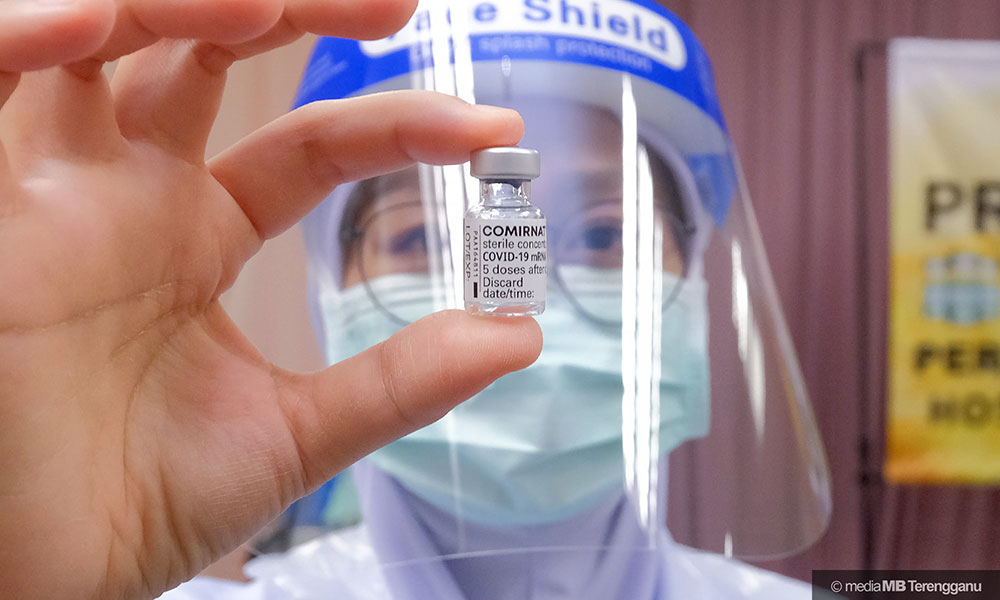
The National Pharmaceutical Regulatory Agency of the Health Ministry has a frequently asked questions (FAQ) section about the Pfizer (Comirnaty) vaccine. On allergies, they state: “Comirnaty should not be given to individuals who are known to have allergic reactions to any of the ingredients in the vaccine…
“The second dose of the vaccine should not be given to individuals who had a severe allergic reaction after the first dose of this vaccine.”
They also advise individuals with allergies to speak to their doctor before deciding on their suitability for vaccination but say that you may receive the vaccine even if you have an allergy.
It would be good if clearer guidelines were made available to all doctors and health staff so they can advise those coming for vaccination. The Health Ministry will be monitoring all side effects after vaccination and encourage us to report them.
What do I do if I have severe allergies?
Having read all that, you may ask: What do I do if I am in the category of the person with a previous severe allergy (ie prior anaphylaxis or angio-oedema or a large number of bad drug allergies)?
Well, I am in the same situation as you are. I have numerous drug allergies, some very severe (Steven Johnson reaction); I have had an angio-oedema episode, one allergic airway obstruction and also have underlying asthma and eczema.
We want to support the Covid-19 vaccination programme, we want to help protect others by getting vaccinated and we certainly do not want our lives restricted if we don’t get vaccinated (if the government or businesses impose conditions on those not vaccinated).
I believe there are three possible options for those of us with severe allergies:
- Firstly we may choose not to get vaccinated as we feel the risk is too high. But we will have to accept a much stricter standard operating procedure for our lives and be prepared to have our life restricted for some time.
- The second option is that we choose to vaccinate and, due to the high risk, ask that it be done with enhanced health professional support ie vaccinate in a hospital and have good physician backup with adrenaline at hand.
- The third option is to delay vaccination and watch the data as more is made available. The risk of anaphylaxis is small and likely to be even smaller as we get more vaccination data. We will also have a clearer idea which vaccine has the lowest rate of severe allergic reaction. Once this data is available we hope to be able to choose the least allergic vaccine and vaccinate in a hospital with good physician backup.
Note that this advice only applies to those with severe allergies. Those with milder allergies should consider getting vaccinated but inform their doctor about their allergies. Hundreds of thousands of persons with allergies have already had the vaccine safely.
It would be good if the MySejahtera app, when registering for vaccination, had a clear box to check for past allergies. Currently, we have only an “Others” box to tick.
In this discussion, we must remember that the chance of dying from Covid-19, especially if you are over 60 like me, is much higher than any vaccine risk. Not to mention the 10-20 percent who may suffer from “long Covid-19” which is quite debilitating.
As always, we must appreciate that our vaccination will help protect those who cannot get vaccinated, especially children and those currently contraindicated due to poor health.
What we need is full data transparency, especially about adverse events. Rapid, open granular data sharing with the public kills rumours and aids our vaccination programme.
Source:Malaysiakini
UPDATED 5.45PM | List of locations affected by Covid-19 (Feb 28)
RESIDENCES
– Residensi Kiara Jalil 1, Kuala Lumpur
The management said in a notice to residents dated Feb 17, sighted by Malaysiakini, that a resident from Block C had tested positive for Covid-19.
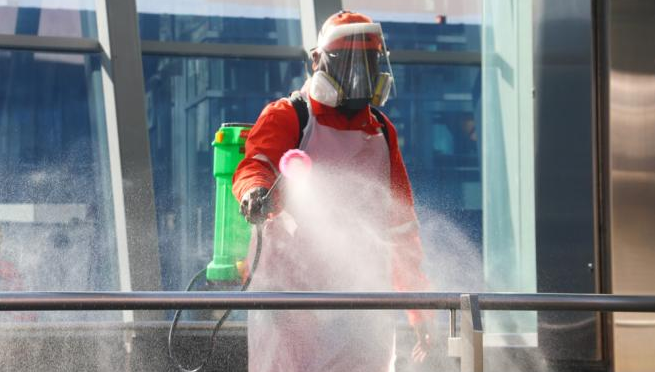
The management has since carried out intensive cleaning on the premises
MARKETS
– Pasar Sg Plan, Bintulu, Sarawak
According to the Sarawak Disaster Management Committee, a customer who later tested positive for Covid-19 had visited this location on Feb 21 from 10.45am to 11.15am.
– Pasar Taman Rejang, Sibu, Sarawak
According to the Sarawak Disaster Management Committee, a customer who later tested positive for Covid-19 had visited this location on Feb 20 from 6.01am to 6.35am.
GOVERNMENT BUILDINGS
– Mahkamah Samarahan, Sarawak
According to the Sarawak Disaster Management Committee, an individual who later tested positive for Covid-19 had visited this location on Feb 22 and 23 from 9am to 11am.
– Samarahan police district headquarters (IPD), Sarawak
According to the Sarawak Disaster Management Committee, an individual who later tested positive for Covid-19 had visited this location on Feb 22 and 24 from 8am to 5pm.
OTHERS
– Various localities in Kelantan
Covid-19 cases were detected at the following localities yesterday, the Kelantan Health Department said.
Bachok:
- Kampung Kuau Besar
- Kampung Pohon Nenas
- Kampung Kok Lintang
- Taman Seri Lalang
- Kampung Beris Tengah
- Kampung Pengkalan Chengal
Kota Bharu:
- Hadapan SK Tegayong
- Kampung Belukar Padang Tengah
- Taman Sri Keranji
- Penjara Pengkalan Chepa
- Kuarters Penjara
- Kampung Pauh Lima
- Taman Putra Kota Jembal
- Cabang Tiga Hj Musa
- Jalan Taman Jaya
- Taman Puteri Lagenda
- Kampung Bukit Marak
- Kampung Guchil
- Kampung Telok Chengal
- Kampung Paya Permai
- Jalan Hilir Istana
- Kampung Seterpa
- Kampung Setek
- Kampung Tok Ku
- Kampung Dendang
- Kampung Cabang Empat
- Kampung Pasir Jelatang
- Kampung Kukang
Gua Musang:
- Aring 6
Kuala Krai:
- Kampung Telekong
- Kampung Bechah Batu Besar
- Kampung Batu Jong
Machang:
- PPA Machang
- Kampung Pangkal Meleret
- Kampung Kerila
Pasir Mas:
- Kampung Binjal
Tumpat:
- Kampung Bendang Kerian
- Kampung Menjual
- Kampung Alor Pasir
- Hadapan SK Kutan
- Kampung Jubakar Pantai
- Kampung Kubang Batang
Tanah Merah:
- Taman Barakah
– Various locations in Kedah
Below are the locations where Covid-19 cases were detected yesterday, according to the Kedah Health Department:
Source : Malaysiakini
 English
 简体中文
简体中文 Bahasa Indonesia
 Bahasa Melayu